Weather:
- Ha Noi 18oC
- Da Nang 24oC
- Ho Chi Minh 27oC
Tony Kuschert*
Tết is the foundational moment in Việt Nam that signifies everything that is Vietnamese. As an expat, appreciating this time can be a complex mix of admiration and frustration.
In Australia, the major holiday period is Christmas and New Year. In the USA, it is Thanksgiving. In Việt Nam, the moment when everything comes to a standstill is the Tết festival.
Tết is based on the lunar calendar and occurs at a different time each year. It usually lasts for about a week, sometimes between late January and mid‑February, depending on the moon cycle.
The only way to describe Tết to someone from the West is:
“It is like Christmas, Easter, Thanksgiving, and your birthday all rolled into one week.”
Although the history of Tết can be traced back well before the 10th century – and although it has evolved over time – the essential elements of Tết have remained steadfastly rooted in family and the environment.
Due to the vastly different climates between the north and south, small variations in customs appear, such as the types of flowers used. But family bonds remain a solid tradition no matter where in the country you come from.
What Happens From an Expat’s View?
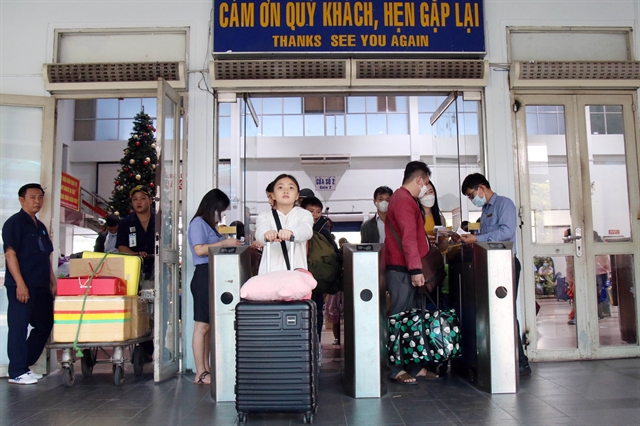
In the week leading up to Tết, people begin to disappear. Many take time off work or school, close their businesses, and vanish from their local communities. They make the pilgrimage back to their hometowns in any way possible.
During the week before Tết, the week of Tết, and the week after, it is almost impossible to find a bus, plane, or train ticket. The majority of the 100 million population migrates back to the birthplace of their ancestors to spend time with family.
I learned this the hard way. As a new expat in Việt Nam in 2014, I found an empty train in the middle of the Tết break. I bought a ticket from HCMC to Nha Trang and decided to spend a few days at the beach before returning. It was a wonderful first look at the seaside city.
Two days after arriving – and the day before everyone returned to work – I foolishly went to the train station to buy a ticket back. I received a very unpleasant response, but the message was clear: “No tickets for the next four days.” What?
I then went to the bus station. It was like kickoff time at the Super Bowl. Thousands of people were scrambling to get onto buses, even sitting on the floor or sharing two adults to one seat just to get back to the city in time for work. Again, the answer was: “No tickets until Wednesday.”
The only good part of this story is that we knew someone who knew someone who knew a man with a bus. It was leaving Nha Trang at 9pm and scheduled to arrive in HCMC at 6 am. I started work at 8am, so I had hope – hope that slowly died over the next 12 hours.
We left Nha Trang at 9pm on a bus full of ducks, chicks, rice, one pig, and more people than the bus was ever designed to carry when it was built in 1979.
I arrived back in HCMC the next morning at 7:30am. Dirty, smelling like unwashed ducks, and with hair full of rice‑farm dust, I walked into class with less than 30 minutes of sleep and began my first day back at work after Tết.
This story is common, and the advice is simple: as an expat, don’t travel during Tết. It is a disaster unless you have your own pre‑arranged transport, and even then, it will come at an exceptional price. For many, it is better to stay home.
Navigating Tết With a Vietnamese Family
For those with Vietnamese families, Tết can also be a time of confusion and frustration. A cornerstone of the celebration is giving lucky money, “Lì xì” As an expat, you may grow resentful that your hard‑earned money is being handed out by your partner to brothers, sisters, nieces, nephews, and cousins.
As an expat in a Vietnamese family, you need to find a middle ground. There must be limits – you cannot have your life savings handed out – but you also need to understand that this is the culture, and it is important.
A simple piece of advice:
Before the holiday, ask your partner, “How much money do you need for everything at Tết?”
“Everything” means food, transport, and lucky money.
Agree on the amount, give it, and you will feel more comfortable.
Another frustration is people directly asking you for lucky money. From bar staff to local sellers to school kids, you will get requests. Unless you have a personal moral reason to give, it is best to simply say you don’t have money and leave it at that. Once you give to one person, a constant stream will follow.
If you are with a Vietnamese family, it is best to keep a low profile. Show respect through body language if you don’t speak Vietnamese, and take things slowly. Nothing happens quickly during Tết.
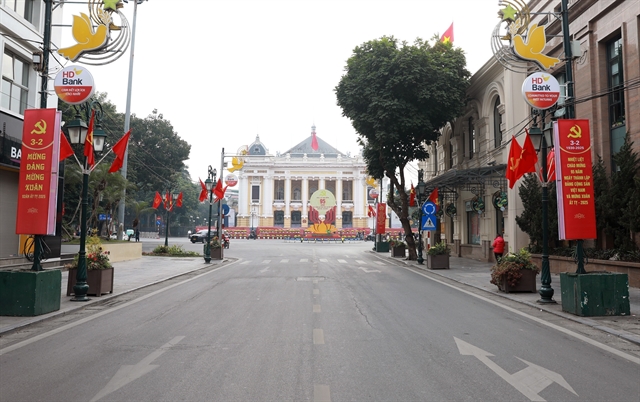
For those without a Vietnamese family, the advice is similar: slow down, show respect, and enjoy the peace. Getting frustrated that nothing is open won’t change anything – this has been happening for over ten centuries.
A Personal Reflection
I used to hate the Tết holiday. From not being able to work, to losing money, to being bored, it was a frustrating time I never enjoyed. Now, I find a different feeling in this period. Small pursuits – hobbies and tasks I put off all year – fill my time, and I appreciate the moments I spend with my wife’s family.
So, Chúc Mừng Năm Mới to one and all.
I wish you happiness and good health in the coming year, and I hope your Tết is a meaningful experience in whatever way you choose to celebrate it. — VNS
*Tony Kuschert shares videos on his YouTube channel, An Aussie in Vietnam. Since 2013, he has lived and travelled in Việt Nam, sharing cultural experiences with the world.
