Weather:
- Ha Noi 26oC
- Da Nang 30oC
- Ho Chi Minh 27oC
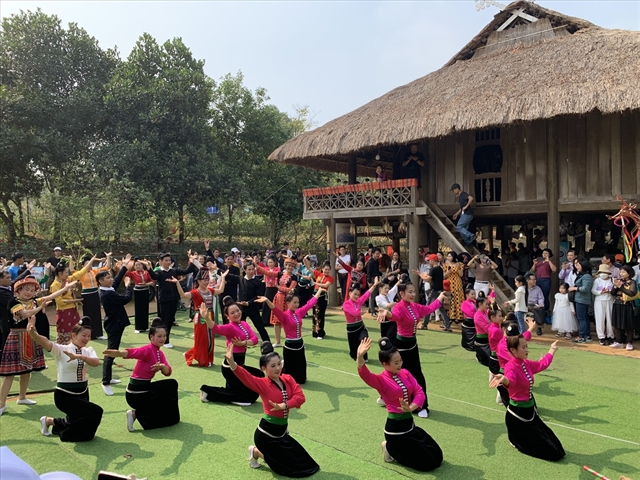
Across Việt Nam’s 54 ethnic groups, folk dance remains a powerful expression of identity and tradition. Yet in a fast-changing artistic landscape, this heritage faces mounting pressures. Vân Khánh spoke with Trương Thị Ngọc Bích, head of the Dance Performer Department at the Việt Nam Academy of Dance, about how ethnic folk dance can be preserved and renewed today.
Inner Sanctum: As you work in the arts and train in ethnic folk dance, what is your assessment of the importance of preserving and developing this art form today?
Ethnic folk dance is one of our most treasured intangible cultural heritages, embodying the soul, identity, beliefs, and lifestyles of Vietnamese ethnic communities. In the context of globalisation, folk dance not only nurtures community cultural life but also acts as a bridge, promoting Việt Nam and its people internationally.
Thus, the preservation and development of ethnic folk dance are critical for safeguarding national cultural identity while absorbing the essence of human culture, integrating without losing uniqueness, and creatively adapting to contemporary life.
In our training, we emphasise this as a core task, helping young artists understand their responsibility to preserve and spread this invaluable traditional art form. As a nation, Việt Nam takes pride in its national culture.
The first step in preservation is to collect, research, and comprehend the origins, customs, and traditions of ethnic dances. This requires a systematic and consistent approach to management and implementation. Organising workshops and training courses for qualified instructors is essential to equip those in ethnic dance with the necessary knowledge.
Inner Sanctum: Given its significance, folk dance clearly expresses the cultural identity of each ethnic group. Many famous dance works from our country originated from these traditions, right?
Việt Nam's 54 ethnic groups possess unique and diverse cultural identities. Each region boasts its own distinctive dances. For instance, in the North, the Red River Delta features Những cô gái Việt Nam (Vietnamese Girls) by Chu Thúy Quỳnh, and the flat palm-leaf hat dance Thoáng xuân quan họ (A Glimpse of Quan Họ Spring) by Quốc Toản. The Central Highlands has given rise to works such as Nơi hoang dã (The Wilderness) by Công Nhạc and Lời ru của rừng (Lullaby of the Forest) by Phạm Anh Phương. Each of these works reflects the essence, thoughts, and feelings of its respective ethnic group.
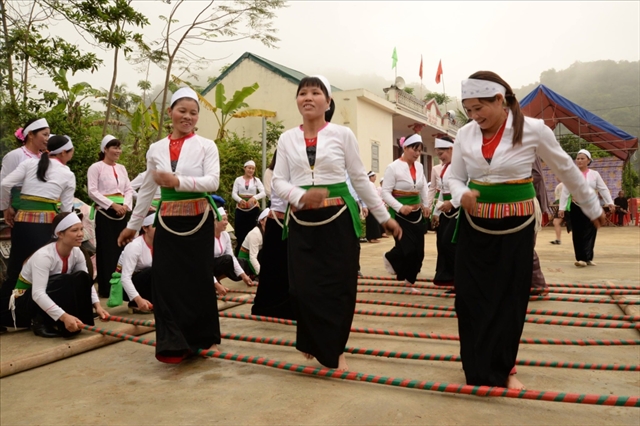
The dances of the Central Highlands people are known for their innocence and grace. The Northwest ethnic groups favour lively and joyful dances. Dances from the Red River Delta highlight softness and fluidity, while the Mường people showcase bamboo pole dances and chàm đuống dances, among others. The Thái people present conical hat dances, scarf dances, and circle dances, while the Khmer community has xayăm and rồm vông dances. The Êđê people are known for shield and drum dances.
Intertwined with these folk dances are religious forms, such as the hầu đồng dance of the Vietnamese, kim pang then of the Thái, and cấp sắc dances of the Dao. Additionally, there are professional court dances that have historically served the royal class in Vietnamese and Chăm societies.
Ethnic folk dances maintain a vital role in representing the national image, contributing to soft power and economic development, and enhancing Việt Nam's international standing. In today's society, the heritage of folk dance is crucial for the growth of the nation's professional dance industry. Therefore, prioritising the preservation, inheritance, and promotion of folk dance values is essential.
Inner Sanctum: While affirming its value throughout history, folk dance faces numerous challenges in the current stage of development and integration. What is your assessment?
Folk dance has established its significance over thousands of years, firmly embedding itself in national culture. However, this art form now encounters many challenges.
Firstly, the prevalence of modern entertainment options makes folk dance less attractive to youth. Additionally, the lives of artists remain challenging, with limited creative spaces and performance opportunities.
Secondly, research, collection, and teaching of folk dance often lack systematic approaches, risking the loss of certain dances as older artists pass away.
Nevertheless, these challenges also drive our innovation. We must blend preservation of original forms with creativity, catering to popular tastes, leveraging technology for promotion, linking folk dance with tourism, and encouraging international exchanges. With the right strategies, supported by training institutions, artists, and ethnic communities, folk dance can be preserved and continue to flourish in this era of integration.
Inner Sanctum: The mingling and adaptation of ethnic groups can lead to a blending of ethnic dances. Is this a challenge for preserving and promoting ethnic folk dance art?
Indeed, cultural exchange can pose risks of mixing that may blur the original identities of ethnic folk dances. However, I view this as both a challenge and an opportunity. If not carefully managed, this blending could lead to a loss of roots and assimilation. Yet, if we can adapt selectively, folk dance can gain new vitality, resonate with contemporary audiences, and maintain the essence of each ethnic group.
The challenge lies in clearly defining boundaries: knowing when to preserve originality and when to introduce creativity without losing foundational elements. For instance, in choreographing an ethnic dance, regardless of how innovative a choreographer might be, they must retain the essential movements that represent the core identity of that dance.
Inner Sanctum: This reality suggests that an excessive reliance on modern dance styles in folk dance creation has caused the original essence to diminish, especially in staged performances. Do you agree?
I believe this issue arises primarily in cases where there’s insufficient understanding of folk dance, seasoned choreographers tend to avoid such pitfalls. To safeguard the value and cultural identity of folk dance, we need strategic thinking and a visionary approach to developing Vietnamese dance based on folk foundations. This includes necessary financial and professional investments to ensure that artists can continuously innovate and enhance quality, elevating folk dance art to new heights.
Furthermore, we must promote the artistic value of folk dances from various regions and ethnic minorities, integrating them into cultural tourism products to share folk dance with both domestic and international audiences. This approach is crucial for preserving and promoting the unique value of Vietnamese folk dances in today’s context.
As Việt Nam continues to build an advanced culture rich in national identity, it is essential for the cultural sector to focus on preserving and promoting the essence of this art form. VNS
