
Singer Nguyễn Ngọc Hà, known by her stage name Hà Myo, is breathing new life into Xẩm, a traditional Vietnamese folk singing genre, by blending its distinctive storytelling with contemporary sounds while remaining committed to preserving its cultural identity.
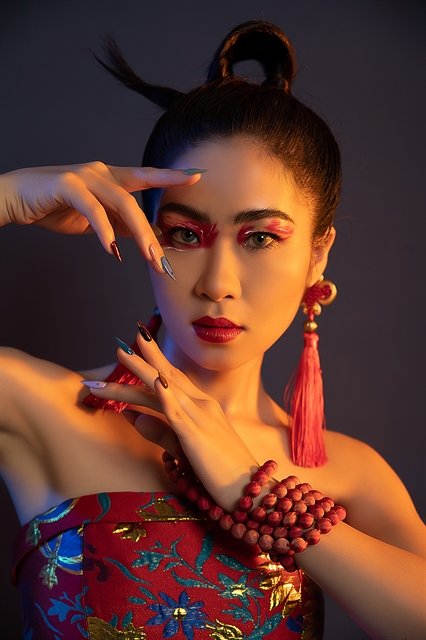
Singer Nguyễn Ngọc Hà, known by her stage name Hà Myo, is bringing the traditional Vietnamese folk singing genre of 'xẩm' to younger audiences through contemporary musical interpretations. — Photo courtesy of Hà Myo
Singer Hà Myo is bringing traditional xẩm singing to younger audiences through contemporary musical experiments. Blending folk melodies with electronic dance music and rap, she hopes to preserve the genre's distinctive character while making it more accessible. She talks to Bùi Quỳnh Hoa about creativity, cultural heritage and her artistic journey.
Inner Sanctum: What first drew you to xẩm singing and persuaded you to pursue this traditional art form?
Like many young people, I used to enjoy pop music and knew little about xẩm singing [a traditional form of Vietnamese folk music historically performed by itinerant blind singers]. But when I had the opportunity to explore it more deeply, I discovered that it was far more interesting than I had imagined.
What impressed me most was its closeness to everyday life. Xẩm songs tell stories about love, family and social issues, often with humour and remarkable insight. I began wondering why so many young people had never had the chance to discover such an engaging art form.
My curiosity led me to study xẩm singing and experiment with combining it with contemporary music. The more I learned, the more I loved it. Eventually, it became much more than a musical experiment; it became an important part of my artistic journey.
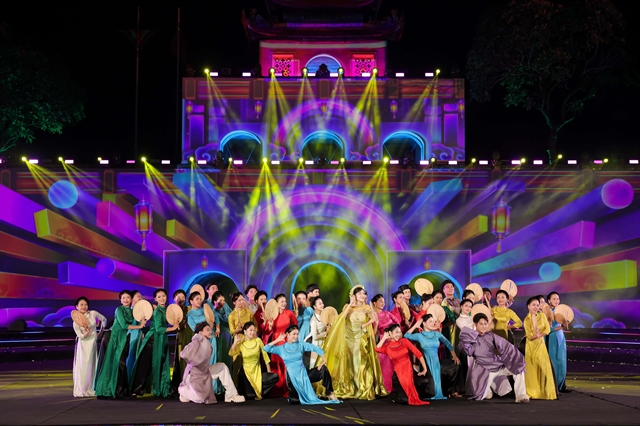
Singer Hà Myo performs 'xẩm' at the recent World Culture Festival in Hà Nội, introducing the traditional Vietnamese folk genre to international audiences. Photo courtesy of Hà Myo
Inner Sanctum: You are widely known as “Hà Xẩm”. Does the name bring more encouragement or pressure?
Both, but encouragement outweighs pressure. Being called Hà Xẩm is a joy because it means people associate me not just with a song or performance, but with xẩm itself.
However, I understand that this also brings responsibility. I would not claim to represent xẩm folk singing, as many master artisans and artists have devoted their lives to preserving and passing on the genre.
I simply hope my work can make more young people curious about xẩm. If even a few begin exploring and appreciating it, that is meaningful to me. The name is a source of pride, but it also reminds me to keep learning.
Inner Sanctum: How do you balance experimentation with electronic dance and rap against the need to preserve xẩm singing's traditional character?
Before renewing something, we must first understand and respect its original values. I try to learn about xẩm's melodies, vocal techniques, diction and distinctive storytelling spirit.
EDM and rap offer new ways to introduce the genre, particularly to younger listeners. But simply placing xẩm vocals over an electronic beat does not guarantee a successful fusion. Sometimes I need to scale back the modern arrangement to give the traditional singing room to breathe; at other times, I experiment with different arrangements until the two elements complement each other.
My aim is not to modernise xẩm at any cost, but to help today's audiences appreciate its beauty through a more familiar form. My fusion projects are an avenue for creativity, not a replacement for traditional xẩm.
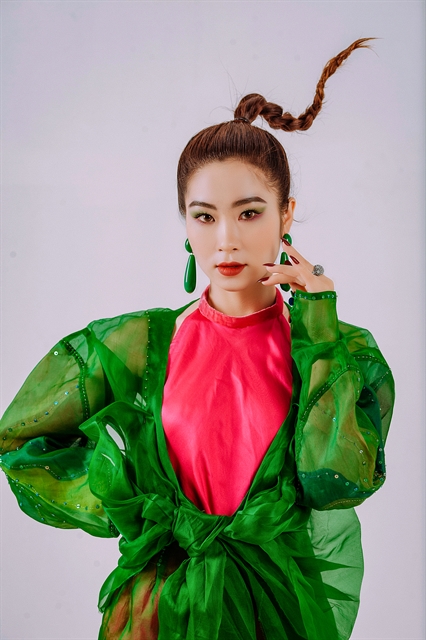
Singer Nguyễn Ngọc Hà, known by her stage name Hà Myo. Photo courtesy of Hà Myo
Inner Sanctum: You have described xẩm as a kind of cultural diary. How do contemporary and humorous themes help sustain that role?
Xẩm has always been closely connected to everyday life. Traditional performers sang about love, family, social issues and the amusing situations around them. That closeness to ordinary people is one of its greatest strengths.
Through works such as Xẩm Nịnh Chồng (Praising One's Husband), Xẩm Mắng Chồng (Scolding One's Husband) and Xẩm Khen Chồng (Complimenting One's Husband), which I share on social media, I try to continue that storytelling tradition from a young person's perspective.
I want listeners to recognise their own experiences and families in the songs. Traditional art can remain relevant when it continues to tell stories about people living today.
Inner Sanctum: Have you encountered criticism of your approach to blending tradition with modern music?
Different opinions are natural when experimenting with traditional art. Some people enjoy the fusion, while others prefer xẩm in its traditional setting. I understand and respect both views.
There have been times when I have wondered whether my experiments were appropriate or needed adjustment. I try to see criticism as an opportunity to learn, particularly feedback from artisans, experienced performers and specialists.
I do not believe every work must appeal to everyone. What matters is approaching the creative process seriously, understanding what we are doing and being willing to make changes when something does not feel right. I am still learning every day.
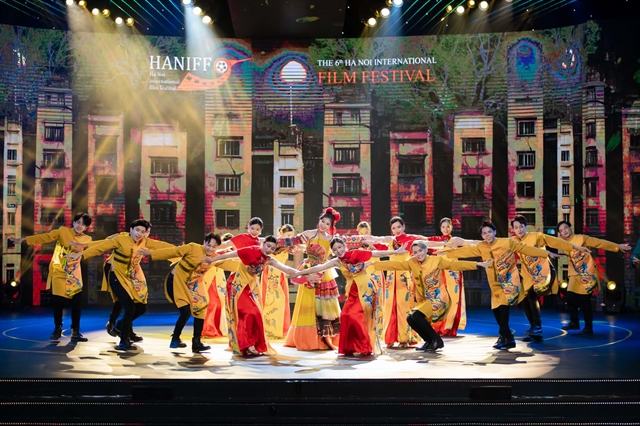
Hà Myo performs at the 6th Hà Nội International Film Festival. Photo courtesy of Hà Myo
Inner Sanctum: How did international audiences respond when you performed xẩm at the World Culture Festival in Hà Nội?
Performing at an international cultural event in Hà Nội was memorable because I felt I was introducing an aspect of Vietnamese culture to foreign audiences.
Even when visitors could not understand the Vietnamese lyrics, they could respond to the melodies, rhythms and emotions. Music has a special ability to connect people across cultural and linguistic boundaries.
I hope the contemporary rhythms in my xẩm fusion performances offer international audiences an accessible entry point, while the genre's distinctive qualities encourage them to explore Vietnamese culture further. If someone leaves wanting to discover what xẩm is and where it comes from, that is already a meaningful achievement.
Inner Sanctum: Since lyrics are central to xẩm, how can you overcome the language barrier for international listeners?
It is a real challenge because the lyrics are among the genre's greatest treasures. Some lines carry profound meanings, while others rely on wordplay and humour that are difficult to translate.
However, people do not need to understand every word before appreciating a musical tradition. When performing for international audiences, I pay attention to emotion, delivery, costumes and the stories introduced alongside the performance.
English explanations or subtitles can also help audiences understand the songs. I believe the first step is to capture their interest, then encourage them to explore the cultural values behind the lyrics. Understanding xẩm is a gradual process that goes beyond a single performance.
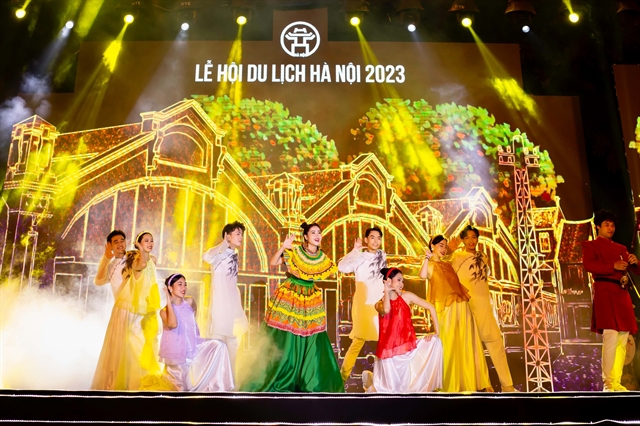
Hà Myo (centre) at the Hà Nội Tourism Festival 2023. Photo courtesy of Hà Myo
Inner Sanctum: What kinds of experiences could help turn folk music into a cultural industry product?
Beyond stage performances, we should create more opportunities for audiences, especially international visitors, to experience folk music directly. They could learn about xẩm singing's origins, explore traditional instruments, try playing the wooden clappers or learn a few simple lines. Such hands-on activities can leave lasting impressions.
Folk music could also be connected with tourism, cuisine, fashion and local cultural spaces. I hope regular performances will make these art forms easier to discover throughout the year, rather than only during festivals.
From an artist's perspective, making traditional music accessible and engaging can help preserve heritage while creating new opportunities for cultural experiences and tourism. The key is to develop experiences that genuinely attract Vietnamese and international audiences while respecting the artistic values of traditional music.
Inner Sanctum: After more than five years working with xẩm, how much progress have you seen in attracting young audiences?
I am happy to see growing openness among young people towards music combining traditional and contemporary elements. My goal is not to persuade everyone to listen to xẩm in my way, but to give them another opportunity to discover it.
There is still a long way to go. Lasting engagement with heritage requires more than a few musical releases or individual artists. Artisans, performers, researchers, educators, media organisations and communities all have a role to play.
One of my greatest sources of happiness is hearing a young person say, “I never used to listen to xẩm, but after discovering your work, I have started to find it beautiful and interesting.” Even small changes like that motivate me to continue.
Inner Sanctum: What would you say to young artists who dream of renewing Vietnamese traditional music?
I would encourage them to explore traditional music and be brave enough to experiment. Việt Nam has an incredibly rich musical heritage, with much that young people have yet to discover.
My journey began with curiosity, followed by learning, experimentation and mistakes. Creativity should be encouraged, but before renewing a traditional art form, we must understand what makes it distinctive. Seeking guidance from experienced performers is also essential, as some knowledge cannot be acquired through books or the internet alone.
Every generation can contribute to preserving and promoting cultural heritage in its own way. We do not all have to follow the same path. What matters is working with genuine affection, seriousness and responsibility.
I hope more young artists will find inspiration in our national cultural heritage and discover their own ways of bringing it to wider audiences. — VNS