Weather:
- Ha Noi 27oC
- Da Nang 26oC
- Ho Chi Minh 27oC
Anh Đức
Video games have been around in Việt Nam since the late 1990s, but their popularity exploded in the early 2000s as computers and internet access became more widespread.
In those early years, competition thrived in small arcade shops packed with CRT televisions connected to Famicom consoles and in internet cafés where gamers famously wedged toothpicks between mouse buttons to level up faster. What began as neighbourhood bragging rights over arcade football games has since evolved into a global industry worth an estimated US$8.1 billion in 2025: esports.
Esports, part of the wider gaming industry, was recognised by the Government as one of the country’s six key cultural industries under Resolution 80 issued by the Communist Party of Việt Nam on the country’s cultural development strategy.
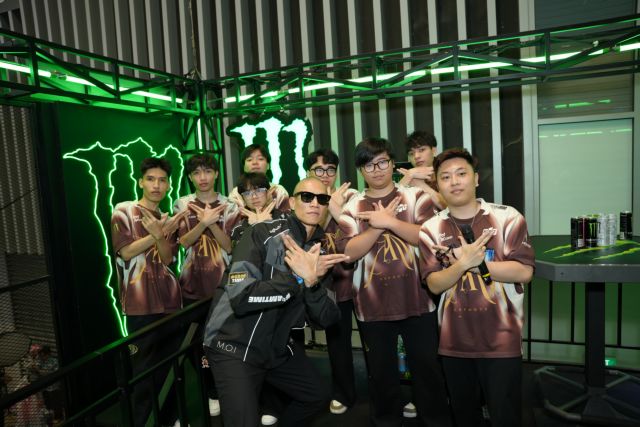
“Esports is video gaming at the highest level,” said Anthony “TK” Nguyễn, owner of Việt Nam’s most decorated gaming team, GAM Esports.
“It’s a digital arena, but a global sport from the very beginning. That’s what makes it such a fun and exciting space to be in.”
Anyone meeting TK Nguyễn for the first time might not immediately picture him running a gaming organisation. Tall and athletic, he began his entertainment career, had a passion for fitness and once owned a rooftop beach club in Nha Trang. None of those traits fit the stereotype of a gamer and some might even see them as the complete opposite.
Then the pandemic hit in late 2019, forcing the closure of his beach club. While searching for a new business opportunity, one of his partners introduced him to an unfamiliar field: esports.
Challenge of a lifetime
TK Nguyễn’s involvement as CEO of GAM began in 2021, but the team’s legacy stretches back at least 12 years further, to 2009.
GAM Esports traces its roots to StarsBoba, a team that competed in Defence of the Ancients (DotA), represented Việt Nam and won two Asian championships in 2009 and 2010.
When a new game, League of Legends (LoL), arrived and surged in popularity in 2011, many DotA players switched to LoL.
In 2014, former StarsBoba member Trần Hữu Minh Nhựt, known as Archie, joined four teammates to found Boba Marines. The team was renamed Gigabyte Marines in 2016 before becoming GAM Esports in 2018.
Nearly 17 years have passed since StarsBoba won its first Asian title and the industry has transformed dramatically since then.
While StarsBoba and other Vietnamese gamers were carrying the nation’s flag at international tournaments, online gaming at home was facing a barrage of negative headlines. Video games were often dismissed as a waste of time and the stigma surrounding gaming continued to grow.
A breakthrough came in 2012 when Việt Nam’s Saigon Jokers defeated the Singapore Sentinels in the Southeast Asian LoL Championship. The team later advanced to the World Championship, beat North America’s Dignitas Gaming and finished 10th overall.
The Saigon Jokers returned home as idols in the gaming community, cemented LoL’s status as the country’s most popular game and helped awaken Việt Nam’s esports industry.
Many fans regard the Jokers’ success as a turning point for Vietnamese esports and players still point to the team as a source of inspiration.
But for young esports players, inspiration alone is often not enough. Prejudice and stigma from parents towards gaming and esports as a profession remain widespread despite changing attitudes.
“When I got the offer from South Korea to go abroad and play, they did not allow me to,” said esports player Trần Bảo Minh, known as LazyFeel. “They thought it was too good to be true and I had to persuade them a lot,” Minh added.
At just 19 years old, Minh has become one of Việt Nam’s biggest esports stars, reportedly earning millions as the first foreign esports player to compete in South Korea’s top gaming league, the League of Legends Champions Korea (LCK).
He was also among the 66 prominent figures invited to the state dinner during Party General Secretary and State President Tô Lâm’s visit to South Korea.
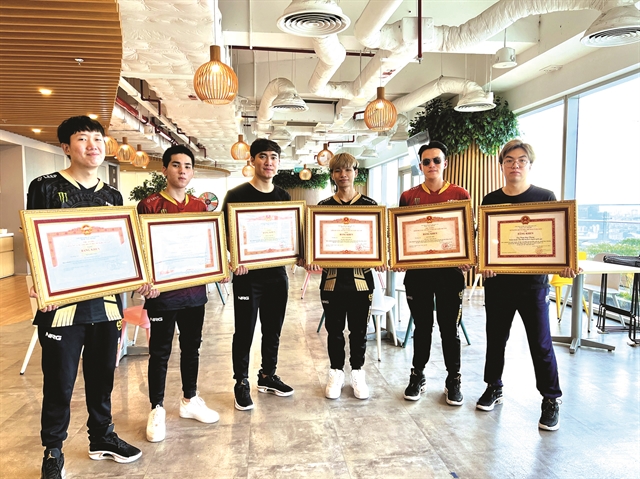
For many gamers, success in competition has helped change their parents’ perception of esports as a profession.
“After the 30th SEA Games in the Philippines, I gradually managed to change my parents’ perception of my work,” said Nguyễn Vũ Hoàng Dũng, known as PSMan, a former esports player.
After retiring from professional competition, Dũng became head coach of GAM Esports’ Arena of Valor (AOV) team, leading a squad of young rookies to a top-four finish in the national championship and qualification for their first international tournament.
Despite winning only a bronze medal with Việt Nam’s national esports team at the SEA Games seven years ago, Dũng said he remained proud of the achievement.
“I am very grateful for that, because I was not only bringing glory home to the country, I was also earning the trust of families and of parents,” Dũng added.
Passion to play
But not everyone who plays esports games gets the chance to bring glory home.
In League of Legends alone, more than 17 million accounts were actively playing in Việt Nam in 2025. Of those, only the top 1,000 accounts on the national leaderboard, or 0.005 per cent, are eligible to enter try-outs for professional teams such as GAM Esports.
From that pool, only 15 players secure places in Việt Nam’s three leading teams, including GAM, in the regional Championship Pacific league, where a franchise system offers stable and lucrative salaries.
For those who make the cut, keeping their place is an even greater challenge. Gaming is often described as a lazy or easy profession, but players and coaches say the reality at the highest level of esports is very different.
“It’s not just about the in-game skills,” said TK Nguyễn. “What really sets people apart is mindset and health. We have a formula here we call our world champion formula: mindset times health, plus skills,” he added.
With a background in fitness, TK Nguyễn understands the importance of physical conditioning in performance. GAM Esports employs personal trainers who work with players three times a week. The team house also includes a fully equipped gym and nutrition is a key part of the organisation’s programme.
“The day before a match, I make them eat carbs or starches, like rice, to use that energy for the next day, because they sometimes compete for five hours on stage, and five hours of being super-focused is a lot,” TK Nguyễn said.
According to TK Nguyễn, esports players spend nearly 10 hours a day sitting down, with around five hours in what he described as super-focus mode during official matches.
“A day will have around two to three training blocks, and these are usually held in the afternoon and evening. Those time slots also coincide with the slots they will be competing in on match days during the week. So it is just like they are actually competing; they have to get used to it,” said Dũng.
The daily routine also gives players time for recovery, team bonding and livestreaming activities for fans.
“In the afternoon, everyone goes outside to walk or go swimming together so that we can bond as a team,” said Ngô Hà Tiến Phát, a player for GAM’s Arena of Valor team.
These routines, introduced and continuously refined by TK Nguyễn and his staff after he became CEO, have helped GAM dominate Việt Nam’s League of Legends national championships, winning eight consecutive titles and regularly qualifying for international tournaments.
The Vietnamese-American businessman now aims to replicate that success across the organisation’s other teams as they prepare for the 2026 Esports World Cup in Riyadh, Saudi Arabia, where GAM is a partner team.
“For any young player joining GAM, I want them to know they’re joining a world-class organisation, and I want them to see themselves as a world-class athlete,” he said.
Spirit is right
But world-class athletes are not built through training regimens alone. They are driven by the support of fans who follow every match and cheer them on.
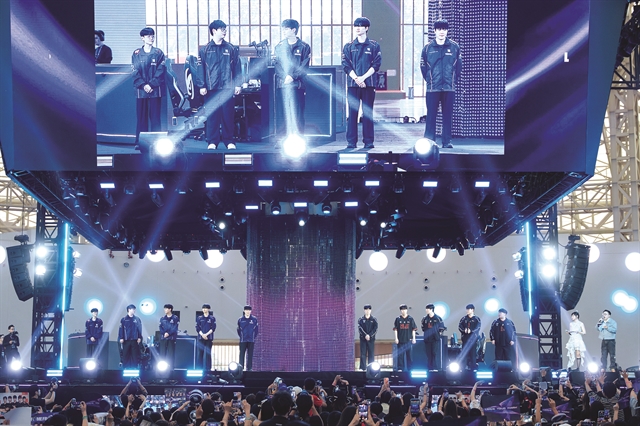
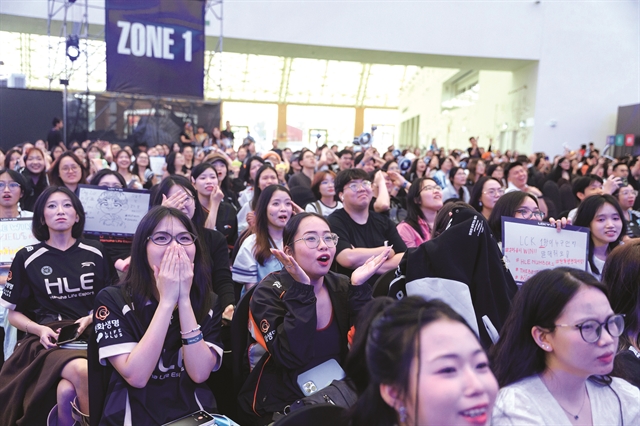
From May 8 to 10 at the Việt Nam Exposition Centre (VEC) in Hà Nội, more than 10,000 spectators attended matches featuring Bảo Minh’s Kiwoom DRX against South Korean powerhouses Gen.G Esports and Hanwha Life Esports.
Ticket prices ranged from VNĐ1.5 million to VNĐ6 million (US$57-227). Some fans even travelled from Minh’s hometown of Hồ Chí Minh City to watch their idols compete live on stage.
The League of Legends Champions Korea (LCK) had never previously staged a regular season match outside South Korea and selected Việt Nam’s capital as its first overseas destination.
Minh has competed in South Korea’s top league for around a year, but the event marked his first official matches on home soil in Việt Nam.
As hosts boomed his introduction — “Descendant of the dragon, Việt Nam’s own, Trần Bảo Minh!” — Minh walked onto the stage to deafening cheers from thousands of fans. Expectations for victory on home ground were immense and so was the pressure.
“Young players will dwell on a mistake, they’ll keep thinking about a mistake, again and again, until they’re stuck there,” said TK Nguyễn on the mentality of gamers.
In a game where a single misclick on a pixel can change the course of a match, the pressure can be overwhelming enough to break a player’s resolve.
Beijing’s National Stadium, widely known as the Bird’s Nest, hosted the 2017 League of Legends World Championship final between South Korean teams SKT and SSG. SKT’s line-up featured legendary player Lee Sang-hyeok, better known as Faker, who had already won the title three times.
In one of the biggest upsets in esports history, SSG swept SKT 3-0. After the defeat, Lee collapsed onto the gaming desk in tears as millions of SKT supporters watched around the world.
Lee took six years to recover from the loss and has since gone on to win three consecutive world titles. He has credited the unwavering support of fans as a key source of motivation behind his comeback.
The esports fanbase has also grown significantly and become more diverse. More than 28.2 million Vietnamese follow esports or esports-related content, equivalent to 28.7 per cent of the population. Globally, according to Statista, women accounted for 35 per cent of esports fans in 2024, up from 28 per cent in 2016.
That shift was evident during the May 10 matches, when female fans at times outnumbered and outcheered male supporters. On social media, fan groups led by women rented photo check-in booths at the VEC to support players, displayed welcome messages near Nội Bài Airport and organised charitable activities in the gamers’ names.
“I’ve met so many friends along the way of being an esports fan,” said Nguyễn Thị Hằng Nga, a supporter of esports player Lee Min-hyeong, known as Gumayusi.
“When you get the chance to meet people who share your passion, you feel extremely happy.”
The Oxford Dictionary defines sport as “an activity involving physical exertion and skill in which an individual or team competes against another or others for entertainment”.
If competitive gaming can produce the emotion and physical strain seen in traditional sports, then whether esports should be considered a sport is no longer the central question. Instead, the focus has shifted to who is watching and what that audience has helped build.
“For me, esports is not just the future of sport. It’s the future of entertainment, because it’s all in the digital world, and that’s where the current and next generation are; that’s where the youth are,” said TK Nguyễn. VNS
