Weather:
- Ha Noi 24oC
- Da Nang 32oC
- Ho Chi Minh 33oC
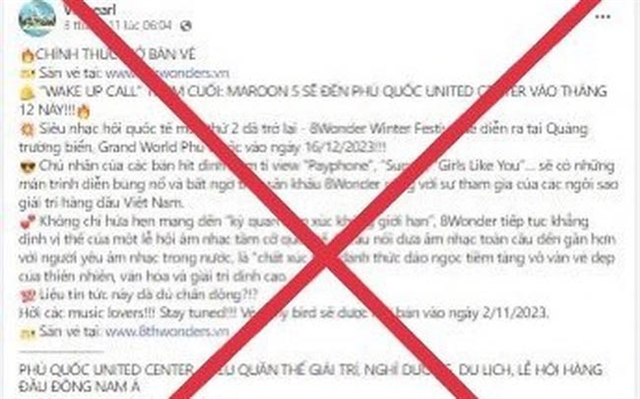
HÀ NỘI — As the peak travel season approaches, fuelled by the long holidays of Reunification Day (April 30) and International Workers’ Day (May 1), scammers are intensifying efforts to exploit demand for cheap tours, air tickets and accommodation, using increasingly sophisticated tactics that are leaving many travellers out of pocket.
Reports of tourists being duped, widely shared on social media, are fuelling public anxiety while undermining the reputation of legitimate travel businesses and disrupting the tourism market during its busiest period.
One of the most common schemes involves impersonating airline ticket agents. Fraudsters create websites and fan pages closely resembling those of airlines or reputable agencies, offering attractive promotions to lure customers into making bank transfers.
Taking advantage of the growing habit of online booking, they often forge payment receipts and invoices bearing the names and seals of travel firms or hotels to build trust.
Similarly, fake fan pages advertise tours and hotel rooms with eye-catching slogans such as 'flash sale,' 'deep discount' or 'limited-time offer.
Once customers pay deposits of 30–50 per cent of the service value, scammers continue requesting personal information under the pretext of finalising bookings, enabling further, higher-value fraud.
In more advanced cases, criminals use deepfake technology to mimic faces and voices during video calls, urging victims to transfer money urgently due to alleged changes in flight prices or to secure promotional rates. Many victims only realise something is wrong when they fail to receive valid booking codes, sometimes only upon arrival at the airport.
V.T. Thương, a resident of Hưng Yên Province, said she fell victim while booking a four-day, three-night trip to Đà Lạt. After multiple exchanges, the service provider sent her what appeared to be a valid flight booking code and requested payment.
Shortly after she paid a deposit, she was told an error had occurred and was asked to make additional transfers for a refund. Misled through several steps, she ended up transferring money three times, totalling around VNĐ19 million, before realising she had been scammed.
In many cases, scammers cut off contact immediately after receiving deposits. In others, they prolong communication with various deceptive tactics to extract more money before disappearing and blocking all contacts.
B.Q. Hưng from Hà Nội’s Hồng Hà Ward recounted a similar experience when booking a flight-and-hotel package. The service provider sent detailed booking information, including passenger names and flight schedules, to gain his trust and requested payment to issue tickets and lock in favourable prices.
However, on the day of departure, his family discovered at the airport that the tickets were fake, forcing them to cancel their trip.
Although such scams are not new, criminals are refining their methods, making it essential for travellers to remain vigilant, verify information carefully and be cautious of unusually attractive offers on social media.
Technology experts warn that creating fake accounts or buying followers online is inexpensive and easy, meaning users should not rely solely on follower counts to judge a page’s credibility. Warning signs include sudden spikes in followers, repetitive or generic comments, newly created accounts without profile photos and low engagement despite high follower numbers.
Users are advised to review a page’s activity history, assess how it responds publicly to customers and cross-check information from multiple sources before making bookings or payments.
Đào Thị Kim Lan from Royal Tour stressed the need for caution when booking services via social media, especially offers with steep discounts. In reality, tour and accommodation discounts typically remain within a modest range of under 5 per cent. Deals that are 20–30 per cent cheaper than market rates should raise red flags.
Before transferring money, travellers should contact hotels, resorts or travel companies directly to verify prices and booking details.
Nguyễn Chi Mai of Vietindo Tour recommended prioritising reputable service providers with clear addresses and formal contracts. In cases of suspected fraud, victims should immediately secure their bank accounts, gather relevant evidence, obtain transaction statements from banks and report the case to the police.
Lieutenant Colonel Hồ Thọ Hải, Deputy Head of the Security Division under HCM City Police, emphasised that public vigilance is key and could help prevent up to 80–90 per cent of fraud cases.
Travellers are urged to research tour packages carefully, prioritise bookings through trusted companies or verified travel apps and request proper contracts and invoices. When encountering suspicious online offers, they should refrain from transferring money until all information is verified and promptly report concerns to the nearest police authority for guidance and support. — VNS
