Weather:
- Ha Noi 23oC
- Da Nang 27oC
- Ho Chi Minh 29oC

Unprecedented floods sweeping the Central Highlands and other regions of Việt Nam in recent months have left deep scars on landscapes and livelihoods, while casting a long shadow over tourism during the peak year-end season. As destinations race to recover, the industry is being forced to rethink how it adapts to an era of increasingly extreme weather.
Việt Nam News speaks with Phạm Hải Quỳnh, rector of the Asia Tourism Development Institute, about how provinces and cities are working to salvage tourism and chart a way forward for their tourism industries.
How has the recent flooding affected tourism in provinces in the Central Highlands and other regions?
This year’s successive flooding incidents, which I would call “flood upon flood”, have caused far greater damage than usual, directly affecting tourism experiences.
In Đà Nẵng, for example, high tides combined with successive typhoons have led to erosion of seawalls and sidewalks, while also damaging decorative structures, hurting the visual appeal of some areas even after the water has receded.
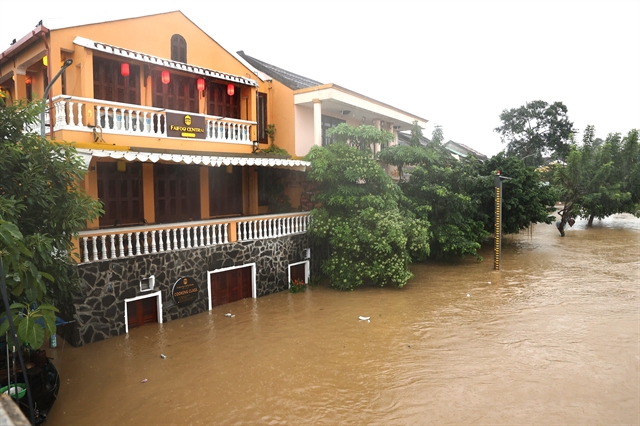
In Huế and Hội An, repeated flooding has submerged historical relic sites, causing plaster to peel off from walls and moss to grow. This, combined with after-flood debris, means restoring these sites to their original state has cost a great deal of time and resources.
Mountainous tourist areas – such as the Khánh Lê Pass connecting Nha Trang and Đà Lạt and eco-tourism sites in Tây Giang and Quảng Nam – have suffered landslides and fallen trees, damaging both their pristine beauty and visitors’ experiences.
Inter-regional and local travel has also been hindered by floods and landslides, forcing temporary suspensions of tourism activities, leading to tour cancellations and disrupting supply chains for hotels and restaurants.
Despite that, statistics from November show international tourist numbers in Huế and Đà Nẵng continued to grow — with foreign arrivals to Huế increasing by more than 60 per cent year-on-year. So it seems that foreign visitors are willing to accept weather risks to enjoy indoor tourism activities related to culture and heritage.
This signals that the tourism industry needs to shift towards “weather-adaptive tourism”, rather than relying primarily on natural scenery.

How do you assess the provinces’ efforts and policies in recovering their tourism sector after the floods?
I would describe the responses of the localities as rapid and highly practical. Unlike in previous years, restoration efforts in 2025 have been highly "militarised" aimed at salvaging the end-of-year tourism season.
For example, in Huế and Hội An, authorities mobilised the army, police and youth volunteers to clear mud after the floods. Within just three days heritage sites reopened to visitors, even though surrounding areas were still being cleaned.
Tourism businesses also took the initiative to pump water out and clean the area quickly. Some even offered boat-rowing tours through flooded streets, creatively turning challenges into novel visitor experiences.
The Government's emergency support packages worth billions of đồng demonstrate strong attention to post-disaster recovery. These funds have helped address urgent needs such as repairing roads and embankments to restore traffic flow.
However, attracting tourists back to these areas has not been easy. Images of floodwaters up to the roofs of buildings and devastating landslides on social media have left a deep psychological scar.
Domestic tourists – a crucial segment for year-end travel – are particularly concerned about being stranded, forced to cancel trips or facing safety risks.
Even though the water has receded and streets have been cleaned in tourism destinations such as Hội An and Huế, many travellers from Hà Nội and HCM City still perceive the Central Highlands as severely damaged.
Fearing that floods may somehow come back, tourists and tourism agencies are opting for southeastern destinations, Phú Quốc Island or overseas trips.
Additionally, visually unappealing scenes – fallen trees, ancient building walls stained with mud and cluttered beaches — discourage young travellers who prioritise photography and social media content.
Tourism businesses now face a dilemma: they need a lot of money for refurbishment and would keep prices the same or increase slightly, yet are pressured to offer discounts to attract tourists back after a natural disaster.
Hotels and homestays have to deal with mud-stained walls and damaged electrical systems, which need time for repair, but some of them felt the need to open as quickly as possible, leading to poor visitor experiences.
Additionally, efforts have been focused mostly on fixing and cleaning the roads. There has been a lack of broader economic support, such as tax reductions for businesses affected by floods or large-scale publicity campaigns to counter negative perceptions.
How can affected provinces regain tourists’ trust after natural disasters?
In today's digital age, tourists pay more attention to what they can see rather than reports or official statements.
Provincial tourism authorities could work with relevant agencies to provide live camera feeds at popular tourism sites. Images of sunny weather, clean streets and bustling shops can be more convincing than thousands of articles.
Trustworthy travel bloggers and influencers can be invited to localities to provide honest, first-hand reviews of accommodation, dining and scenery, which can also help reshape perceptions.
Provinces could encourage tourism associations to adopt shared risk policies, such as offering full refunds or flexible future bookings if flooding occurs during a trip or within 24 hours beforehand. This reduces travellers’ fear of financial loss.
There is also a segment of tourists who would like to contribute to cleaning and restoration efforts, mainly foreign tourists and Gen Z youths. They may enjoy tours where they can try planting trees, cleaning beaches and other meaningful activities.
Provinces should promote their indoor tourism products such as food tours, museums, performance shows, and meditation and yoga – things that still make trips valuable despite the rain.
Looking forward, how should the tourism industry adapt to climate change?
I think businesses should shift away from concrete buildings near the sea as they can be destroyed by strong waves. There are house models that can stay afloat during floods, which accommodation providers can try to follow to minimise losses.
Mangrove forests and protective forests are also natural buffers that help safeguard tourism infrastructure.
Investment should be made in indoor recreational activities, digital museums, art shows, and VR/AR technology so that even under heavy rains visitors can experience the culture of Huế and Hội An.
There is also an opportunity for new tourism products during safe flooding periods, such as boat rowing tours to explore ancient cities, but this would require strict safety management.
Digital twin technology can be applied – heritage sites in Huế and Hội An can have digital 3D versions of themselves, which can aid restoration efforts as well as provide interesting experiences for tourists.
Finally, tourism should be integrated with sustainable agriculture, allowing local communities to earn income from speciality products rather than relying solely on visitor numbers. VNS
