Weather:
- Ha Noi 36oC
- Da Nang 27oC
- Ho Chi Minh 33oC
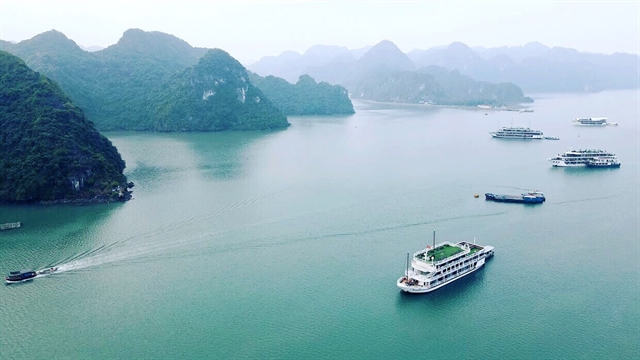
HCM CITY — Resolution No. 26-NQ/TW of the Politburo reaffirms tourism’s role as a spearhead economic sector and calls for comprehensive changes in tourism governance, products, infrastructure, human resources and destination development.
In recent years, Việt Nam’s tourism industry has undergone significant transformation, with its scale, service quality and competitiveness improving on the regional and global tourism map.
To enable the sector to make a stronger breakthrough in the country’s new development period, Resolution No. 26-NQ/TW calls for fundamental changes in tourism development thinking, approaches and methods.
Impressive growth, rising to the global stage
Recognising tourism’s contribution to socio-economic development, the Party and State have introduced a range of policies to support rapid and sustainable growth.
A significant milestone was Resolution No. 08-NQ/TW, issued by the Politburo on January 16, 2017, on developing tourism into a spearhead economic sector.
The resolution affirmed that tourism development was the responsibility of the entire political system, authorities at all levels, sectors and society, while calling for breakthroughs in institutions, infrastructure, human resources, promotion and advertising, and the development of a national tourism brand.
It was followed by the 2017 Law on Tourism, the Việt Nam Tourism Development Strategy to 2030, the national digital transformation programme, the green growth strategy, and policies on visa exemptions, extended stays, streamlined immigration procedures, transport infrastructure and key tourism hubs.
After nearly 10 years of implementing Resolution No. 08-NQ/TW, the sector has recorded positive and fairly comprehensive changes.
Awareness of tourism’s role has increased, mechanisms and policies have gradually improved, markets have expanded, and infrastructure, technical facilities and human resources have developed. Promotion, marketing and digital transformation have also made significant progress.
Tourism has increasingly demonstrated its ability to generate high added value, create jobs, facilitate economic restructuring, preserve and promote cultural values, and enhance the image of Việt Nam and its people.
In 2025, Việt Nam welcomed nearly 21.2 million international visitors, up 20.4 per cent year-on-year, while serving 137 million domestic tourists.
The momentum has continued. From January to August 2026, the sector welcomed 15.9 million international visitors and is on track to achieve its target of 25 million arrivals for the year.
According to the Việt Nam National Authority of Tourism, during the five-day National Day holiday from August 29 to September 2 alone, the sector served an estimated 6.5 million visitors, up 18.1 per cent from the same period in 2025.
Major destinations recorded strong growth.
HCM City welcomed 1.71 million visitors, with tourism revenue estimated at VNĐ4.9 trillion (US$188 million). Đà Nẵng received around 850,000 visitors and generated VNĐ3.3 trillion, while Hà Nội welcomed more than 900,000 visitors and earned over VNĐ3 trillion. Khánh Hòa received an estimated 1.25 million visitors and earned around VNĐ2.1 trillion.
Việt Nam’s position on the global tourism map has also improved.
According to the World Economic Forum, the country climbed 16 places, from 75th out of 141 countries in 2015 to 59th out of 119 in 2025.
It also rose from fifth to third in ASEAN for international tourist arrivals, behind Malaysia and Thailand.
In 2025, total tourism receipts reached approximately VNĐ1 quadrillion, up 19 per cent from 2024 and nearly 38 per cent higher than in 2019.
Tourism contributed nearly 8.8 per cent directly to GDP and generated around 4.41 million jobs, equivalent to 8.5 per cent of the total labour force.
However, development remains unsustainable in some respects and has yet to fully match the country’s potential.
Challenges include insufficient awareness of tourism’s role in some sectors and localities, weak inter-sectoral coordination and regional connectivity, limited investment resources, a lack of diverse and in-depth products capable of generating greater added value, and delays in implementation.
Against this backdrop, the 14th-term Politburo issued Resolution No. 26-NQ/TW on August 22, 2026, on developing Vietnamese tourism into a spearhead economic sector in the new era.
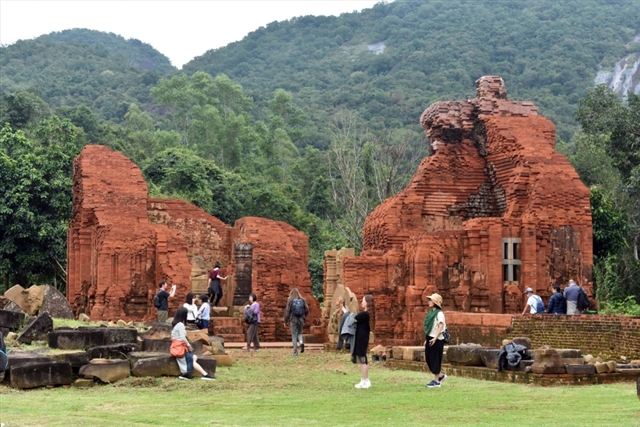
Culture as the core foundation
Resolution No. 26-NQ/TW marks a turning point by reaffirming tourism as a growth driver and establishing its position within the national economic structure.
Speaking at a national conference on September 3, Deputy Prime Minister Phạm Thị Thanh Trà said changing tourism trends and increasingly fierce competition among destinations required flexible responses and a comprehensive, sustainable strategy.
To support the goal of double-digit economic growth and the country’s two centenary goals, tourism must make breakthroughs, create spillover effects, unlock resources and drive other sectors.
“The core issue is to make fundamental changes to our thinking, approach and methods, with the focus on shifting the tourism growth model and governance methods from quantity to quality, thereby increasing added value for the economy,” she said.
Resolution No. 26-NQ/TW identifies five breakthrough viewpoints.
First, tourism must genuinely become a spearhead economic sector and new growth driver, contributing to double-digit growth, with culture as its core foundation and national identity and quality experiences as competitive advantages, supported by science and technology, innovation and digital transformation.
Second, tourism should be developed as an integrated economic ecosystem that drives other sectors while ensuring sustainable economic, cultural, social and environmental development, and strengthening cultural diplomacy and international integration.
Third, the sector must shift from quantity-driven development towards quality, smart, green and innovative growth, improving products and services, human resources, employment and social welfare.
Fourth, tourism governance must be modernised, with data-driven management linked to spatial planning and the preservation and promotion of cultural values and heritage.
Fifth, the resolution identifies stakeholders and mechanisms for mobilising resources.
Tourism development is the responsibility of the entire political system; businesses are the pioneering force; and people are both participants and beneficiaries.
Greater inter-sectoral and regional connectivity is required, alongside effective use of domestic and international resources.
Target of tourism contributing 14-15 per cent of GDP by 2045.
Resolution No. 26-NQ/TW sets a target for tourism to contribute directly 10-12 per cent of GDP by 2030, welcome 45-50 million international visitors and serve 160 million domestic tourists, with total tourism receipts reaching US$80-90 billion.
It aims to establish three tourism growth poles, including Hà Nội, HCM City and Đà Nẵng, together with 10 key tourism centres and 20 national tourism areas.
It also targets 15 internationally competitive tourism corporations and groups, while creating around 2.3 million direct and 3.5 million indirect jobs.
By 2045, tourism is expected to directly contribute 14-15 per cent of GDP, welcome 70 million international visitors and place Việt Nam among the world’s top 30 countries in tourism competitiveness.
The country is envisioned as an attractive, high-quality, world-class destination with a strong Vietnamese identity.
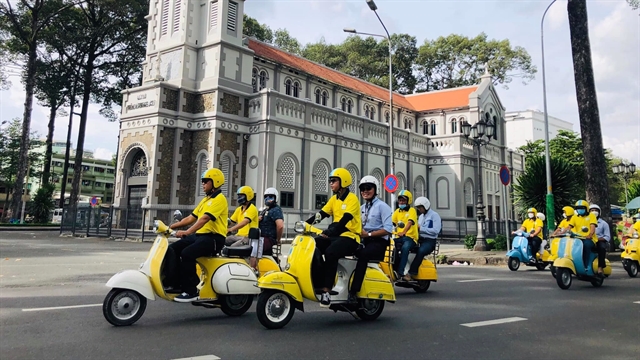
To achieve these goals, the resolution sets out eight groups of tasks and solutions.
The first and most important is to renew thinking and raise awareness and responsibility for tourism development.
This includes positioning tourism as an integrated economic sector within the national growth model; shifting from quantity and simple resource exploitation towards high-quality, efficient, sustainable and high-added-value development; moving from fragmented management to tourism ecosystem governance; and integrating tourism objectives into socio-economic and cultural strategies and plans.
Institutions and policies must also be improved, while resources are mobilised through three priorities: developing synchronised infrastructure and competitive tourism centres; developing high-quality markets and products to improve economic efficiency; and strengthening promotion and advertising to enhance the Vietnamese tourism brand.
Other priorities include developing human resources, businesses and tourism communities; accelerating science and technology, innovation, digital transformation and smart tourism; and renewing governance methods to create green, smart, safe and sustainable destinations.
Deputy Prime Minister Phạm Thị Thanh Trà said the eight groups of tasks and solutions represented a comprehensive renewal of tourism development thinking and methods: institutions must pave the way, resources provide the driving force, innovation and digital transformation create breakthroughs, while culture, people, nature and Việt Nam’s distinctive qualities provide its identity and competitive advantages.
At the September 3 conference, General Secretary and State President Tô Lâm stressed that implementation must move beyond studying and disseminating resolutions.
Their value must be demonstrated through practical changes, with each Party committee, agency and locality having clear tasks, responsibilities, authority, resources, deadlines and outcomes.
Tourism development, he said, must be placed within the broader national development strategy and regional economic space, becoming a new growth driver and enhancing Việt Nam’s soft power.
The sector should operate as an integrated, inter-sectoral and inter-regional economic ecosystem.
Bottlenecks in institutions, visas, infrastructure, destination management, human resources, data and tourism promotion must be removed, with greater attention to high-spending and long-stay visitors.
Regional connectivity should generate distinctive products, shared brands and substantive value chains, while businesses serve as the pioneering force and people remain central stakeholders.
Heritage, identity and the environment must not be sacrificed for short-term growth.
Resolution No. 26-NQ/TW therefore opens a new development vision for Vietnamese tourism, with higher ambitions, a more comprehensive approach and breakthrough solutions.
More importantly, it defines tourism as an integrated economic ecosystem requiring the engagement of the entire political system.
Entering a new era of development, the sector is expected to continue driving economic growth, strengthening national competitiveness and contributing to the aspiration of building a strong and prosperous Việt Nam. — VNS
