Weather:
- Ha Noi 28oC
- Da Nang 28oC
- Ho Chi Minh 28oC
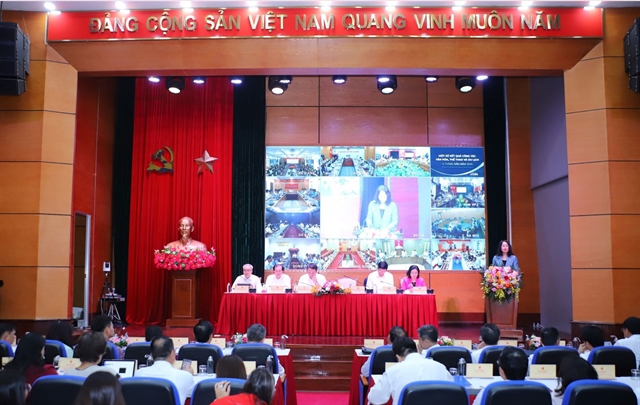
HÀ NỘI — The tourism sector will implement a series of key tasks and solutions in the last six months of 2026 to realise the goal of making tourism a leading economic industry in the new development era.
According to a report released at a conference held recently by the Ministry of Culture, Sports and Tourism (MoCST), in the last six months of the year, the sector aims to continuously carry out tasks and solutions to achieve its growth targets; accelerate the implementation of the project to develop tourism into a key economic sector; improve the effectiveness of promotion and marketing; develop a digital tourism ecosystem; and effectively exploit tourism products and markets, contributing to socio-economic growth according to the Government's goals.
It will prioritise perfecting institutions, promoting administrative reform, decentralisation and delegation of authority, developing science and technology, digital transformation, building a database system and identifying strategic technology products for each field.
Speaking at the conference, Member of the Central Committee of the Communist Party of Việt Nam and MoCST Minister Lâm Thị Phương Thanh emphasised that the culture, sports, tourism sector's position, role, and contribution to achieving the national double-digit growth targets are becoming 'increasingly evident'.
The MoCST minister stated that in the future, the Politburo will give opinions on a project to develop tourism into a key economic industry.
The sector will need to proactively implement it immediately after approval, focusing on restructuring to shift from quantitative to qualitative development.
Thanh requested the acceleration of operations with a focus on restructuring, shifting from a quantitative to a qualitative direction to become a leading economic sector in the new era.
It should also concentrate on developing high-quality, green, smart, and innovative tourism; taking culture as the foundation, identity and quality of experience as a competitive advantage; and using customer satisfaction and return rates as drivers of development, she said.
According to Thanh, social resources, especially the business community, should be simultaneously mobilised to participate in tourism development.
The sector should accelerate digital transformation, building databases and digital platforms to serve state management, promotion, and development of destinations.
In the first six months of the year, tourism continued to be a bright spot with Việt Nam welcoming nearly 12.3 million international visitors, an increase of nearly 15 per cent compared to the same period last year and reaching 49.2 per cent of the yearly plan. Total revenue from tourism is estimated at VNĐ569 trillion, an increase of 9.8 per cent.
Alongside a strive to fulfil growth targets, the tourism sector continues to refine its development mechanisms and policies.
Digital transformation continues to attract attention with the issuance of a plan for building a 'data architecture framework' for the tourism industry.
According to the report, building a unified database aims to improve the efficiency of state management, strengthen connections between management agencies, localities and businesses, and support the development of tourism services on digital platforms.
The sector will continue to innovate its promotional activities, strengthen regional linkages, develop new products, and improve service quality to meet the increasingly diverse needs of domestic and international tourists.
Tourism businesses contribution
Also speaking at the conference, Vice President of the Việt Nam Tourism Association Đỗ Thị Hồng Xoan stated that businesses are the direct force in transforming tourism development policies into products, services and economic value.
"For the tourism industry to effectively contribute to the country's double-digit growth target, the role of the business community is particularly important," she said.
According to the association official, businesses are contributing to growth in four main aspects of creating jobs and budget revenue; developing products, improving destination competitiveness; promoting Việt Nam's image in the world market; at the same time, enhancing digital transformation, green transformation and sustainable business model innovation.
To make a 'real contribution' to economic growth, tourism needs to shift from increasing quantity to improving quality, added value and pervasiveness.
The goal is not only to increase the number of visitors but also to extend the stay duration, increase spending, improve service quality and promote related industries such as aviation, commerce, culture, agriculture and the night economy.
Xoan affirmed that the double-digit growth scenario is not only a 'requirement for speeding', but also for the quality of development. Vietnamese tourism has sufficient resources, a sufficient market, and sufficient ambition, and is currently having tremendous opportunities.
The remaining issue is to mobilise more social resources, create more favourable conditions for businesses, and reorganise products towards a more professional, greener, more digitised, and higher added value", said the official. — VNS
