Weather:
- Ha Noi 29oC
- Da Nang 29oC
- Ho Chi Minh 27oC
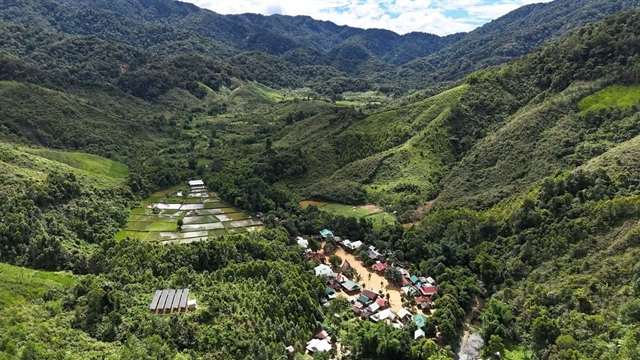
ĐÀ NẴNG In the heart of the Saola Conservation Reserve in central Việt Nam, A’ur Village, a remote community deep in the primary forests of the vast Trường Sơn mountain range, has emerged as a destination for visitors to experience the unique culture of the Cơ Tu ethnic group.
The village in A Vương Commune, 120km west of downtown Đà Nẵng, is accessible only via a 12km hiking route through dense jungle from the commune's administrative centre.
Traditionally, the Cơ Tu community in the village has relied largely on gathering forest products, growing rice and raising livestock for its livelihood.
The villagers have preserved much of their indigenous culture and traditional way of life, maintaining a close relationship with nature despite the changes brought by modern life.
A Lăng Phích, a member of the newly established Trường Sơn Agriculture Tourism Service Cooperative, said generations of villagers had inherited their forest-based way of life from their ancestors, who had regarded the forest as a safe shelter for generations.
“It’s a long tradition. The Cơ Tu community earns a living from the forest, and we believe that the god of the forest protects us from danger. We farm on 200ha, growing food crops and raising livestock, while also gathering forest products. The forest is our home and holds spiritual significance for all the Cơ Tu in the region's mountainous areas," Phích explained.
“The village started offering tourism services in 2017, but an ecotourism programme has recently been introduced for international visitors to explore the well-preserved culture and lifestyle of the Cơ Tu people,” he said.
The Cơ Tu man said all villagers take part in providing tourism services, including guiding, homestay accommodation, cooking, traditional performances and guided hikes, as well as farming and handicraft experiences.
Forest traditions
A Tinh Del, who joined the cooperative as a guide and porter for jungle trekking tours, said that tourists have to trek about 12km along the main route to reach the village from A Vương Commune, as the remote settlement is inaccessible to cars and motorbikes
“It takes five to six hours to trek along the jungle path from the commune centre to the village. Villagers regularly go to the market at the commune centre to exchange forest products and livestock for consumer goods,” Del said.
“We collect forest products to make a living, but we are careful not to over-exploit these resources, out of respect for the god of the forest. Traditionally, the Cơ Tu people have protected forests under strict rules passed down from our ancestors.”
Unique customs
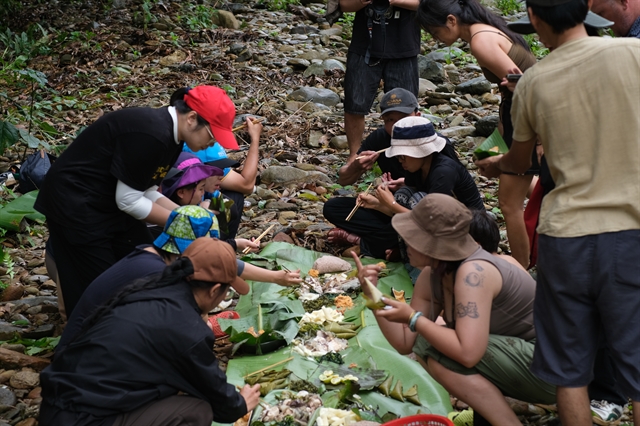
A'ur villagers welcome visitors with traditional hospitality and communal meals. Resident A Rất Thị Nghi said each family contributes food or a dish to welcome tourists.
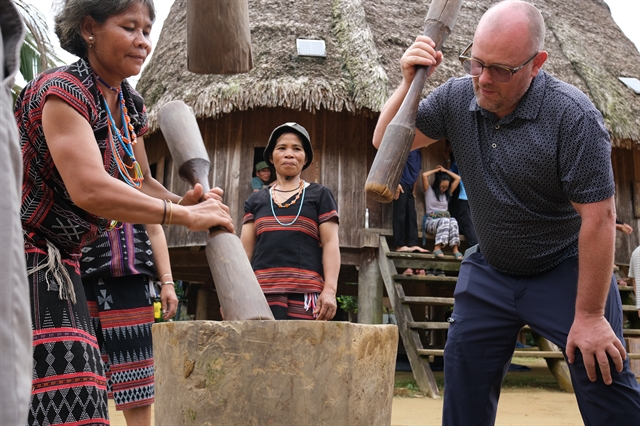
“We all share the hosting duties. Villagers bring rice, chicken, vegetables, fish or herbal wine to prepare meals for guests. All the families contribute a pig to provide meals for a group of 20 tourists, and two or three visitors will be accommodated by each host family in the village,” Nghi said.
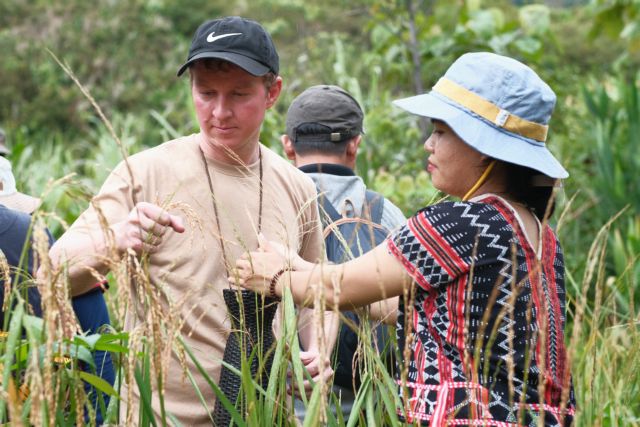
“Visitors can work on farms or trek through the jungle to gather forest products with villagers if they stay for a few days. It’s an opportunity for them to understand how we live and work with the forest and how we respect the god of the forest,” she explained.
Nghi added: “I’m member of the handicraft group and also work as a local guide in the village. Handloom weaving is a traditional craft of the Cơ Tu people, and we also make handicrafts from screw pine leaves gathered in the jungle."
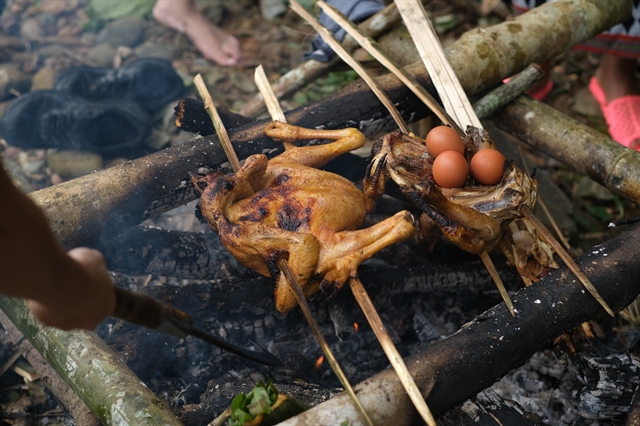
Villagers also offer trekking services, during which tourists can enjoy barbecues in the jungle, swimming in streams and gathering forest products, she said. Livestock are kept away from the houses to maintain a clean living environment.
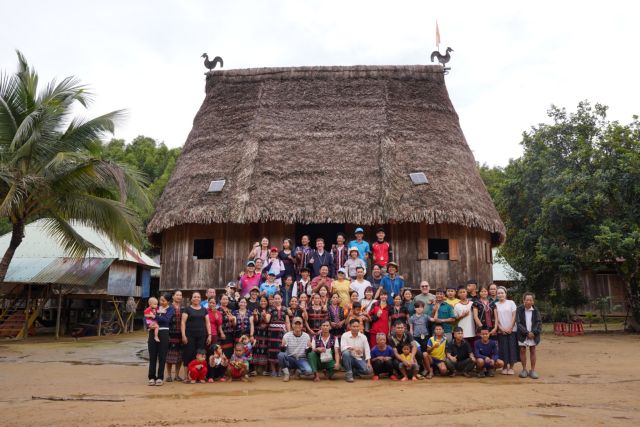
According to Nghi, guests are welcomed at the village gươl, a long communal stilt house of the Cơ Tu people that serves as the heart and soul of the community. The gươl is the main venue for all village gatherings.
Greener tourism
Cooperative member Nguyễn Văn Nhân said more investment is planned to develop quality ecotourism services and accommodation in line with green standards.
Nhân said funds will be raised within the community to provide English courses and training in hospitality, cuisine and waste management to improve villagers' skills.
Travel agencies have agreed to work with residents to boost tourism and experiences of indigenous culture at the village, he noted.

Visitors to the village can leave modern life behind and experience life close to nature.
Traditional farming practices and methods of forest protection passed down through generations in the Cơ Tu community are among the attractions for tourists seeking fresh air, unspoilt surroundings and unique customs in A’ur Village, Nhân said.
“Please do not discard plastic gags in the village, as the community has launched a ‘Say No to Plastic’ campaign to conserve nature and our lifestyle,” he added. — VNS
