Weather:
- Ha Noi 12oC
- Da Nang 24oC
- Ho Chi Minh 31oC
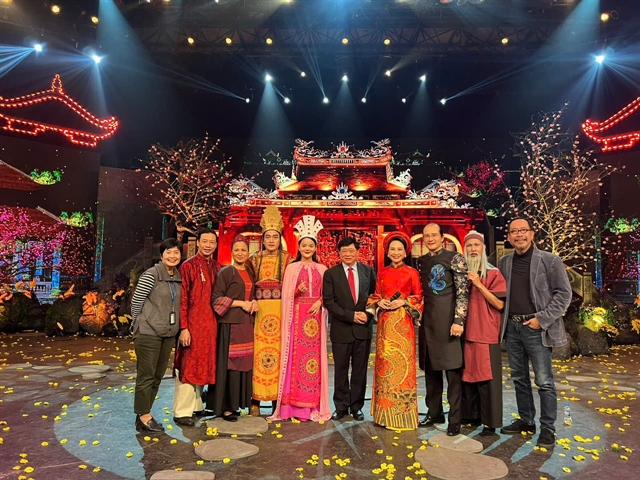
After the historic merger of Việt Nam’s three major traditional theatres under one roof and renamed the Vietnam National Traditional Theatre, People’s Artist Lê Tuấn Cường, Deputy Director in charge, now carries the challenge of redefining how tuồng, chèo and cải lương survive and thrive in a fast-changing cultural landscape. In this interview with The Weekend, he speaks candidly about reform, artistic discipline and the urgency of reconnecting traditional performance with contemporary audiences.
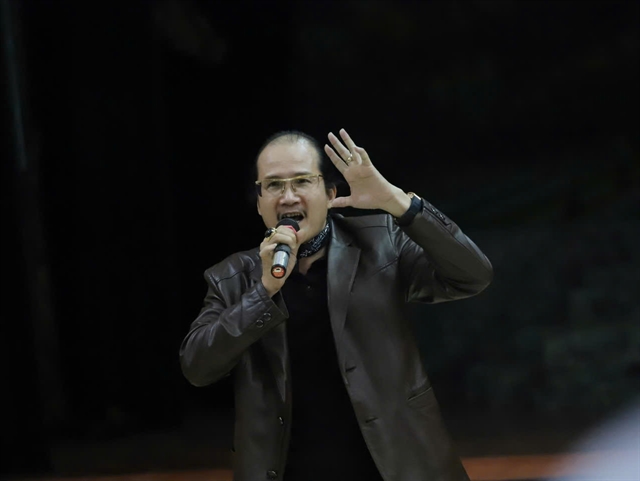
The Weekend: Could you explain why all three traditional theatres were merged into one?
Lê Tuấn Cường: The purpose of this government-led merger was to create an institution that is more concise, stronger and more compact. This aligns with the current policy direction, which encourages public institutions to streamline, strengthen and improve efficiency.
I believe this move came at the right time and was the right decision. It pushes all of us artists out of our comfort zones. As society changes, we must also change accordingly.
You can no longer function as a passive employee anymore. You have to work harder. You cannot just sit and wait for your salary to be wired into your account.
Now you're driven to polish your skills and learn new approaches. If you cannot keep up with the developing pace, you'll be left behind. As a performing artist, you must enrich your knowledge, hone your skills and performance as well as maintain your professional appearance as best as possible.
In the past, there were cases where some artists made little or no progress over 10 years, yet no one could dismiss them. They remained in their positions, continued receiving pay, but were unwilling to change.
The Weekend: So greater teamwork is one of the main goals moving forward?
Lê Tuấn Cường: If we want better development, we must think of new ways to create fresh works and maintain and feed artistic passion.
When our new leadership board was appointed, it faced the difficult task of letting weaker performers go. This was not easy. However, we had to follow government requirements, citing relevant regulations and laws, to move the process forward.
We want everyone in the theatre to understand why they are here, what their responsibilities are, and what is expected of them – and to fulfil those responsibilities well. From leadership to security staff, everyone must contribute. Only then can we grow together and become stronger.
The Weekend: How many productions will the theatre present each year, and how does the new system work?
Lê Tuấn Cường: Before the merger, each theatre was required to produce two works a year. Now, that means six productions annually.
Each troupe will stage one classic opera to preserve age-old traditions, and one new work that uses traditional tools, techniques and storylines to tell contemporary stories.
Preservation and development are a wholesome pair that always go well together. On one hand, we must preserve our traditional pieces, with music, dances, singing and acting with strict traditional rules and regulations. On the other, we have to write new works using time-tested methods, techniques and tunes inherited from traditions, but presented in ways that appeal to new viewers and encourage them to come to the theatre.
Since I took on this role, almost every night has sold out. It's very encouraging for us. It signals that we are providing what our audiences want. It means the traditional arts we're preserving today not only maintain the essence of our culture, but also develop, and the spectators can see it.
The Weekend: Where can viewers see these plays, and how many viewings are there?
Lê Tuấn Cường: Hồng Hà Theatre on Đường Thành Street is dedicated to tuồng, while Kim Mã Chèo Theatre is located on Kim Mã Street. Although we are now under one institutional roof, audiences can attend performances at both venues.
Each theatre is required to stage between 100-120 shows a year. Audience numbers are recorded and reported to the Minister of Culture.
The Weekend: Your background is deeply rooted in chèo. How challenging is it to manage three troupes and represent them effectively?
Lê Tuấn Cường: Traditional performing arts share one common root – they are part of the cultural flow of Việt Nam. I've completed doctoral studies in history and theory of performing arts, and I have directed tuồng, chèo and cải lương operas.
The manager needs to steer a leading theatre in the right direction. Orientation makes the right move for everyone to follow and you need to know your craft well.
I have behind me a few dozen years of performing my art. Over the years, I've come to dive deeply into traditional arts. My mother's side of the family had tuồng and cải lương artists. I've studied the fundamental rules of each genre, which gives me confidence in evaluating new works and giving professional judgments.
When we all come under one roof, we are siblings in a family. My policy is that bonuses must be fair, and leadership must treat all artists equally.
We need to ensure artists get equal treatment and they are paid according to their performance and efforts, regardless of genre. There should be no hierarchy among tuồng, chèo and cải lương. We are one big family. — VNS
