Weather:
- Ha Noi 30oC
- Da Nang 29oC
- Ho Chi Minh 28oC
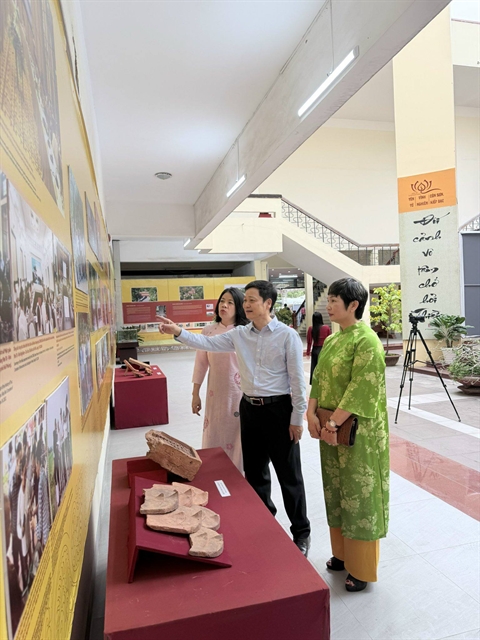
BẮC NINH — Visitors can now step into history and spirituality as many rare artefacts and documents about Trúc Lâm Buddhism go on display at Bắc Ninh Museum 1 in Bắc Ninh Province. The local Department of Culture, Sports and Tourism has opened a thematic exhibition highlighting the world cultural heritage of the Yên Tử - Vĩnh Nghiêm - Côn Sơn - Kiếp Bạc complex of historical sites and scenic spots.
Department Deputy Director Trương Quang Hải said that Việt Nam was a country with a rich history spanning thousands of years, boasting a wealth of tangible and intangible cultural heritage. Among these, the Yên Tử - Vĩnh Nghiêm - Côn Sơn - Kiếp Bạc complex is a particularly significant heritage site, possessing profound historical, cultural and spiritual value, not only for the localities of Quảng Ninh, Bắc Ninh and Hải Phòng but also as a source of national pride.
The heritage complex spans many ancient lands, closely linked to the process of nation-building and national defence. It also embodies the typical values of the Trần Dynasty, a golden age in the nation's history.
At the exhibition, visitors will have opportunities to view and read about 250 images, documents and artefacts that exemplify the cultural values of the renowned pure Vietnamese Zen sect. This activity is part of a series of provincial key events, including the announcement of the Yên Tử - Vĩnh Nghiêm - Côn Sơn - Kiếp Bạc complex as a World Cultural Heritage site and the inauguration of the Returning to Heritage - 2026 Festival.
All artefactsand documents tell the story of the formation and development of Trúc Lâm Buddhism, founded by Buddhist Emperor Trần Nhân Tông. People can learn more about the outstanding global values of culture, religion and landscape of the heritage sites, as well as the more than 13-year journey of building the dossier to submit to UNESCO.
The exhibition is divided into several sections: Yên Tử, the centre of Trúc Lâm Buddhism; Vĩnh Nghiêm Pagoda and Bổ Đà Pagoda, centres for training monks and preserving Buddhist woodblock prints recognised by UNESCO as Documentary Heritage under the Memory of the World Programme; and Côn Sơn and Kiếp Bạc, a complex of historical sites associated with prominent figures such as Trần Hưng Đạo and Nguyễn Trãi along with related landmarks.
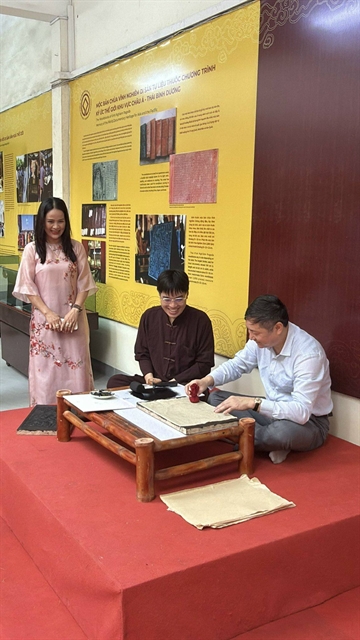
In addition to the display, visitors can take part in a range of experiential activities such as woodblock printing, which helps them gain a deeper understanding and appreciation of the heritage’s value.
Trúc Lâm Buddhism, established in 1299 during the Trần Dynasty, unified religions and became Đại Việt's national religion, emphasising active engagement and national unity.
The Buddhism is associated with the story of the Three Patriarchs of Trúc Lâm, namely first Patriarch Trần Nhân Tông, second Patriarch Pháp Loa and third Patriarch Huyền Quang, as well as many records and studies about the lives and contributions of the three in founding and bringing the Trúc Lâm Zen sect to its peak in Đại Việt's Buddhist life.
The exhibition will remain open to the public until March 31 at No. 6, Nguyễn Văn Cừ Street, Bắc Giang Ward. — VNS
