Weather:
- Ha Noi 30oC
- Da Nang 25oC
- Ho Chi Minh 31oC
Nguyễn Sỹ Thủy
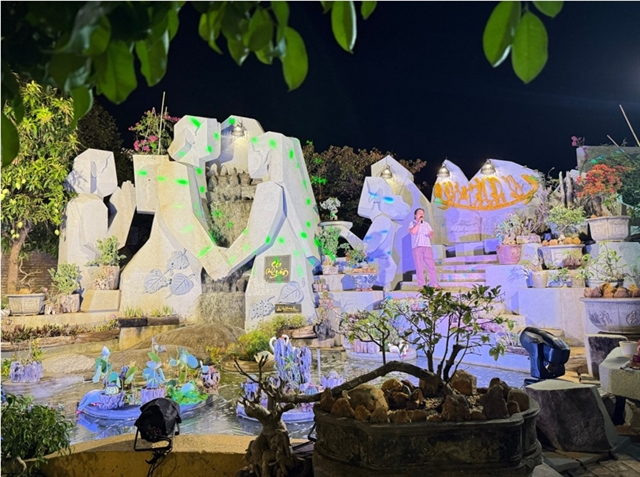
A sculptural artwork has been completed in Côn Đảo, offering visitors an immersive cultural and artistic experience on an island once dubbed 'hell on earth' during wartime.
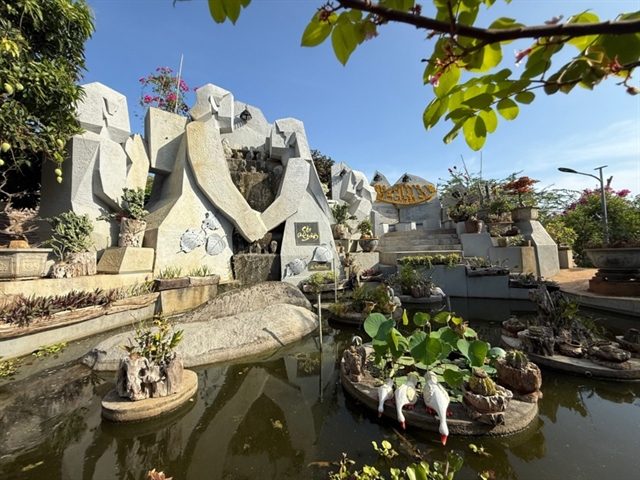
Located in Garden X in the Côn Đảo Special Economic Zone, Cội Nguồn (Origin) is a monumental sculptural installation measuring 12 metres wide, six metres high and six metres deep.
Designed and directly constructed by sculptor Ngô Xuân Lai, the work is currently open to visitors free of charge and also serves as an intimate venue for small-scale cultural events.
The piece stands on a stretch of Côn Đảo’s exposed, arid and unyielding rocky ground. Rather than concealing or altering the terrain, the design embraces it: large, solid boulders – so dense that vegetation can scarcely take root – are preserved as the very foundation of the structure.
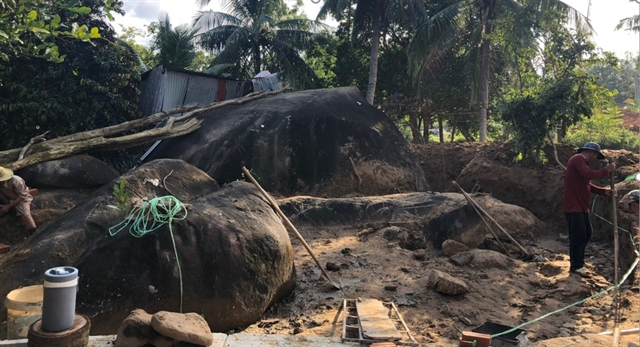
Before construction began, the site was almost entirely devoid of soil, unable to retain moisture, and offered virtually no conditions for life to develop – only bare rock. These same massive, resilient stones now remain, anchoring the entire work at its point of origin.
The transformation does not lie in simply greening the surface. Instead, Origin creates the conditions for life to emerge: water is channeled in, pockets of moisture are formed and layers of substrate gradually accumulate. From there, plants begin to take root.
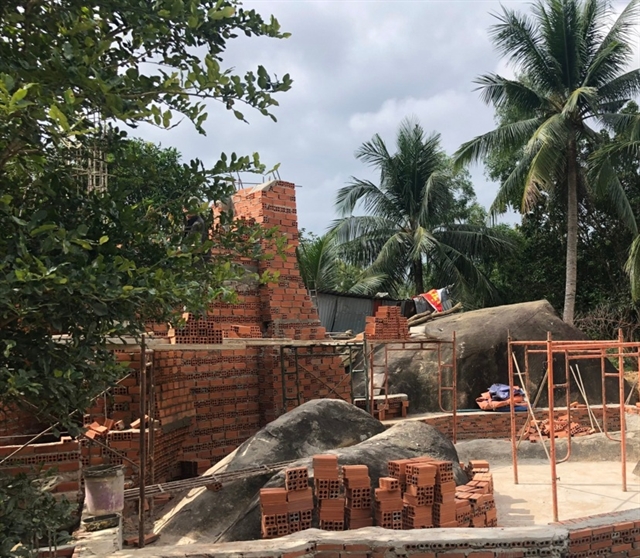
An ecosystem slowly develops atop the rock, neither dense nor overwhelming, yet enough to soften the entire perception of what was once an arid, unyielding landscape.
The life within Origin is not introduced from the outside but nurtured from within the structure itself. As one moves around it, the image of a boat gradually emerges – not head-on, but through shifting, oblique perspectives.
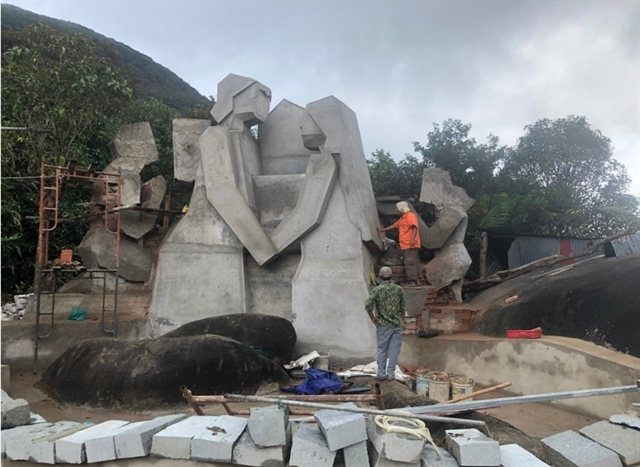
The main form faces the sea, open and outward-looking, yet it remains anchored to the land behind it. At the base of the work lies a still body of water, shaped like a leaf, quietly reflecting the structure above.
From above, water flows down into a small cascade – continuous, unhurried, not loud, yet enough to create a rhythm for the space. This pool is not merely a visual feature. It sustains aquatic life, provides irrigation for the plants, and at the same time serves as a water reserve during the dry season – an understated yet essential layer of the project’s infrastructure. That flow does more than organise the structure; it also evokes a familiar movement: water always finds its way back to where it began.
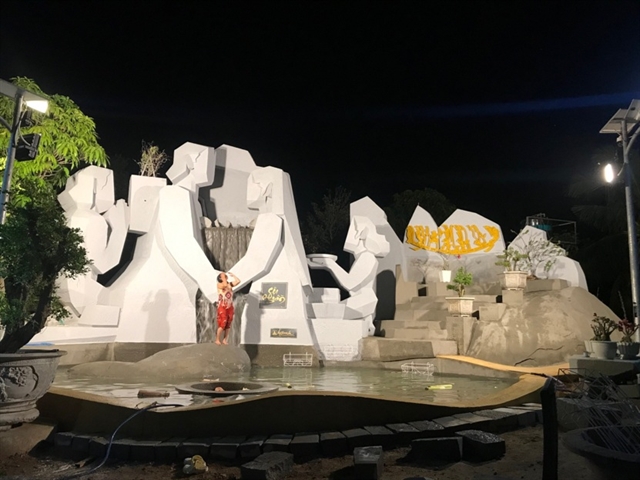
Within that space, leaf-like forms appear as a gentle reminder: once they leave the branch, leaves too return to the earth. The sound of water does not overwhelm; it is just enough to fill the silence.
The longer one lingers, the more it becomes clear that the structure is not meant to be fully grasped at a glance. There is no single vantage point from which the whole can be seen; instead, the space unfolds in layers – stone plinths, transitional thresholds, the water’s edge, and pathways.
Old bricks, repurposed and arranged in a ring around the pool, bear the marks of time. No longer relics, they become a ground for people to step on – a place where the past continues to be present.
At the centre, the image of a family stands quietly. Neither ostentatious nor imposing, it is enough to create a point of emotional anchorage – something closer to everyday life than to a symbol shaped by the spirit of the age.
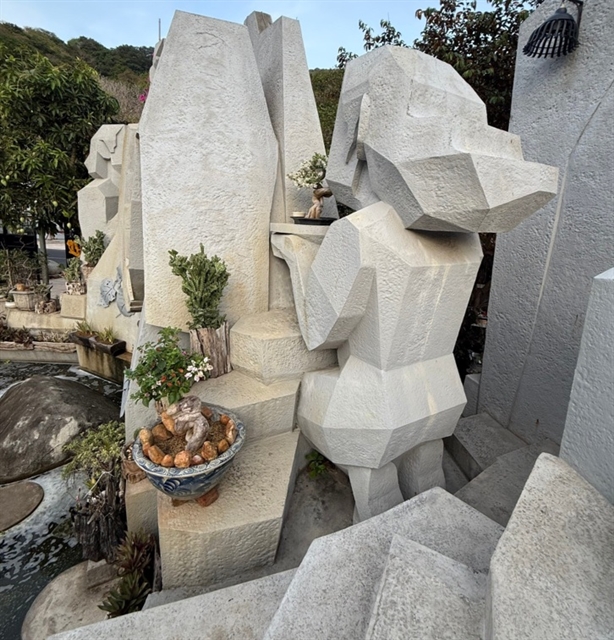
Origin depicts a family – parents, a daughter offering flowers, and a son in a gesture of reverence – recreating the Vietnamese tradition of honouring one’s parents.
This composition helps shape a space that is both rooted in continuity and open in spirit, reflecting an effort to carry forward and sustain Vietnamese cultural values in the contemporary context of Côn Đảo. VNS