Weather:
- Ha Noi 26oC
- Da Nang 30oC
- Ho Chi Minh 28oC

NINH BÌNH — As midnight approaches on the 14th day of the first lunar month, incense smoke rises gently above the ancient roofs of the Special National Relic Site of Trần Temple – Phổ Minh Pagoda.
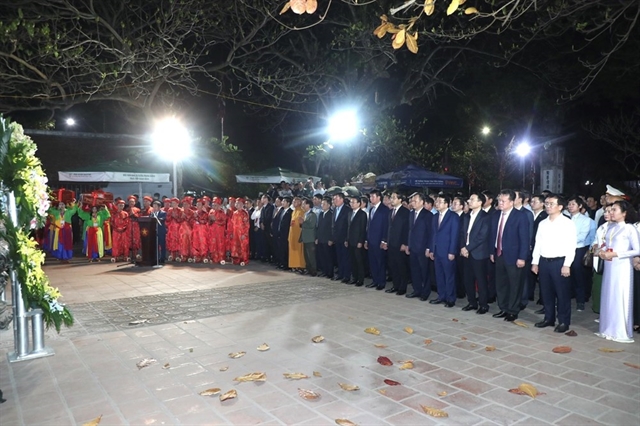
Under ceremonial lights and the glow of torches, elders, officials and pilgrims stand in solemn anticipation of the sacred moment – the Trần Temple Seal Opening Ceremony.
The ritual traces its roots to the ancestral land of the Trần clan in Tức Mặc Palace, where the Trần Dynasty rose to power and ruled Đại Việt from 1225 to 1400. Nearly two centuries of Trần rule marked a flourishing era in Vietnamese history, remembered for strong governance, cultural development and legendary victories defending national independence.
Historical records note that Tức Mặc Palace was built in 1239 and later renamed Trùng Quang Palace, while the administrative unit of Tức Mặc was elevated to Thiên Trường Prefecture.
It became a spiritual and political centre where retired emperors resided and kings returned to pay tribute to their ancestors.
Today, that sacred ground becomes the heart of a deeply symbolic spring festival.
Recognised as a National Intangible Cultural Heritage, the Trần Temple Seal Opening Ceremony takes place annually on the night of the 14th and early hours of the 15th day of the first lunar month.
The ritual symbolises the reopening of royal administration after Tết (the lunar new year festival), reflecting responsibility, discipline and moral governance.
More than a spiritual event, the ceremony carries a profound humanistic message: a prayer for national peace and prosperity, and for every household to receive blessings embodied in the seal’s inscription Tích phúc vô cương (Boundless accumulation of virtue).
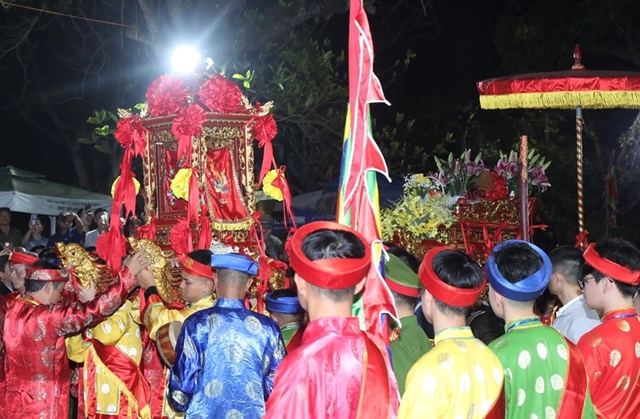
The ceremony unfolds with dignified precision. Delegates offer incense and candles before the ancestral altar, their faces illuminated by flickering flames. Young men from the village, carefully selected for the honour, carry the palanquin bearing the sacred seal in a colourful midnight procession, dressed in traditional garments of red, blue and gold.
As soon as the seal is officially opened, thousands of people stream into the temple grounds. Many bow in silent prayer; others wait patiently to receive a stamped paper bearing the sacred imprint – not as a promise of material gain, but as a symbolic reminder to live and work with integrity, creativity and dedication in the year ahead.
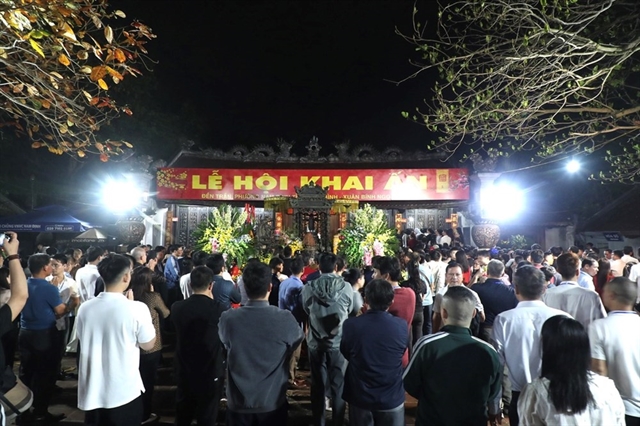
In contemporary society, the festival remains a living lesson in history and ethics. It reflects the Vietnamese tradition of remembering one’s roots, and offers an opportunity for generations to express gratitude to their ancestors and honour the enduring legacy of the Trần Dynasty.
As dawn breaks over Thiên Trường Prefecture and the crowds gradually disperse, the incense lingers in the cool spring air. The sacred seal has been opened, but its message – of virtue, unity and aspiration – continues to resonate long after the ceremony ends. — VNS
