
Lidia Brito, UNESCO Assistant Director-General for Priority Africa and External Relations, praised Việt Nam’s contributions to education, science, culture and information, describing the 50-year partnership between Việt Nam and UNESCO as a sustained and increasingly substantive journey.
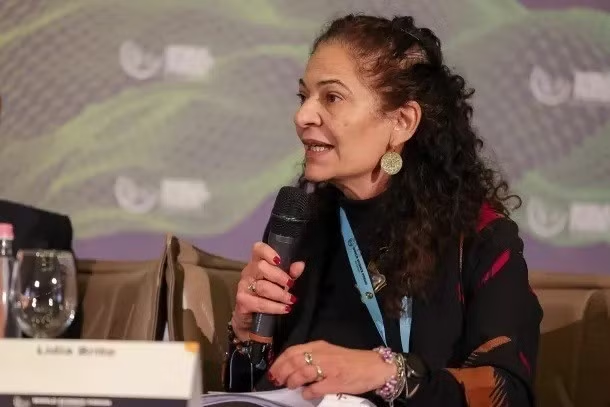
Lidia Brito, UNESCO Assistant Director-General for Priority Africa and External Relations. Photo courtesy of UNESCO
HÀ NỘI – Lidia Brito, UNESCO Assistant Director-General for Priority Africa and External Relations, expects Vietnam to continue playing a leading role in multilateral cooperation, particularly in implementing the International Decade of Culture for Sustainable Development for 2027-36.
In an interview with Vietnam News Agency correspondents in Paris, Brito praised Vietnam’s contributions to education, science, culture and information, describing the 50-year partnership between Việt Nam and UNESCO as a sustained and increasingly substantive journey.
Việt Nam joined UNESCO in 1976, shortly after national reunification, reflecting its commitment to multilateralism, education and culture as tools for national reconstruction and peacebuilding, she said.
The partnership has yielded significant results. Việt Nam currently has nine properties inscribed on the World Heritage List, 17 intangible cultural heritage elements recognised by UNESCO and four cities in its Creative Cities Network.
In education, the country has progressed from widespread literacy campaigns to universal primary education and internationally recognised learning outcomes. It has also made strides in sustainable development, innovation, digital transformation and access to information.
Brito particularly highlighted Việt Nam’s increasingly active engagement in UNESCO's multilateral mechanisms. The country served on the organisation's Executive Board from 2021 to 2025, participated in the intergovernmental committees of the 2003 and 2005 Conventions, and became a member of the World Heritage Committee.
Việt Nam has not only actively participated in UNESCO activities but also proposed initiatives with significance beyond its national borders, she noted.
A prominent example is its initiative to launch the International Decade of Culture for Sustainable Development for 2027-36, demonstrating the country's leadership in mobilising international support and promoting culture as a driver of sustainable development.
The challenge now is to translate recognition of culture's role into concrete policies and resources. Over the coming decade, countries need to increase investment in culture, support cultural and creative industries, safeguard cultural diversity and integrate culture more systematically into development strategies.
Cultural leadership
UNESCO expects Vietnam to remain a driving force in implementing the initiative through experience-sharing, dialogue and expanded international cooperation. The organisation will work with member states to develop an action plan, while Vietnam could lead by example through greater domestic investment and the mobilisation of partners, including the private sector, Brito said.
On heritage preservation, she cited Huế, Hội An, Hạ Long Bay – Cát Bà Archipelago and the Tràng An Landscape Complex as examples of combining conservation with economic activities and local development. Tràng An is particularly noteworthy for its emphasis on community participation and sustainable tourism.
She also praised Việt Nam's efforts to share its experience internationally. The recent Asia-Pacific Dialogue on Heritage and Authenticity, held in Hà Nội and Ninh Bình, adopted the Hà Nội Document, bringing regional and Global South perspectives into discussions on heritage authenticity and the future of the World Heritage Convention.
Heritage, she stressed, should remain a living part of society, contributing to cultural identity, social cohesion and community development while being passed on to future generations.
Việt Nam is also an important partner in South-South cooperation, particularly with African countries, one of UNESCO's global priorities. Its experience in education, heritage conservation and local development has attracted growing interest from African nations.
Looking ahead, Brito said UNESCO is promoting its “UNESCO for the people” approach, focusing on tangible benefits in daily life. In Việt Nam, this could include training teachers in digital technologies and AI ethics, developing sustainable livelihoods in biosphere reserves, preserving ethnic minority languages and knowledge, and helping young journalists identify misinformation.
UNESCO's partnership with Việt Nam has also proved valuable during difficult times. Following storms in 2024 and 2025, the organisation mobilised more than 830,000 USD to help protect schools and heritage sites and support recovery and disaster resilience efforts.
The next phase of cooperation is expected to be formalised through a 2026-30 agreement between the Vietnamese Government and UNESCO, scheduled for signing during UNESCO Director-General Khaled El-Enany's visit to Việt Nam in December, along with a UNESCO country strategy for Việt Nam for 2027-31.
On the occasion of the 50th anniversary of Vietnam's cooperation with UNESCO, Brito encouraged young Vietnamese people to take pride in their national heritage while remaining open to the world and advances in science and technology.
She stressed that young people should use modern tools to learn, create and share information responsibly, adding that UNESCO will continue creating opportunities for them to actively contribute to the International Decade of Culture for Sustainable Development and shape the next 50 years of the partnership. VNA/VNS