Weather:
- Ha Noi 25oC
- Da Nang 26oC
- Ho Chi Minh 26oC
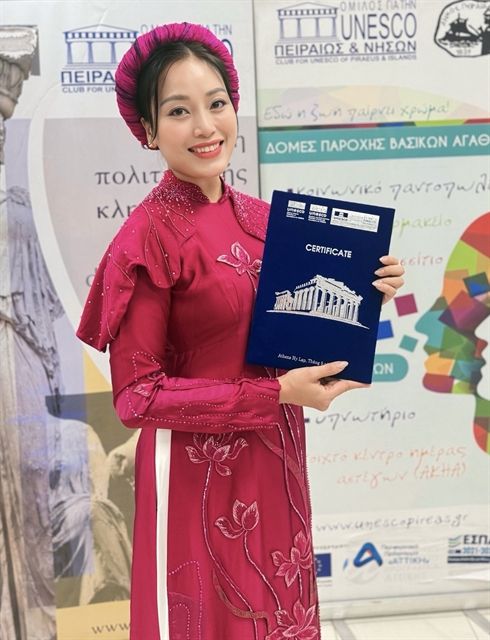
Vietnamese singer Huyền Trang recently received the 2026 Pioneering Artist in Safeguarding and Promoting Folk Music Award from the UNESCO Associations Network in Athens, Greece.
Việt Nam News reporter Nguyễn Bình interviews Huyền Trang about the award and her career.
You have been recognised by UNESCO for your contribution to preserving, practising and promoting folk music. What does this recognition mean to you?
For me, it is a great honour, but above all, it recognises the dedication and commitment I have shown to the path I chose and have pursued over many years.
The title fills me with happiness and pride while also making me more aware of my responsibilities as an artist. My role is not only to preserve traditional musical values but also to find ways to keep them alive today and ensure they reach wider audiences in the future.
Many Vietnamese artists are working to preserve and promote traditional music. What do you think has set you apart and led to this recognition?
I consider myself fortunate to be among the many artists devoted to traditional music. Perhaps what has set me apart is my commitment to the path I chose when I took part in the Sao Mai Singing Contest in 2013 and have continued to follow ever since.
I always try to incorporate folk elements into my music in ways that resonate with contemporary life, while respecting their original beauty and spirit. For me, this recognition is not just a personal honour but also a source of encouragement and hope for the many artists working together to preserve and promote Việt Nam’s traditional music.
Could you tell about your trip to Greece to receive the award? Did it open up any opportunities for collaboration?
For me, the trip to Greece was not just about receiving the award but also an opportunity to introduce Vietnamese music and culture to international audiences. I had the chance to meet and interact with people from different backgrounds and see first-hand how music can connect people across language barriers.
Visiting ancient sites with histories spanning more than 4,000 years also gave me a deeper appreciation of how the Greeks respect and preserve their cultural heritage.
The meetings during the trip also sparked new ideas and opportunities for collaboration. I hope to develop future exchange projects bringing Vietnamese folk music together with artists and cultural influences from other countries, helping Vietnamese music reach a wider international audience.
You won the folk music category at the 2013 Sao Mai Singing Contest. This year’s winners will be announced on November 22. What can you share about your experience in the contest?
Sao Mai is the only nationwide singing contest in Việt Nam featuring three genres, chamber music, folk-inspired music and pop. Many well-known Vietnamese singers have emerged from the competition.
The Sao Mai Singing Contest was a very special milestone in my career. Winning in 2013 gave me a starting point, but more importantly, the contest taught me that an award marks the beginning of a long journey in which I must prove myself through dedication to my craft and the creation of genuinely valuable works.
First conceived as the National Television Singing Festival in 1997, Sao Mai has now been running for nearly 30 years. It remains a prestigious music competition that has discovered and nurtured many talented singers.
For me, each new season brings back a wealth of emotions and offers a chance to see new generations of artists take to the stage with their talent, confidence and love of music.
What do you think of the contestants’ efforts to bring a fresh interpretation to folk music this year?
I have noticed that, alongside familiar songs, the contestants have all made an effort to introduce fresh interpretations with a contemporary feel. This is encouraging, as folk music needs to be carried forward and developed to connect with today’s audiences.
However, I believe that no matter how much folk music evolves, it must retain its roots and distinctive identity. I hope the contestants will choose their songs carefully and find ways to give familiar pieces a fresh touch through their musical creativity and personal style.
With only around five minutes on stage, audiences may not always have enough time to fully appreciate entirely new works or arrangements that depart too radically from the originals. The key is to ensure that creativity is grounded in traditional values so that innovation does not come at the expense of the spirit of folk music.
How would you like to develop your career in the next chapter?
I want folk music to remain at the heart of my artistic journey while also creating more contemporary music. I hope to develop projects that blend traditional music with fresh influences, with greater investment in visual presentation and cultural storytelling, and gradually bring Vietnamese musical elements closer to international audiences.
After more than 13 years in the music industry, I no longer simply aspire to produce more music but to ensure that each release leaves a meaningful legacy. I hope that when audiences think of Huyền Trang, they will remember an artist who has remained committed to traditional music while striving to keep its values alive and relevant in contemporary life. — VNS
