Weather:
- Ha Noi 26oC
- Da Nang 25oC
- Ho Chi Minh 26oC
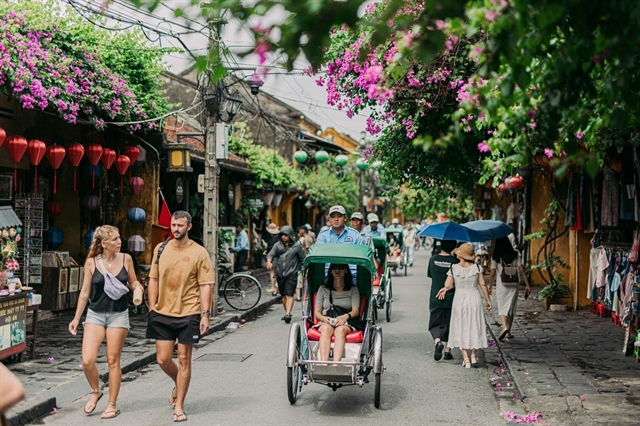
HÀ NỘI — Việt Nam and nine other countries are among the ten largest non-high-income T&T economies by direct T&T GDP, according to the World Economic Forum’s Travel & Tourism Development Index 2026.
The nine others are China, India, Indonesia, Malaysia, Thailand, the Philippines, Türkiye, Mexico and Brazil.
According to the report, together, these economies account for more than 28 per cent of global direct travel and tourism GDP, with their share projected to rise to 35 per cent by 2035.
"They therefore represent one of the most important sources of future tourism growth," the report said.
Looking back to 2019, these economies increased their average TTDI score by 4.7 per cent, compared with 2.9 per cent and 1.9 per cent for the overall index and the top 20, respectively.
Between 2024 and 2026 alone, these economies improved at a faster rate than the remaining 100 economies on 15 of the 17 TTDI pillars.
The WEF said since 2019, these economies have continued to strengthen their advantage in cultural resources while gradually narrowing the gap with advanced economies in terms of ICT readiness, safety and security, and air transport infrastructure.
This trend comes amid the Asia-Pacific region being the most improved region, with its average TTDI score increasing by 3.6 per cent between 2024 and 2026. Notably, seven out of the 10 most improved economies come from developing countries in South-East and South Asia.
Nonetheless, important gaps remain, the report pointed out. Tourist Services and Infrastructure represents by far the largest difference between these economies and the top 20, underscoring the need for greater investment in accommodation, visitor services and supporting infrastructure.
Below-average scores for the Business Environment and Human Resources and Labour Market pillars reflect common challenges, including limited access to finance, regulatory barriers and gaps in workforce capabilities.
Environmental Sustainability remains another challenge, underlying a growing risk to these economies’ rich tourism-generating natural resources.
The TTDI assesses 110 economies based on the conditions and policies that support sustainable tourism development and resilience to shocks, including transport infrastructure, tourist services, safety, cultural and natural resources, and sustainability-related factors. — VNA/VNS
