Weather:
- Ha Noi 34oC
- Da Nang 36oC
- Ho Chi Minh 31oC
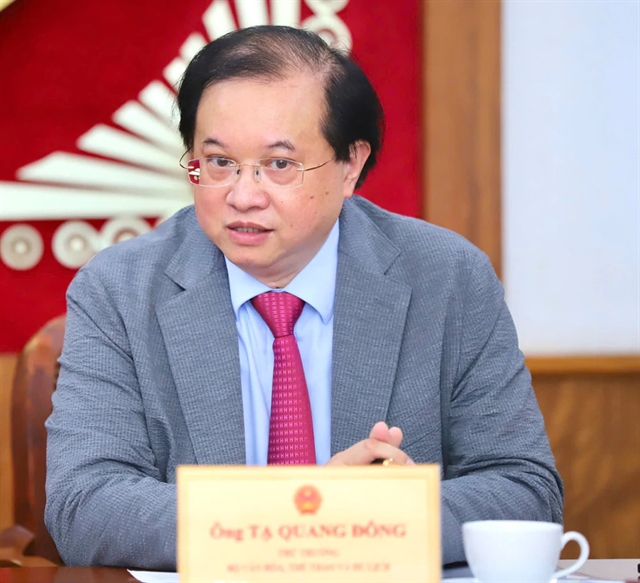
Việt Nam is working towards developing its first Photography City. The initiative follows the inclusion of four Vietnamese cities in UNESCO’s Creative Cities Network. Deputy Minister of Culture, Sports and Tourism Tạ Quang Đông shared his views on the proposal, its potential impact and the roadmap for its implementation.
Inner Sanctum: What is the current progress of the Photography City proposal?
Photography is one of the key sectors in Việt Nam’s strategy for developing the cultural industries. With its strong visual impact and broad public appeal, photography is not only an art form but also an effective way to document history and promote the image of the country.
It can contribute to socio-economic development, particularly tourism, the arts and other related industries.
The Ministry of Culture, Sports and Tourism, through the Department of Fine Arts, Photography and Exhibitions, is taking the first steps in developing the proposal. The initiative is being developed within UNESCO’s Creative Cities Network, under the field of Media Arts, which includes photography.
International experience shows that the Photography City model can be successful. Cities in countries such as France, Germany and Switzerland have attracted tourists as well as photographers and creative professionals.
Such cities can also host international workshops and seminars, creating opportunities for artists and professionals to work together and exchange ideas. At the same time, the model can encourage improvements to urban landscapes and the creation of new spaces for visual arts.
This is a direction that I believe Việt Nam’s major tourism destinations should consider more actively.
From the beginning, we have worked to involve UNESCO, photography associations, businesses, local authorities and respected artists from Việt Nam and abroad. Close cooperation among these groups will provide a foundation for the initial pilot activities.
Inner Sanctum: What could a Photography City mean for local communities and the wider economy?
The aim is to develop a city into a national photography centre, an international destination for photography and visual creativity, and a growth hub for the cultural industries.
Building a Photography City brand could create both economic and cultural benefits. It could attract investment and support accommodation, tourism and related services while creating conditions for photography businesses and other creative enterprises to grow.
The city could also use the brand to promote its culture and landscapes, strengthen tourism and expand international cooperation.
Over time, this could help build a more complete photography ecosystem involving artists, businesses, creative organisations and tourism services.
Inner Sanctum: What activities would be organised to attract visitors and the public?
A Photography City cannot be built simply by organising photo exhibitions. Experience shows that successful models are based on connections among major cultural events, creative spaces, tourism experiences, image-related services, digital technology and communications.
The proposal therefore looks beyond the idea of a single geographical area. It is based on four layers: physical infrastructure, the creative ecosystem, the market and consumer layer, and digital infrastructure.
The development would take place in three phases. The first phase, from 2027 to 2028, would focus on building the city’s brand through events and activities. The second, from 2029 to 2032, would gradually develop businesses and the market while completing basic infrastructure.
In the third phase, from 2033 onwards, the focus would be on strengthening the brand and market and completing the Photography City model.
An international visual creativity festival or international photography festival would be a major feature. It could combine photography with sound, lighting and digital technology.
Other proposed annual activities include central exhibitions, the "Light of Việt Nam" and a 360-degree multisensory photography space.
If successfully implemented, the project could create new opportunities for the cultural and tourism sectors, support specialised creative industries and help Vietnamese culture engage more closely with the international community.
Inner Sanctum: What criteria would be used to select a Photography City?
First, the city should have outstanding natural landscapes and rich cultural heritage. It should also have creative spaces where artists can stay, work and participate in residencies.
Second, the locality needs well-developed tourism infrastructure and strong appeal as a destination.
Third, local authorities and residents need to share the ambition to raise the profile of their hometown and promote its image to domestic and international audiences.
We are currently conducting surveys and working with localities that could participate in pilot activities, including Khánh Hòa, Huế, Ninh Bình and Quảng Ninh, as well as several others.
These localities have different strengths, so the selection process needs to consider their specific conditions and potential.
Inner Sanctum: What needs to be addressed when implementing the proposal in localities?
The biggest challenge is not technical. It is helping local authorities and residents understand the potential impact of photography on socio-economic development. When people understand the role photography can play, there can be stronger consensus around the policy direction and better conditions for implementing the project.
Photography, like cinema, is a specialised art form and may not always be easy for the wider public to engage with. But it has a major advantage in the digital age. Almost everyone, from older people to children, now has a smartphone and can take photographs. In that sense, anyone can become a photographer.
With proper guidance and greater awareness of photographic skills and visual thinking, photography could become a promising field where art, technology, culture and tourism interact. This is also an opportunity to bring photography closer to everyday life rather than seeing it only as a specialised artistic activity.
Inner Sanctum: How is UNESCO supporting the proposal?
UNESCO has been very supportive of the development of Creative Cities in Việt Nam. It is helping connect us with cities in France and Germany and with international experts who can contribute to the development of the proposal.
UNESCO is also helping us identify solutions for effective implementation. It has suggested studying successful international models, particularly cities in the field of Media Arts of UNESCO’s Creative Cities Network.
These experiences can provide useful references as Việt Nam develops its own Photography City model.
International cooperation will be important because the project is not only about creating a domestic photography centre. The longer-term goal is to build an international destination that can attract photographers, creative professionals and visitors.
We are very hopeful that Việt Nam will have its first city receive the designation in 2027. — VNS
