Weather:
- Ha Noi 25oC
- Da Nang 25oC
- Ho Chi Minh 27oC
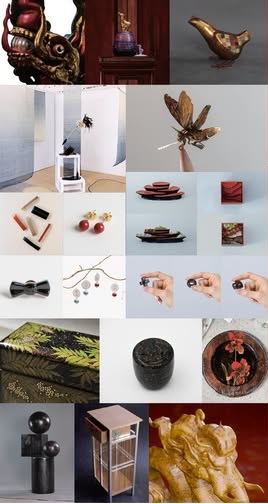
HÀ NỘI — A new exhibition in Hà Nội will showcase works and ideas by Vietnamese lacquer artists inspired by their experiences in Wajima, Japan.
Trương Hoàng Hải, Đinh Công Đạt and Trần Thảo Miên each approach Japanese lacquer from a different perspective, exploring material research, sculpture, weaving and installation.
In late September, the artists visited Wajima, a small city on the Noto Peninsula where the Wajima-nuri lacquer tradition has been practised for more than six centuries.
For four days, they walked through workshops making wooden cores, applying cloth and learning traditional Japanese decorative techniques, such as chinkin inlay, maki-e or the use of powdered metal, and roiro, in which the lacquer is highly polished to a mirror-like gloss.
They also met artisans rebuilding their craft after the 2024 earthquake, working alongside them in their studios and handling knives and brushes inside the craftsmen's studios.
The Việt Nam – Japan Lacquer Road exhibition marks the first time that ideas and experiences from Noto have been brought back to Hà Nội. It is the first outcome of a long-term collaborative project between Hanoi Grapevine and TAKI Corporation of Tokyo, which aims to connect Vietnamese lacquer art with Wajima-nuri, one of Japan’s most distinctive lacquer traditions.
As part of a festival that places craftsmanship at the heart of urban creativity, the exhibition also explores how traditional crafts can continue to thrive alongside the cities and communities that sustain them.
The exhibition will run from November 13 to 28 at the Hà Nội Department of Culture, Sports and Tourism. A talk and exhibition tour featuring the artists and representatives of TAKI Corporation will take place on November 15.
The discussion will explore what Vietnamese and Japanese lacquer communities can learn from one another, drawing on experiences from a region where lacquer production has flourished for centuries, techniques passed down through generations and the role of culture in post-disaster recovery.
The programme will also introduce experiments in digitising lacquerware into 3D models, alongside design concepts that bring traditional techniques into contemporary life. These initiatives point to new possibilities for education and creative practice.
The exhibition is part of Craft Through the Streets, a project curated by Nguyễn Tú Hằng under the 2026Hà Nội Creative Design Festival, held by the Hà Nội Department of Culture, Sports and Tourism from November 13 to 28. — OVN/VNS
