Weather:
- Ha Noi 25oC
- Da Nang 25oC
- Ho Chi Minh 28oC
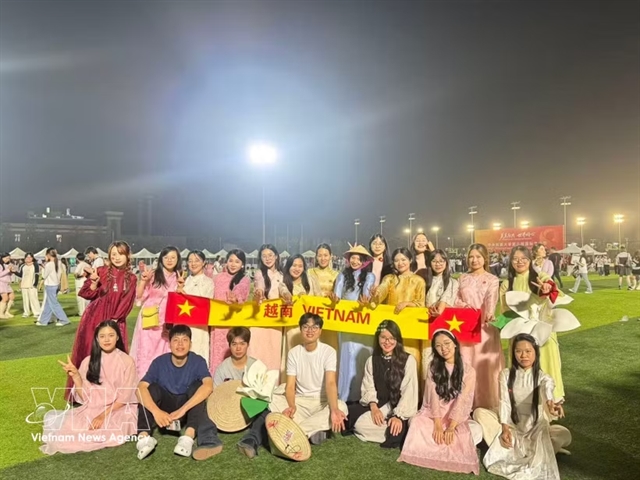
BEIJING — Far from home, Vietnamese in China still stick together, preserving the language, traditional customs and actively engaging in activities tied to the homeland.
For them, patriotism isn’t just nostalgia. It’s built through small daily acts that strengthen great national unity and project Việt Nam’s image to the world.
Talking with Vietnam News Agency correspondents in Beijing ahead of Great National Unity Day (November 18) and Việt Nam Culture Day (November 24), Tô Trương Thị Hồng Hoài, who has lived in Beijing for nearly three decades, said the community’s greatest asset is its ability to bond, support one another and look homeward despite different circumstances and jobs.
Hoài said every Tết (Lunar New Year), wrapping bánh chưng (square glutinuous rice cake) together, cooking traditional dishes, setting up the ancestral altar and gathering for spring celebrations bring warmth and ease homesickness.
Student activities and community networks create a practical support system. Earlier arrivals share study, work and living tips with newcomers; students help each other; and when a family struggles, fellow countrymen’s visits and encouragement become a vital comfort.
Patriotism also shows up whenever people back home are hit by natural disasters, storms, floods or hardship. Despite the distance, the community tracks events at home, shares information and joins relief efforts through credible fundraising channels.
Beyond internal bonds, Vietnamese in China are active in cultural, educational and people-to-people exchanges. Introducing Vietnamese language, food, clothing, art and daily life helps Chinese friends understand Việt Nam better and boosts people-to-people ties.
Phạm Thị Hậu, married and living in China for over a decade, said she feels a duty to preserve and spread Vietnamese identity in a multicultural setting. She keeps using Vietnamese with friends, reads newspapers, listens to music, watches Vietnamese films and writes diaries in her mother tongue. She also volunteers to teach Vietnamese to Chinese friends interested in the language.
During traditional holidays, Hau and fellow students organise or join Lunar New Year, Mid-Autumn and Hùng Kings’ Commemoration activities, prepare traditional dishes and hold cultural exchanges. These events ease homesickness and give younger generations a better grasp of the history, traditions and values that shaped the Vietnamese soul.
To spread Việt Nam’s image abroad, Hậu takes part in school cultural exchanges, runs food stalls and photo exhibitions on Vietnamese landscapes and people. She uses social media to share images of áo dài (traditional long dress), scenic spots, dishes and simple beauty of home. When international friends mention Việt Nam through a bowl of phở, a conical hat dance or tropical fruit, she feels proud and more aware of her role in showcasing national culture.
Ahead of Great National Unity Day and Việt Nam Culture Day, both women want Vietnamese at home and abroad to keep up solidarity, preserve the language, fine customs and national traditions. For families abroad, keeping the mother tongue alive at home, wrapping bánh chưng with children, preparing Tết meals and telling stories about the homeland and grandparents are practical ways to pass love for roots to the next generations. — VNA/VNS
