Weather:
- Ha Noi 27oC
- Da Nang 26oC
- Ho Chi Minh 27oC
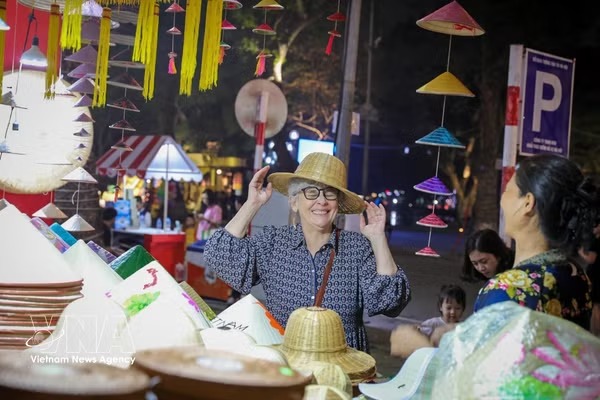
HÀ NỘI — As Việt Nam's cultural industries continue to grow, souvenirs are carving out a bigger role as "cultural ambassadors," spreading the country's image, rich heritage, and momentum in the creative economy.
Every souvenir tells a story
Trịnh Hà Miên, founder of handicraft brand Liu Lo Arts & Craft, sees souvenirs as a traveller's first real handshake with a culture.
"Some people discover Việt Nam through a small item they take home. That product can tell the story of how we live, who we are, and our heritage without the need for long explanations", she said.
The keepsakes she was talking about have left miniature monuments and flag-printed magnets in the dust. Today's souvenirs capture the rhythm of everyday life: a "banh mi" (Vietnamese baguette) lapel pin, a sketchbook of Hà Nội's tangled streets, and illustrations of daily life in HCM City. They work because they paint a Việt Nam that feels authentic, approachable and alive. Simple, compelling stories are giving cultural souvenirs a whole new appeal.
A channel for cultural exports
Drawing more than two million visitors a year, Hà Nội's Temple of Literature is seen as a prime destination for heritage-driven merchandise.
Dương Ngọc Hà, Deputy Director of the site's Centre for Cultural and Scientific Activities, said souvenir shops there long relied on generic products found at any tourist stop, with few items reflecting the relic's distinct identity.
Inspired by the motifs carved into ancient doctors' stelae, the Khuê Văn Các (Pavilion of the Constellation of Literature) and symbols of Việt Nam's Confucian scholastic tradition, the centre has designed a broad collection of souvenirs. Each piece carries cultural and spiritual value, letting visitors stretch the experience long after they leave the grounds.
Handcrafted goods from traditional craft villages, though more expensive, pull in buyers for their craftsmanship and the cultural stories embedded in them.
A successful souvenir, Hà said, must fuse three things: utility, aesthetic value and the power to convey cultural identity.
He's pushing for an integrated ecosystem that links creativity, production, distribution and promotion into a single value chain, which can push Vietnamese cultural products into much wider markets. In that chain, distributors, tourist destinations and cultural mechanisms, he said, would be the vital bridges that put those products in front of the public. — VNA/VNS
