Weather:
- Ha Noi 29oC
- Da Nang 29oC
- Ho Chi Minh 27oC
SEA Games
HÀ NỘI Following the announcement of a significantly revised competition programme for the 2027 Southeast Asian (SEA) Games in Malaysia, Việt Nam will have to look beyond familiar medal targets to maintain its regional standing.
The Southeast Asian Games Federation approved a programme of 43 sports and 473 medal events for the 34th SEA Games on October 30. Compared with the previous edition in Thailand in 2025, the programme has seven fewer sports and 100 fewer medal events.
Several sports that contributed 24 gold medals to Việt Nam's total of 87 at the SEA Games last year will not feature in the 2027 programme, including rowing, canoeing, traditional boat racing, kickboxing, jiu-jitsu and chess.
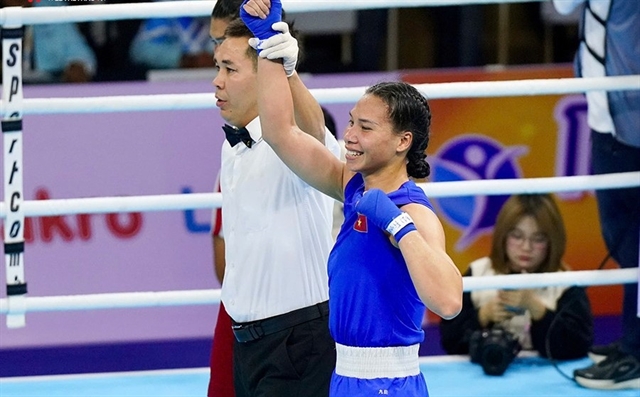
Some events in sports that do remain on the programme have also been dropped. Women's futsal, in which Việt Nam won its first SEA Games title in 2025, is not included. Boxing will have only six men's weight categories, with no women's events, while wushu will feature taolu but not sanda.
In athletics, the mixed 4x400m relay has been left out. Shooting has lost four team events, while fencing will not include men's épée. As a result, a number of Vietnamese athletes who won gold in Thailand will not have the chance to defend their titles in Malaysia.
The changes are expected to affect Việt Nam's medal prospects. Sports and events no longer included in the programme accounted for at least 30 gold medals for the country at the 33rd SEA Games.
However, the adjustments have not come as a surprise to Vietnamese sports officials. Malaysia had outlined its proposed programme earlier, giving teams time to assess the likely impact and prepare for changes.
Tạ Đình Đức, who is in charge of wrestling at the Sports Authority of Việt Nam, said the possibility of wrestling being left out had been anticipated. Its exclusion means the sport will have to adjust its personnel plans and competition schedules, while ensuring athletes continue to gain experience at international events.
The exclusion of chess was also expected. Vietnamese players won two gold medals at the SEA Games last year, but coach Bùi Vinh said the regional Games were not the only basis for planning the sport's development.
Representing the country at the SEA Games was always special for players, he said, but international chess offers many other competitions where they can test themselves.
Beyond SEA Games medals
The loss of medal opportunities is disappointing for athletes and coaches. However, the SEA Games programme is shaped to a large extent by the host country's choices, and the medal table at a regional Games does not fully reflect a country's sporting strength.
Some sports absent from the 2027 programme, including wrestling, rowing and canoeing, are part of the Olympic programme. Boxing is also an Olympic sport, although women's events will not be held at the 34th SEA Games. Meanwhile, wushu sanda is one of Việt Nam's strengths at the Asian level.
Their absence from the regional Games should not lead to a reduction in investment or a loss of development opportunities. Athletes in these sports still need to maintain their training and compete internationally, particularly if Việt Nam aims to improve its results at the Asian Games and Olympic Games.
Hoàng Quốc Vinh, head of the Elite Sports Department under the Sports Authority of Việt Nam, said the country would adapt to the changes at next year's SEA Games while continuing to invest in sports and events included in the Asian Games and Olympic programmes, even if they were absent from the regional Games.
He stressed that the absence of an Asian Games or Olympic sport from the SEA Games programme was not a reason to abruptly cut investment.
For Việt Nam, the challenge is not simply to adjust its medal targets for Malaysia in 2027. It is also to maintain a long-term approach to athlete development, ensure regular competition opportunities and allocate resources to sports with the potential to improve the country's standing at the Asian and world levels.
A country's sporting ambitions cannot be measured by, or depend solely on, the programme of a single SEA Games. Adapting to changes while maintaining investment in key sports will be important to Việt Nam's progress beyond the regional stage. VNS
BOX BOX--------------------------------
43 sports at 2027 SEA Games
The 34th SEA Games will take place from September 18 to 29, 2027, across four host clusters in Malaysia: Kuala Lumpur, Sarawak, Penang and Johor.
The 43 sports are divided into three groups:
Group 1: Aquatics, athletics, archery, badminton, basketball, cycling, equestrian, fencing, football (including futsal), golf, gymnastics, hockey, ice hockey, ice skating, judo, rugby sevens, sailing, shooting, table tennis, taekwondo, tennis, volleyball and weightlifting.
Group 2: Billiards and snooker, bowling, boxing, cricket, dancesport, esports, field handball, kabaddi, karate, Muay Thai, netball, padel, pétanque, sepak takraw, pencak silat, squash, teqball and wushu.
Group 3: Floorball and water skiing. — VNS
