Weather:
- Ha Noi 18oC
- Da Nang 24oC
- Ho Chi Minh 27oC
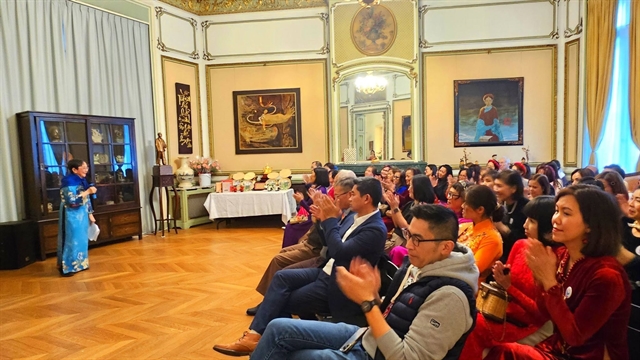
BRUSSELS — A gathering was recently held at the Vietnamese Embassy in Belgium, bringing together representatives of the embassy, associations, intellectuals, experts, businesspeople and students of Việt Nam from Belgium and several other European countries.
The event offered different generations of Vietnamese women an opportunity to share their integration experiences, discuss their role in preserving cultural identity and building communities, and strengthen connections among overseas Vietnamese.
In her opening remarks, Ambassador Nguyễn Hương Trà highlighted Vietnamese women's contributions to community building, maintaining bonds among Vietnamese living abroad, and serving as cultural bridges promoting Việt Nam internationally.
Representing the first generation of Vietnamese women in Belgium, Trịnh Thanh Dung reflected on their journey through different historical periods, from the struggle for national independence to international integration.
Despite living in different environments, generations of Vietnamese women share a love for their homeland, attachment to their roots and a responsibility for preserving national cultural identity, she said.
A panel discussion featured three speakers from different generations: Nguyễn Ngọc Mai Phương, a master's student in global logistics and port management at KU Leuven; Trần Thị Hồng Nhi, a clinical psychology expert; and Nguyễn Thị Kim Chi, a member of the Vietnamese Community Association in the Netherlands.
Sharing her experience of studying in Belgium, Phương said that learning about cultural differences and engaging with international friends can help young people adapt to multicultural environments.
Introducing Vietnamese cuisine and culture to friends allows every student to become a “cultural ambassador” promoting the country's image, she added.
From a cross-cultural psychology perspective, Nhi discussed differences in perceptions and behaviour between parents and children in immigrant families, stressing the need to balance the preservation of traditional cultural values with the adaptation to new environments.
Amid the growing influence of social media and artificial intelligence (AI), parents should accompany their children, equip them with knowledge and build trust, while strengthening connections among individuals, families and communities, Nhi said.
Meanwhile, Chi emphasised the importance of continuous learning and developing personal capabilities to help women build independent and self-reliant lives.
The programme also introduced participants to Vietnamese tea culture through a tea session hosted by Counsellor Nguyễn Bá Sang, offering insights into the history of tea cultivation, distinctive tea-growing regions and the art of tea appreciation.
Cultural performances and a culinary gathering featuring traditional dishes created a warm space for participants to meet and interact. The event concluded with a performance of Nối Vòng Tay Lớn (The Great Circle of Vietnam), conveying a message of solidarity and connection.
Through cultural exchanges and other activities, the programme honoured Vietnamese women's contributions to community life, strengthened intergenerational bonds, and encouraged integration while fostering the preservation of national cultural identity. — VNA/VNS
