Weather:
- Ha Noi 33oC
- Da Nang 29oC
- Ho Chi Minh 29oC

HÀ NỘI — Villagers in Vạn Phúc and Nga My are celebrating the 1,000th anniversary of their longstanding alliance and introducing this distinctive tradition of northern Delta communities to a wider audience.
It has been 1,000 years since the villages formed a kết chạ (sworn bond or ritual alliance), which emerged from the need for community solidarity during land reclamation, for water management or for defence against natural disasters or enemy invasions.
The custom embodies core Vietnamese cultural values, such as solidarity, the cherishing of bonds of affection and loyalty, the observance of propriety and a spirit of mutual sacrifice and support among communities. It has become a strong bond connecting Vietnamese villages across the centuries.
The bond between the people of Vạn Phúc Village, Nam Phù Commune and Nga My Village, Thanh Oai Commune is considered unique in the history of Việt Nam.
A millennium of brotherhood
According to the chronicles, the bond between the two villages dates back to 1026, during the reign of King Lý Thái Tổ shortly after the Thăng Long Imperial Citadel was built.
Residents of both villages joined forces to tame the local waters, constructing dikes to protect their riverside lands and withstand major floods. Afterwards, they became sworn brothers, pledging to preserve their bond for future generations.
To celebrate this millennium milestone in their relationship, a special ceremony was held on July 18 and 19 at the Vạn Phúc Communal House, followed by an extravaganza art performance that gathered more than 2,000 residents of the two villages as well as tourists.
"We have spent nearly a month preparing for the event's rituals and reception, and to welcome our elder brother Nga My," said Trần Thị Vân, a Vạn Phúc villager.
“It is remarkable that, after a thousand years, our bond – based on a pledge to support each other in times of hardship and share one another’s joys and sorrows – has remained unbroken.
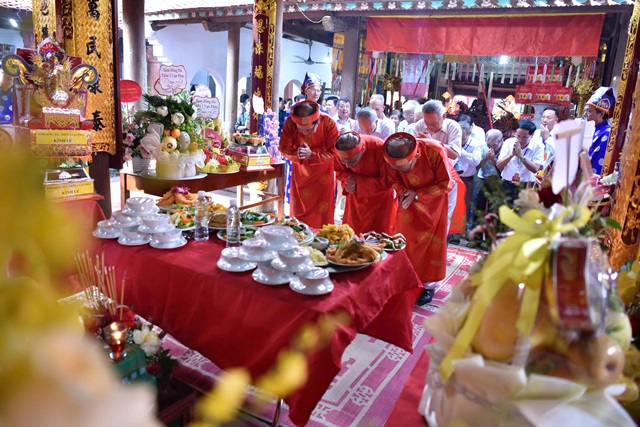
“We continue to uphold the traditional customs, such as addressing one another as ‘honoured elder brother’ and regarding each other as members of the same family, visiting one another during festivals and major events.”
Meanwhile, 81-year-old Bùi Xuân Hiền from Nga My was moved during the event.
"Our kết chạ tradition is not merely a formality; it is a genuine bond. This mutual support is historically documented, and the connection between the two villages has been proven during the most trying times. Since ancient times, nothing has ever prevented the residents of these two villages from visiting and helping one another," he said.
Phạm Đức Cường, secretary of the Party branch of Nga My Hạ Village, said: "Helping each other, attending important events for the two villages, visiting, congratulating, supporting or sharing is not mandated by law, nor is it forced upon anyone. It is voluntary, a moral principle passed down from generation to generation with respect and pride. This is what has created the enduring vitality of the alliance between the two villages."
A special relationship
Historian Lê Văn Lan said the kết chạ tradition between these two villages possesses unique features that very few places manage to preserve.
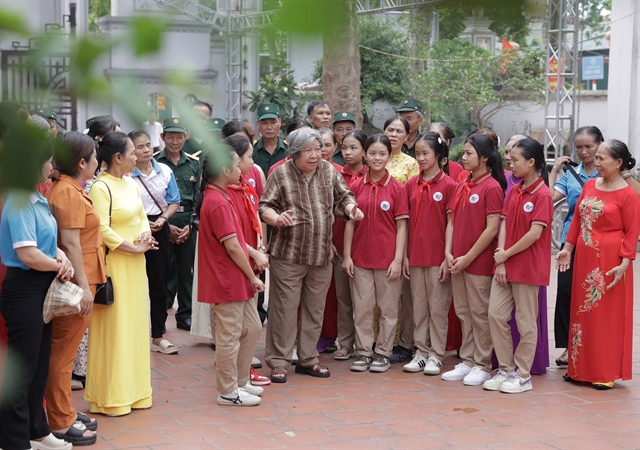
Normally, alliances formed between two neighbouring villages or those separated only by a river, making travel and mutual assistance convenient. But in this case, Vạn Phúc and Nga My are about 30km apart. This distance is not a big issue today, but 1,000 years ago, it was a long journey fraught with transportation challenges and the many upheavals of history.
"Most kết chạ in the northern Delta originated around the 18th or 19th century, boasting a history spanning several hundred years. The alliance between Vạn Phúc and Nga My, however, has endured for a millennium and will continue into the future," said Lan.
"Their tradition is not merely a heritage unique to the two localities, but also a vivid testament to the enduring vitality of Vietnamese village culture.
“At a time when many traditional customs risk fading into oblivion, it is rare for a community to preserve such a bond for a millennium. The people have done more than simply preserve ancient rituals; they have kept alive the very spirit of kết chạ – cherishing deep-rooted ties, sharing with one another and building their lives on a foundation of community. These are values that modern society, too, needs to nurture,” he said.
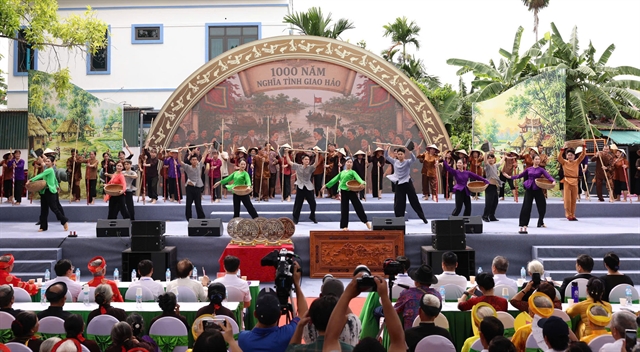
After the ritual, an artistic programme by director and journalist Lục Hường was staged to recreate historical and cultural traditions, as well as the bond of brotherhood, between the villages.
The event served as a tribute to the past and a firm commitment by the people of each village to carry on and uphold their shared cultural heritage, ensuring that their bond endures forever.
In response to the spirit of the Politburo’s Resolution 80 regarding the development of Vietnamese culture in the new era – and to help foster national unity and build a system of Vietnamese values – the villagers will undertake three initiatives.
They will preserve and digitise historical records, royal decrees and Hán-Nôm documents stored in the two communal houses; spread their tradition to young residents; and promote the value of this tradition in conjunction with spiritual and cultural tourism. — VNS
