Weather:
- Ha Noi 17oC
- Da Nang 20oC
- Ho Chi Minh 24oC
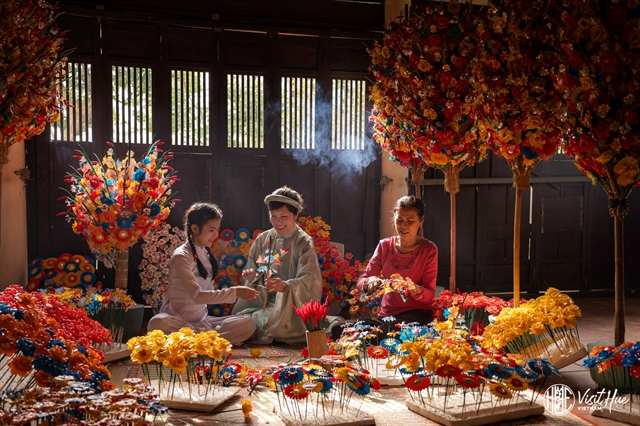
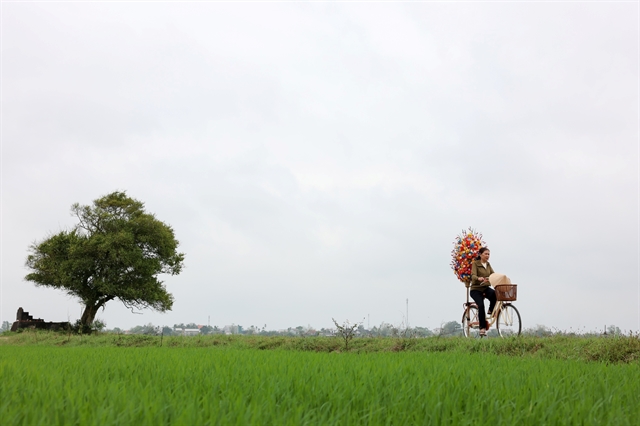
HUẾ — The chill and fine January drizzle of Huế does little to dull the colours of Thanh Tiên, a traditional paper flower village in Dương Nỗ Ward, where brightness seems to bloom regardless of the weather.
Set along the lower reaches of the Hương (Perfume) River, about eight kilometres from Trường Tiền Bridge, Thanh Tiên has been famed for its paper flowers for more than 300 years. In 2013, the People’s Committee of the then Thừa Thiên-Huế Province officially recognised it as a traditional craft village.
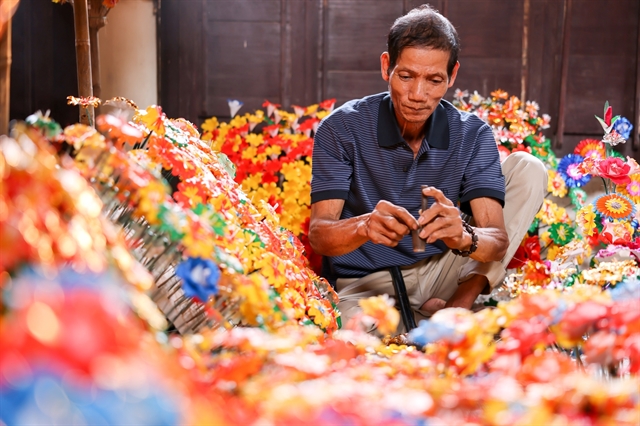
Most residents are farmers but each year, particularly in the twelfth lunar month, they return to making paper flowers to meet demand for the Lunar New Year festival. This seasonal rhythm of cultivation and craft has shaped the village’s identity, where paper flower making is not only a source of income but also a way of preserving spiritual values.
Life philosophy in every petal
For the people of Huế, worship plays a central role in daily life. However, the city’s persistent year-end drizzle often makes fresh flowers difficult to source. Out of this necessity, villagers began creating paper flowers for offerings. What distinguishes their work is not mechanical perfection but the philosophy embedded in every petal.
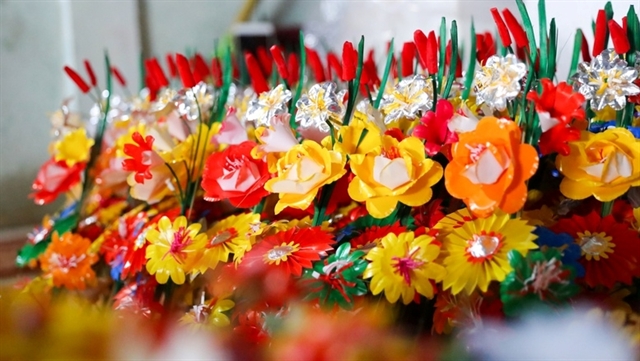
A single branch typically carries three large blossoms at its centre, symbolising the tam cương – the three fundamental bonds of ruler-subject, father-child and teacher-student. Surrounding them are five smaller flowers representing the ngũ thường: the five enduring virtues of benevolence, righteousness, propriety, wisdom and faithfulness. In Huế, the display of flowers is therefore more than decoration; it serves as a reminder of moral principles handed down through generations.
Traditionally, paper flowers were placed on household altars, in temples and at shrines dedicated to deities such as the Earth God and the Kitchen Gods. They were replaced only once a year at Tết, which helps explain why the peak production season has long fallen in the twelfth lunar month.
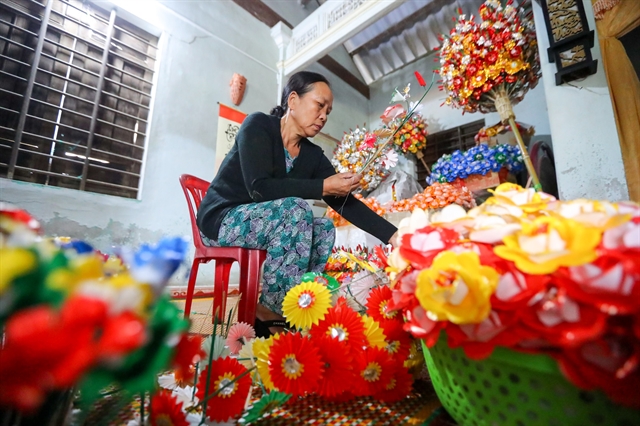
The making of paper flowers begins months before the new year. By the eighth lunar month, families start preparing bamboo grown in their gardens. Mature stalks are cut, split, dried, shaved into fine strips and coated with tree resin to protect them from termites. The strips are then dyed, dried and shaped by hand into stems and stalks.
To create the petals, artisans use iron chisels to cut coloured paper against wooden moulds, before folding and shaping it with nylon thread. Stamens, also fashioned from coloured paper, are attached last, completing each blossom before it is fixed to the stalk.
Notably, villagers avoid chemical dyes, instead relying on colours extracted from leaves, fruit peels and pine resin. This approach helps the flowers retain their vibrancy and resist fading, even in strong sunlight or high humidity. Simple wooden tools are used to create fine wrinkles on the petals, lending them a buoyant, lifelike quality.
With imagination and skill, artisans recreate orchids, lilies, chrysanthemums, hibiscus and wild sunflowers, most famously the lotus, regarded as Việt Nam’s national flower.
According to artisan Trần Phú, who has more than 45 years of experience, the craft requires patience and perseverance but offers an uncertain income. As a result, younger generations have been reluctant to carry it forward. Today, only about ten households in the village continue to practise the tradition.
Yet Thanh Tiên has experienced a revival. Once overshadowed by plastic flowers, the craft regained strength through the efforts of dedicated artisans such as Thân Văn Huy. His paper lotus creations helped carry the village’s reputation far beyond Việt Nam, appearing at tea ceremonies and festivals in the US, France and Japan.
A living heritage for visitors
Now recognised as both a traditional craft village and a cultural tourism destination, Thanh Tiên welcomes visitors keen to learn about its heritage. Its paper flowers are sold in major cities including Hà Nội, Hồ Chí Minh City, Đà Nẵng and Hải Phòng, offering proof that tradition can adapt to modern life.
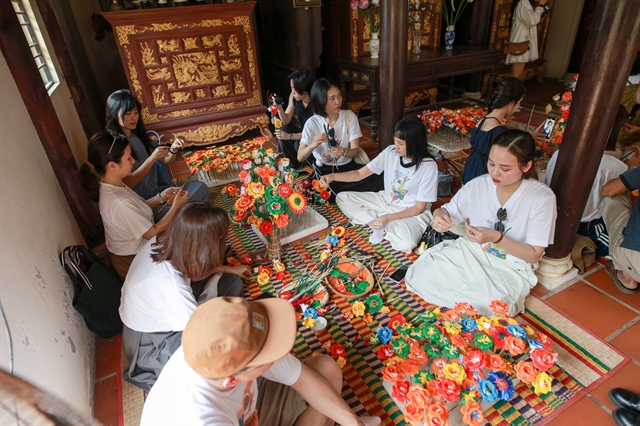
Visitors often describe their experience with a sense of wonder. Diệu Hoa, from Hà Nội, recalled arriving on an early spring day to find courtyards filled with blossoms laid out to dry in the sun. From the village gate, she said she was overwhelmed by the beauty of flowers in every shade and form.
Practical information
Location: Thanh Tiên Village, Dương Nỗ Ward, Huế City, formerly Phú Mậu Commune, about 10km from the city centre.
Experience: Watch artisans at work, join a workshop to learn bamboo shaving and natural paper dyeing and capture the village’s rural rhythm and scenic beauty through your lens.
Best time to visit: The days leading up to Tết, when the village is alive with colour.
Nearby: Combine the trip with a visit to Sình Village, known for its traditional folk paintings. — VNS
