Weather:
- Ha Noi 28oC
- Da Nang 25oC
- Ho Chi Minh 28oC

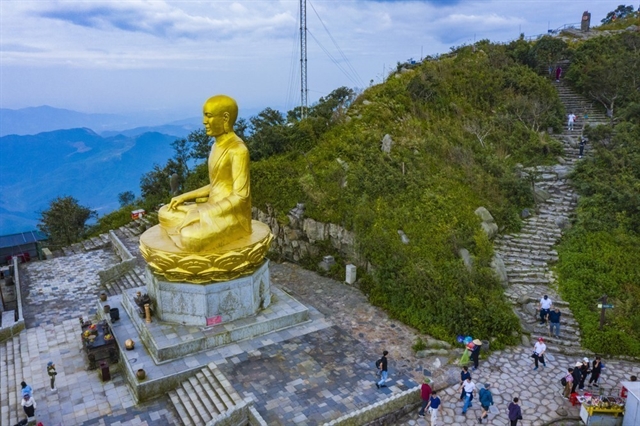
QUẢNG NINH — Yên Tử Spring Festival 2026, the largest of its kind, will open in the northern province of Quảng Ninh on February 26, the 10th day of the first lunar month, marking a significant milestone following the July 2025 UNESCO World Cultural Heritage inscription of the Yên Tử – Vĩnh Nghiêm – Côn Sơn, Kiếp Bạc Complex of Monuments and Landscapes.
According to the organising board, this year’s festival will be co-hosted by the management board of the Hạ Long Bay – Yên Tử World Heritage Site, the provincial Department of Culture and Sports, the Executive Committee of the Việt Nam Buddhist Sangha’s provincial chapter and various relevant agencies.
It seeks to reaffirm the diverse tangible and intangible values of Trúc Lâm Zen Buddhism, a distinctly Vietnamese tradition that is now more than 700 years old.
This year, the festival will be significantly expanded, spreading across Vàng Danh, Yên Tử, Thượng Yên Công, Phương Đông and Bắc Sơn wards rather than being confined to just a few locations as in previous years.
The highlight will be an evening music show on February 26, broadcast live by Quảng Ninh Newspaper and Radio and Television, featuring modern lighting and sound to bring the story and spirit of Buddha King Trần Nhân Tông to life.
The event also features displays of Trần Dynasty antiquities and rare Trúc Lâm Buddhism documents, along with major One Commune One Product (OCOP) items and a fair boasting more than 100 booths offering handicrafts, bronze and wooden ritual items, and local specialities.
Visitors can also explore immersive cultural areas such as Heritage Spring – Tết of Nương Village, where they can take part in folk games, watch dragon and lion dances, and see traditional martial arts performances.
Digitalisation
According to Mai Vũ Tuấn, head of the Management Board of the World Heritage Site of Hạ Long Bay – Yên Tử, the site has affirmed its cultural depth and outstanding global value after a long process of preparing the dossier and undergoing rigorous evaluation.
UNESCO's recognition of the heritage site in July 2025 is not only a source of pride but also a responsibility to conserve and promote its internal strength and to implement a heritage-based economy, he added.
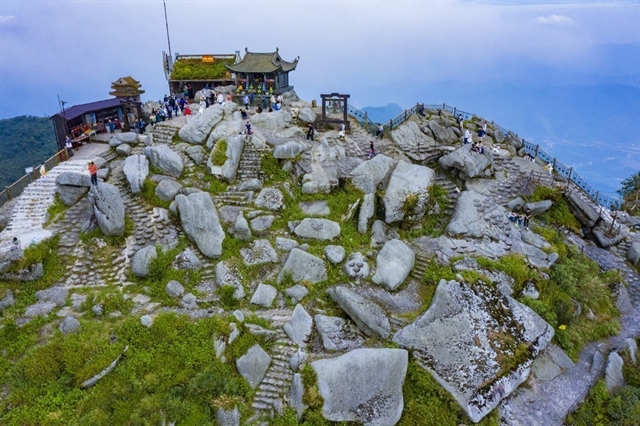
The management board has been actively applying technological solutions to modernise management, enhance the visitor experience and move towards building a smart tourism ecosystem at this special national relic site.
Notably, an electronic ticketing system is being studied and refined to support visitor identity verification, online payments and reservations. It is considered a fundamental solution for managing and regulating visitor flows and preventing congestion at key attraction points in the Yên Tử mountain area.
To make the site more welcoming, the provincial People’s Council has approved a full exemption of entrance fees to the Yên Tử scenic area, excluding cable car tickets, from 2026 to 2028. To enhance safety, authorities have deployed AI-powered surveillance cameras and secured full insurance coverage for all visitors.
The management board is planning to use chip-embedded citizen ID cards and facial recognition (FaceID) technology, allowing visitors to be identified as they pass through gates without manual checks.
Traditional guided narration is gradually being shifted to personalised experiences through technology. By using QR codes at heritage sites, visitors can access multimedia content to listen to audio guides, view images and videos, and experience VR360 virtual reality. To realise this goal, a multilingual digitised database system is being built to meet the specific needs of visitors from different countries.
According to Tuấn, local tour guides are being restructured to become direct producers of digital content. Instead of accompanying each tour group as before, they will focus on building in-depth heritage data to deliver to visitors via smart devices, ensuring the accuracy and vividness of historical and cultural information.
The implementation of digital transformation in 2026 not only closely follows the directives of Quảng Ninh Province and the Ministry of Culture, Sports and Tourism but also reaffirms Yên Tử’s position in conserving heritage linked with sustainable tourism development in the digital era.
Last year, almost 600,000 people made the journey there. Quảng Ninh plans to intensify promotional efforts in 2026 and beyond to attract more visitors to this sacred place. — VNS