Weather:
- Ha Noi 26oC
- Da Nang 28oC
- Ho Chi Minh 33oC
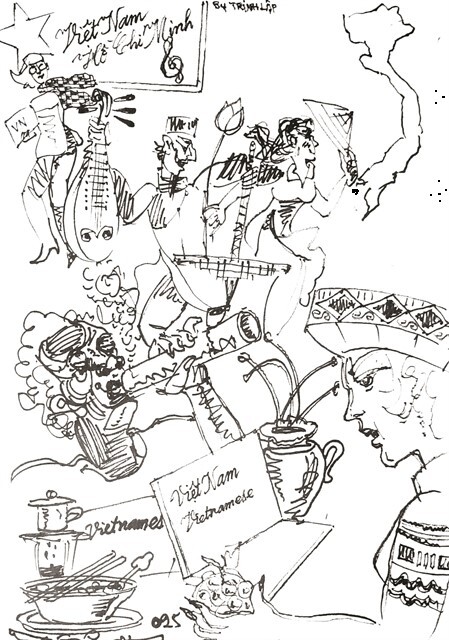
by Nguyễn Mỹ Hà
In Việt Nam today, we don't say we love our country, but we say, "If the afterlife exists, I'd still want to be Vietnamese, living in Việt Nam".
If you have read about the waves of the Vietnamese boat people leaving everything behind to risk their lives in the 1980s in search of new horizon in the West; Vietnamese risking their lives hiding inside in container trucks to cross the English Channel; or walking for days through the forest to reach Eastern Europe, getting lost in the vast lands of Siberia, you'd think the above-mentioned words were not true.
Yes, a large number of Vietnamese people did leave their poor country to build a new life abroad. And many low-skilled workers go abroad on government contracts for better pay.
The majority, however, chose to stay working hard to lift the country out of poverty, supported by remittances sent home from people working overseas and from their own sweat and tears.
While there's a wave of young, enthusiastic and hopeful people who want to try their best studying or working overseas, and slowly settle down elsewhere, the flow back mostly comes from the elderly, who often find themselves coming back to live in Việt Nam.
Those with financial means may find living here less expensive, and the food more reasonable, fresh and delicious. But they still have to work hard to pay for mortgages or cars, or children's education.
So, what is so compelling about living in Việt Nam that many people talk about? The answer is the people.
Every year, typhoon season brings a dozen tropical storms to the country. While the coastal provinces suffer infrastructure losses, the mountainous communities are also devastated by floods and landslides which destroy their homes.
Witnessing the hardship, and the solidarity between people in distant provinces sending relief to trapped people, spontaneous initiatives truly send positive and mutual good vibes not only across the country, but also beyond its borders.
A growing number of young people around the world learn Vietnamese and want to come to Việt Nam to live, thanks to their encounters with Vietnamese they met and learned from overseas. This could be a Vietnamese godmother taking care of an American child who grew up wanting to come to live in Việt Nam, or an Australian teenager working for Vietnamese grocery owners who started to learn Vietnamese and master it to a point that he built a YouTube channel on the topic. They may be born in different parts of the world, but they share a destination: Việt Nam.
But once settled here in the country, they often won't use their Vietnamese for work, but instead develop courses teaching English online.
On the reverse trend, every year, tens of thousands of young Vietnamese head overseas to live their dream of studying or working abroad. Most go under company contracts.
Currently, top destinations for Vietnamese workers and students include the United States, China, Japan, and South Korea. Upon arriving in new nations, the Vietnamese must quickly adapt to new life in their host countries, learning new customs, language and food. They would also have to adhere to new laws and overcome other challenges relating to displacement.
The young students who go abroad to pursue higher education also have to overcome many cultural and educational challenges. Many have to work at least twice as hard as their fellow students. For better or worse, it may take a few years to adjust.
It's a life challenge when young people leave home to start life in a new environment, as they could be exposed to bad habits such as smoking, or risk their own safety under peer pressure. They have to learn to be firm and not succumb to unhealthy or even illegal temptations by others around them. Those who succeed in graduating and getting a job abroad deserve recognition for their perseverance and success.
While the number of Vietnamese going abroad increases each year, a smaller tream of international and diasporic Vietnamese choose to live their lives in Việt Nam. Many leave to study or work to accumulate a certain sum of money, then they decide to return when they retire.
Thuận Nguyễn, a Vietnamese born in Laos, worked in France and only came back to Việt Nam after retirement at 62 years of age.
"I love my life in Việt Nam now. I eat Vietnamese food and wouldn't want to have French food anymore," he said. "All the fermented fish, shrimp sauces, and paste, I love them and can have them day in, day out." VNS
