Weather:
- Ha Noi 15oC
- Da Nang 22oC
- Ho Chi Minh 24oC
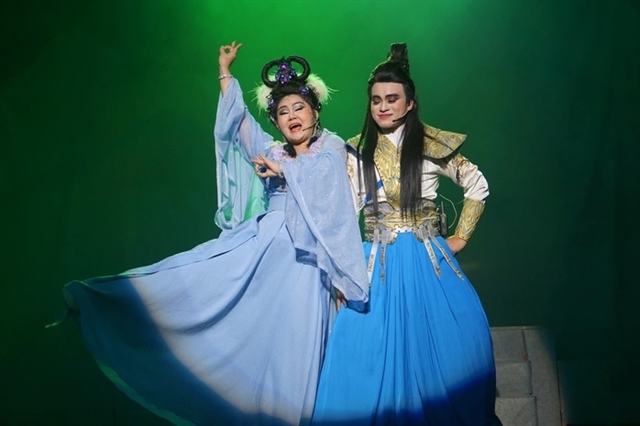
HCM CITY On the cải lương stages of HCM City, change is arriving not with noise or spectacle, but with a quiet confidence. From scriptwriting and directing to performance, the traditional reformed opera is finding new energy through younger voices and fresh creative approaches, renewing itself while holding firmly to its classical soul.
In recent times, the city’s cải lương scene has seen the active participation of many socially funded troupes and young directors who favour innovative creative approaches.
These efforts have injected fresh vitality into productions while carefully preserving the core spirit and aesthetic values of traditional cải lương.
A number of productions that have drawn strong audiences recently, such as Mai Trắng Se Duyên (loosely translated as White Apricot, Fated Love), Văn Võ Kỳ Duyên (A Remarkable Literary and Martial Destiny), Hàn Mặc Tử: Câu Thơ Yên Ngựa (Poetry from the Horse’s Saddle), Bức Ngôn Đồ Đại Việt (The Map of Đại Việt), Giang Sơn Mỹ Nhân (Empire and Beauty), have succeeded thanks to their bold renewal in form and staging.
Instead of adhering strictly to classical conventions, directors have experimented with modern theatrical language.
Traditional, semi-historical and historical works are now told through streamlined sets, carefully structured lighting, flexible scene transitions and a stronger focus on psychological depth.
Classic operas such as San Hậu and Văn Võ Kỳ Duyên have moved away from excessive displays of martial arts or rigid symbolic conventions.
They now foreground inner conflicts and place characters in choices that resonate with contemporary concerns.
The production Lưu Vong (Exile), directed by Meritorious Artist Lê Trung Thảo, left a strong impression with its brisk pacing and innovative use of space and time.
Adaptations of literary works, including Đời Như Ý (A Life as Desired), Hiu Hiu Gió Bấc (Whispers of the Northern Wind) and Cây Lẻ Bạn (The Solitary Tree), have also been carefully staged by young directors, winning audience interest and helping to bridge traditional spectators with Generation Z theatre-goers.
People’s Artist Trần Minh Ngọc expressed her delight: “The HCM City cải lương stage has undergone very clear changes. Productions are winning over audiences and bringing people back to theatres, including many young viewers.”
New faces, new voices
Another encouraging sign is that young performers are no longer confined to secondary roles but are increasingly entrusted with leading parts that allow them to fully demonstrate their abilities. A new generation of actors is steadily making its mark.
According to insiders, HCM City’s cải lương scene now boasts a young cohort with strong vocal technique, restrained acting and the ability to harmonise singing and performance, creating emotionally rich moments on stage.
A clear example is Hồ Nguyệt Cô Hoá Cáo (Hồ Nguyệt Cô Turn into a Fox), directed by Võ Hoàng Phương at Thiên Long Theatre.
The production preserves the essence of tradition while boldly refreshing stage design, creating a mystical atmosphere with striking costumes and lyrical yet contemporary performances.
The tragic story of Hồ Nguyệt Cô is conveyed with emotional clarity, allowing young audiences to engage naturally with classical opera without feeling overwhelmed by its traditional symbolism.
“Without renewal, traditional theatre would struggle to reach today’s audiences. This is the right direction, preserving the soul of classical opera while opening an aesthetic gateway for the young,” People’s Artist Phượng Loan noted.
Alongside classical, social-psychological and literary themes, productions with a more political and reflective orientation have also made a distinct impression in 2025.
Among them is Tiếng Hò Sông Hậu (The Chantings of the Hậu River), directed by Hoa Hạ, which successfully balances ideological messages with theatrical artistry.
This thematic expansion has enriched the face of cải lương, affirming that the genre is not merely nostalgic but capable of engaging directly with contemporary realities.
Overall, cải lương in HCM City in 2025 is not loud or trend-chasing. Instead, it is renewing itself from within, retaining its traditional essence while generating creative energy to move forward confidently in today’s theatrical landscape. VNS
