Weather:
- Ha Noi 18oC
- Da Nang 19oC
- Ho Chi Minh 26oC
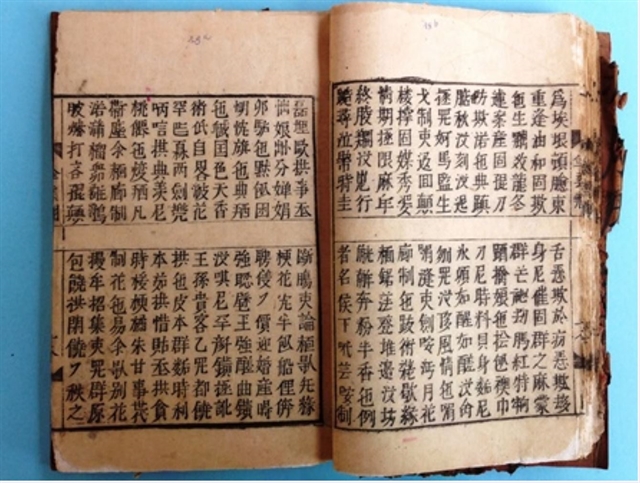
HÀ TĨNH — A rare Nôm edition of Truyện Kiều (The Tale of Kiều), believed to be the oldest surviving version of the Vietnamese and world literary masterpiece by Nguyễn Du (1765–1820), is on display alongside other precious items linked to the poet at the National Special Monument of the Nguyễn Du Memorial Area Museum in Tiên Điền Commune, Hà Tĩnh Province.
The exhibition, themed Đại Thi Hào Nguyễn Du – Ngàn Năm Nhớ Mãi (The Great Poet Nguyễn Du – Remembered for Thousands of Years), is organised by the provincial Department of Culture, Sports and Tourism to mark the 260th anniversary of the birth of the world-renowned cultural figure and great poet Nguyễn Du (1765–2025).
More than 250 valuable documents, artefacts and images are being presented systematically and vividly, highlighting the poet’s life, career and literary legacy, alongside the distinctive tangible and intangible cultural heritage values of Hà Tĩnh Province.

The centrepiece of the display is a collection of Truyện Kiều editions published in Vietnamese and other languages around the world, notably the oldest known version in Nôm script, printed in 1866.
The exhibition also features antiques and artefacts associated with Truyện Kiều, including the Mai Hạc plate collection and other items reflecting Kiều culture across Việt Nam’s three regions, offering visitors deeper insight into the work’s cultural reach.
Through the display, visitors can also trace the formation of the Nguyễn Du Monument, with documents detailing the restoration and construction of the Great Poet’s Memorial Area across different periods, from the 1960s to the 1990s and from 2000 to the present.
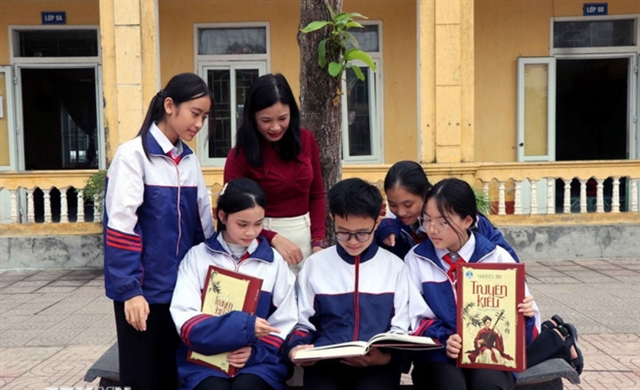
In addition, the exhibition features 32 paintings depicting characters from Truyện Kiều, created by renowned artists.
According to the organiser, the exhibition is the result of a 60-year process of persistent and continuous collection, research and preservation, coinciding with six decades of the formation and development of the Nguyễn Du Memorial Area from 1965 to 2025.
The exhibition space is arranged scientifically and logically, creating favourable conditions for the public to visit, research and learn, thereby helping to raise social awareness, especially among the younger generation, of the enduring value of Nguyễn Du’s heritage in contemporary cultural life.
Speaking at the opening ceremony on Wednesday, Nguyễn Viết Trường, Director of the Hà Tĩnh Department of Culture, Sports and Tourism, said the exhibition aims to widely spread the “immense value” of the heritage in social life, fostering pride, a sense of responsibility and joint efforts across the political system, the business community, intellectuals, artists and particularly each citizen in preserving, safeguarding and promoting traditional cultural values.
“The legacy of Nguyễn Du will only truly endure when it is cherished, continued and creatively adapted in contemporary life, when each citizen becomes a cultural subject, a messenger, spreading the humanistic, compassionate and benevolent spirit that the great poet conveyed through his works,” he said.
The great poet Nguyễn Du, born in Tiên Điền Commune, Hà Tĩnh Province, is a cultural figure with influence both at home and internationally.
His vast and distinctive literary legacy, especially Truyện Kiều, has become a profound embodiment of humanist thought, aspirations for justice and righteousness, aesthetic values, linguistic artistry and the cultural character of Việt Nam.
Truyện Kiều, a classical poem written in 3,254 lines using a couplet form rooted in the native oral ca dao folk tradition while drawing its narrative from a Chinese prose romance, remains deeply resonant with Vietnamese concepts of individual responsibility to self, society and competing spiritual codes, according to a report by the Vietnamese Nôm Preservation Foundation.
The poem was written in the ideographic Nôm script rather than the modern Romanised writing system known as quốc ngữ, which replaced Nôm in the early 20th century, the report said.
For more than two centuries, the work has been continuously studied, interpreted, creatively adapted and widely disseminated through diverse cultural and artistic forms such as Ví, Giặm, Ca Trù and Chèo folk songs, as well as plays, fine arts, theatre, film and digital media, and remains embedded in the folk culture and daily life of the Vietnamese people. VNS
