Weather:
- Ha Noi 26oC
- Da Nang 26oC
- Ho Chi Minh 27oC
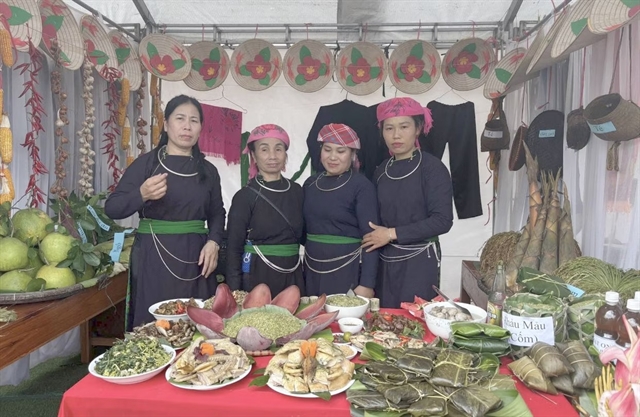
LÀO CAI — More than just an offering to ancestors during the New Rice Festival – a ritual intended to invoke bountiful harvests and prosperity for the family, the bánh cốm (young rice cake) of the Tày ethnic people in Hợp Thành Commune, Lào Cai Province, has evolved into a well-known local speciality, embodying the rich culinary heritage preserved through generations.
The Tày people regard the New Rice Festival as a significant occasion that marks the fruits of their hard labour throughout the farming season.
Once the season's first crops are harvested, locals select the finest, most fragrant glutinous rice grains to make cốm (young rice flakes). They offer them to their ancestors to express gratitude while praying for favourable weather and bountiful harvests.
Bánh cốm (young rice cakes) and dishes made from cốm are also indispensable in other rituals. For centuries, families have passed down the techniques for making these cakes from one generation to the next.
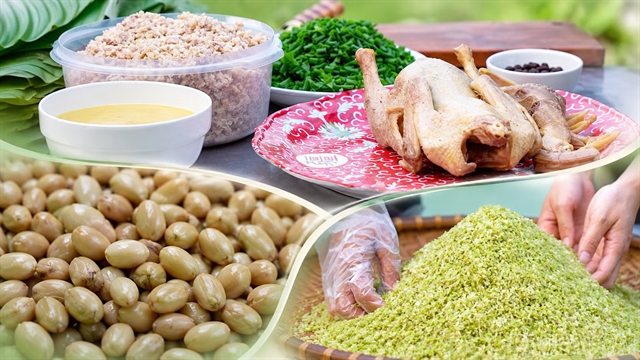
In her kitchen in Cáng Village, Phạm Thị Bền was busy preparing the ingredients for bánh cốm: young rice flakes, minced pork, finely chopped boiled duck, crushed peanuts, scallions, and rich duck broth.
The most important one, of course, is the young rice flakes, which should be of the best quality.
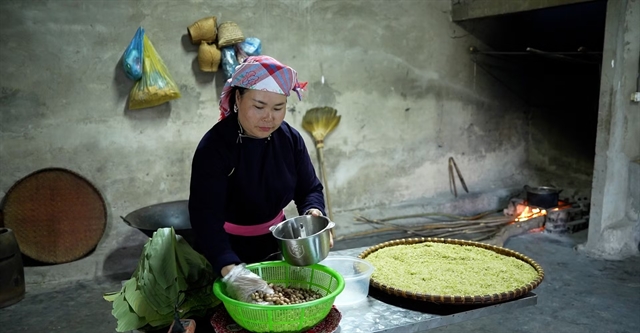
When the rice has just reached maturity, with the grains still plump and full, it will be harvested. The timing of this harvest is crucial to the quality of the cốm. If the rice is too young, the flakes will be mushy, while if it is too mature, they will become hard and lose their signature chewy, pliable texture.
Cốm in Lào Cai has its own distinctive character, with delicate, soft grains and the subtle, fragrant aroma of young rice grown in a region with a temperate climate and fertile soil.
Making cốm requires great care and meticulous attention to detail. The rice is first threshed to separate the grains, which are then roasted in large cast-iron pans. Roasting must be carried out continuously over a moderate flame to ensure the grains are evenly cooked.
Once the rice releases its characteristic fragrance, it is spread out on large, flat bamboo trays to cool before being pounded by hand in a stone mortar.
Throughout the process, the rice must be constantly stirred and turned to remove the husks without crushing the delicate grains. After pounding, the cốm is winnowed repeatedly to remove any remaining husks.
The finished product has a natural green hue, with plump, soft and pliable grains. When tasted, it offers the fresh aroma of young rice and a distinctive, rich, nutty flavour.
Bền said that what makes Hợp Thành green rice cakes unique, setting them apart from typical sweet versions, is the use of boiled duck meat and the broth.
In the traditional beliefs of the Tày people, the duck is regarded as a messenger that conveys human prayers to the deities and the spirit of the rice.
Consequently, duck meat is also an indispensable part of the offerings at the New Rice Festival. Adding duck meat and broth to the cake filling not only enhances its richness and flavour but also reflects deep reverence for the offerings, expressing gratitude for the gifts bestowed by nature.
All ingredients are seasoned with signature spices, including hạt dổi (wild spice seed), which creates a unique flavour for the dish.
A perfect batch of the cakes requires meticulous attention to detail, especially when mixing the ingredients and balancing the seasonings. Every component must be evenly distributed, ensuring the cốm absorbs just the right amount of moisture while retaining its signature chewy, pliable texture.
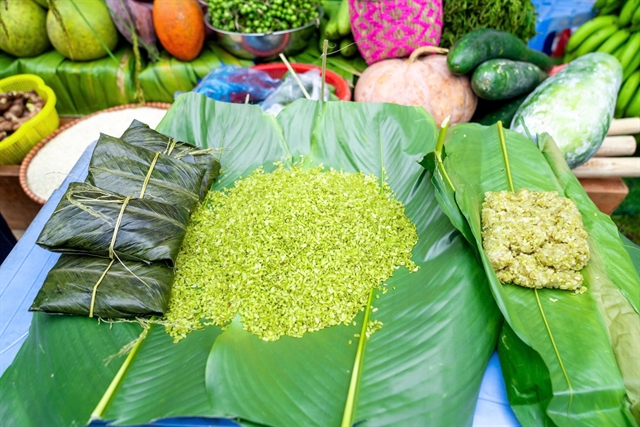
Once mixed, the blend is left to rest for about 30 minutes, allowing the seasonings to penetrate deeply and all the ingredients to meld together. It is then divided into smaller portions and wrapped in green dong, traditional broad green leaves.
The cakes are then placed into a wooden steamer and cooked over boiling water for approximately 30 minutes. As the steam works its magic, the cốm becomes soft and supple, while the aromatic scent of hạt dổi spreads throughout the entire kitchen.
When enjoyed warm, the cake reveals a harmonious blend of flavours: the chewy and fragrant quality of cốm, the rich, savoury notes of duck and pork, the subtle nuttiness of peanuts, and a faint, distinctive hint of hạt dổi.
Bền said her hometown’s cake is already famous nationwide, with many visitors eager to buy boxes to take home as gifts for friends and family.
She takes great pride in her daily craft. Not only does it provide a steady livelihood, but it also helps share her community's traditional culinary flavours with a wider audience. — VNS
