Weather:
- Ha Noi 26oC
- Da Nang 24oC
- Ho Chi Minh 27oC
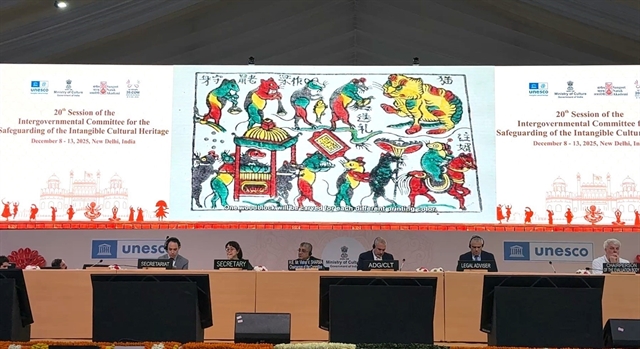
HÀ NỘI — Đông Hồ folk painting was included in UNESCO’s List of Intangible Cultural Heritage (ICH) in Need of Urgent Safeguarding at the 20th session of the UNESCO Intergovernmental Committee for the Safeguarding of ICH on December 9 in New Delhi, India.
According to the Department of Cultural Heritage under the Ministry of Culture, Sports and Tourism, this is Việt Nam’s 17th intangible cultural heritage element recognised by UNESCO.
The committee found that the craft meets all criteria for urgent safeguarding. Đông Hồ folk paintings are closely tied to major traditional festivals, including Tết (Lunar New Year) and the Mid-Autumn Festival, as well as ancestral and deity worship.
However, only a handful of families in Bắc Ninh Province still practise the craft, passing skills down informally within households.
The number of skilled artisans has fallen sharply due to limited economic prospects and declining demand for traditional woodblock prints during festivals, leaving too few practitioners to sustain cultural transmission.
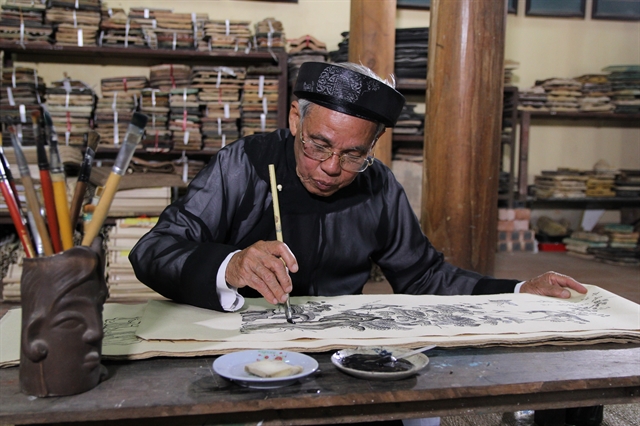
Việt Nam’s safeguarding plan includes training new artisans, taking systematic inventories, developing designs, diversifying markets, improving access to raw materials, and providing protective equipment for artisans.
UNESCO assessed these measures as feasible, sustainable and inclusive, with the practising community playing a central role. The nomination file also demonstrated the active involvement of local families in preparing documents and maintaining updated heritage inventories.
Việt Nam was encouraged to integrate the craft into both formal and informal education to foster understanding among younger generations and strengthen long-term preservation efforts.
The craft originated some 500 years ago on Đông Khê Street in Bắc Ninh Province, where communities developed a distinctive style of woodblock printing.
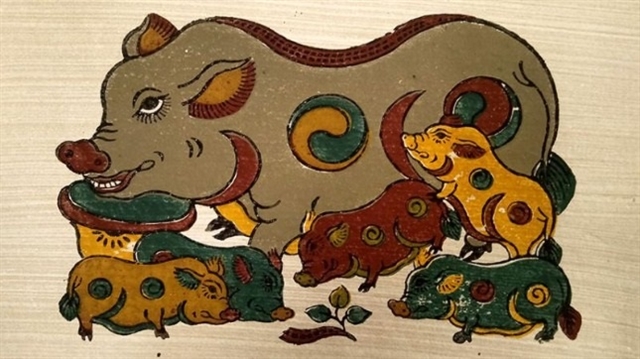
Themes span worship paintings, blessings, historical narratives, daily life and landscapes, traditionally displayed during New Year celebrations and on ancestral altars.
Every stage of production, from sketching designs to carving woodblocks, preparing colours and printing, is carried out by hand.
Designs are drawn using brushes and Chinese ink on dó (poonah) paper before being carved into wooden blocks.
Colours are produced from natural materials such as indigo for blue, seashell powder for white and ash from bamboo leaves or rice straw for black.
Prints are made by pressing each coloured woodblock sequentially onto coated paper, with red applied first and black lines added last.
Deputy Minister of Culture, Sports and Tourism Hoàng Đạo Cương, who led the Vietnamese delegation at the meeting, said that the inclusion of Đông Hồ folk painting in the urgent safeguarding list reflected the appreciation of the international community for the unique value and historical significance of this genre of folk painting, which has been intertwined with Vietnamese cultural life for hundreds of years.
At the same time, this recognition arrives as a timely acknowledgment of a heritage that is at significant risk of dying out.
The deputy minister confirmed that Vietnamese Government agencies would continue to pay attention to and support local communities and the custodians of heritage in protecting intangible cultural heritage, ensuring that these legacies are not only preserved, but also transmitted and cultivated for continued vitality.
Vice Chairman of the People's Committee of Bắc Ninh Province Mai Sơn said UNESCO's recognition carries profound significance for the heritage community and the people of Bắc Ninh Province.
"We sincerely acknowledge the committee's recommendations, especially regarding promoting environmentally friendly values and integrating heritage into the education system," he noted.
“We are committed to rigorously implementing the plan we have submitted to preserve the heritage and sustainably promote its values for the future,” he added.
According to Ambassador Nguyễn Thị Vân Anh, head of Việt Nam's Permanent Delegation to UNESCO, this event helps honour the traditional cultural values of Việt Nam within the treasure trove of humanity's heritage.
Vân Anh said it also serves as a vivid testament to UNESCO's and the international community's appreciation of the country’s contributions to the protection of cultural diversity and the promotion of sustainable development.
The event holds even greater significance, as Việt Nam and UNESCO look forward to celebrating 50 years of the country’s participation in the organisation in 2026, marked by a rich and diverse array of activities, she added.
Việt Nam currently has 37 heritage elements recognised on UNESCO’s various lists, including world cultural and natural heritage sites, intangible cultural heritage elements and documentary heritage entries.
Bắc Ninh Province alone is home to several notable UNESCO-listed elements, including quan họ (love duet singing), ca trù (ceremonial singing), Mother Goddess worship and the Hữu Chấp tug-of-war tradition, underscoring its role as a major centre of Vietnamese cultural identity. VNS
