Weather:
- Ha Noi 30oC
- Da Nang 27oC
- Ho Chi Minh 29oC
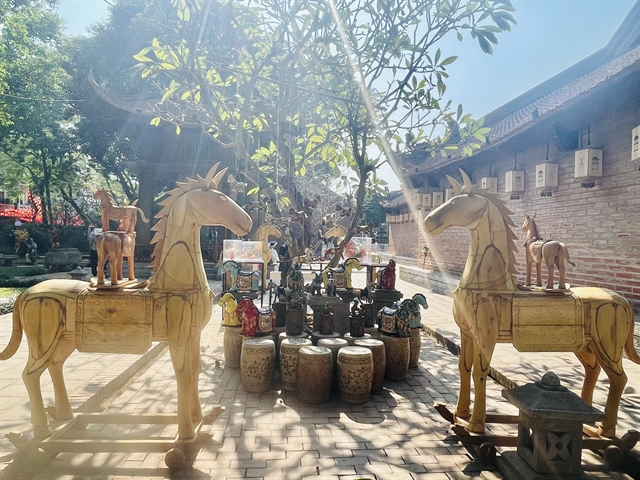
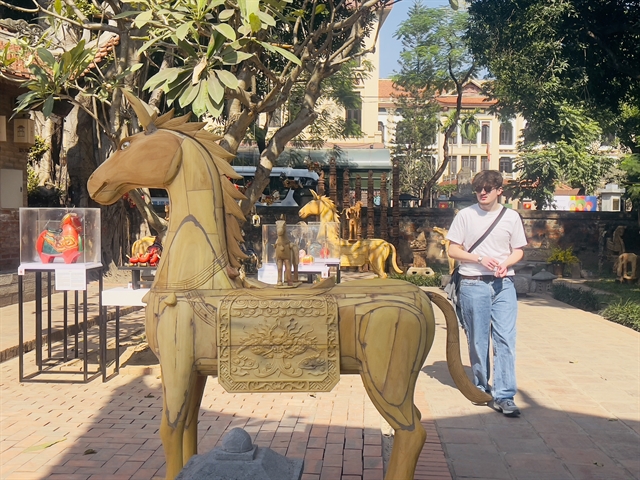
HÀ NỘI — An exhibition celebrating the horse, the zodiac animal of the upcoming Lunar New Year, is on show at the national heritage site Văn Miếu – Quốc Tử Giám, also known as the Temple of Literature, bringing fresh energy to a familiar symbol.
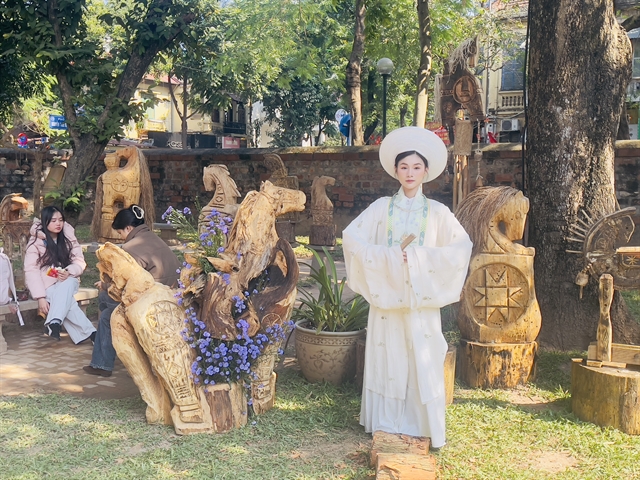
Titled Ngựa Về Phố (Horses Come to Town), the exhibition features works by cultural researcher Đặng Minh Tâm, artist Lê Huy and Lamphong Studio, alongside images and artefacts related to horses drawn from diverse cultural spaces across the country.
Through a multifaceted approach combining cultural research, contemporary visual language and creative installation art, the image of the horse is dynamically reinterpreted, rich in meaning and reflecting both its deep roots in traditional life and the rhythms of contemporary society.
In Vietnamese consciousness, the horse has long been more than an animal tied to daily life, trade and history. It also symbolises strength, loyalty, resilience and an unwavering spirit of progress.
The horse appears across many cultural realms, from legends and folklore to architecture, visual arts and literature. In particular, the Year of the Horse 2026, widely seen as a time of action, movement and breakthroughs, lends the symbol added resonance, evoking inner strength, aspirations for achievement and a relentless spirit of learning as humanity moves towards the future.
The organisation of the exhibition at the national heritage site Văn Miếu – Quốc Tử Giám carries multiple layers of meaning.
The site is not only a unique historical and cultural monument but also a symbol of scholarly pursuit and Việt Nam’s long-standing tradition of valuing education.
Within this sacred space of learning, the image of the horse represents more than physical strength. It evokes the spirit of self-establishment and career-building, embodying determination to advance through knowledge, sustained effort and a lifelong journey of self-improvement.
Lê Xuân Kiêu, Director of the Văn Miếu–Quốc Tử Giám Culture and Science Centre, said the exhibition was launched at the beginning of the year as a spring gift for the public and visitors.
“It aims to showcase the diversity of culture across regions while also revitalising the heritage site, turning Văn Miếu – Quốc Tử Giám into an appealing cultural and creative destination for the community,” he added.
The event is being staged behind the Thái Học courtyard, an area previously overlooked by visitors. With a harmonious layout that integrates the heritage landscape and the artworks, the space is enlivened by rustic and familiar images of horses, offering a fresh experience for viewers while broadening access to the site.
According to cultural researcher Đặng Minh Tâm, bringing the image of the horse into the space of Văn Miếu introduces a familiar cultural symbol while conveying the nation’s core traditional values.
“The horse embodies perseverance, the spirit of rising up and the aspiration to go further; in the Year of the Horse, this symbolism resonates powerfully with themes of inner strength, breakthrough and the determination to overcome challenges in pursuit of new goals,” he said.
The exhibition runs until the end of March. — VNS