Weather:
- Ha Noi 27oC
- Da Nang 25oC
- Ho Chi Minh 26oC
Thanh Hà
Lê Thu Hiền packed up her stuff for a visit to Đồng Tháp Province before giving me a call.
"It's the best time of year for linh fish, otherwise you'll have to wait for a year," she said.
It was Hiền's annual family trip to the southwestern region just to taste dishes made from the little fish, which are only available for a few months during the flood season and are famous in the provinces of An Giang and Đồng Tháp.
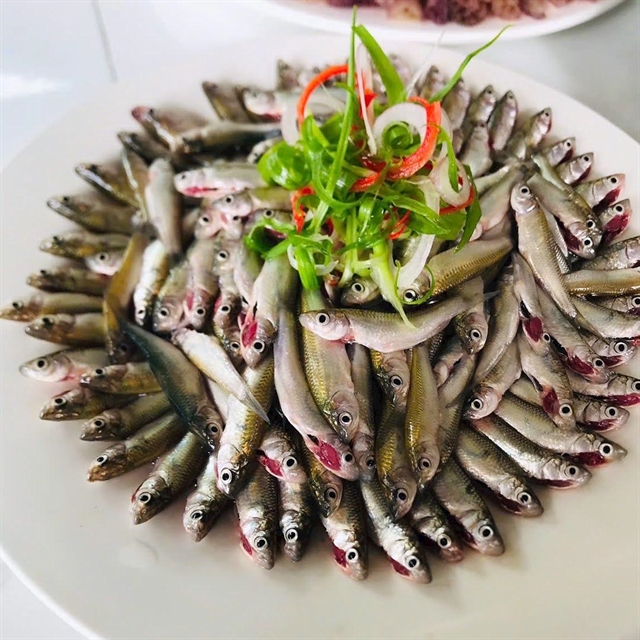
A type of cyprinid, linh fish or Siamese mud carp is a small freshwater fish about the length of a finger, with thin, shiny scales, soft bones and sweet flesh. They live in large schools in Cambodia's Tonle Sap Lake and travel with the seasonal floodwaters from the upper Mekong River down to the Mekong Delta.
"Around mid-July, heavy rains signal the imminent arrival of the flood season, and with it, the linh fish season," fisherman Nguyễn Văn Đượm said.
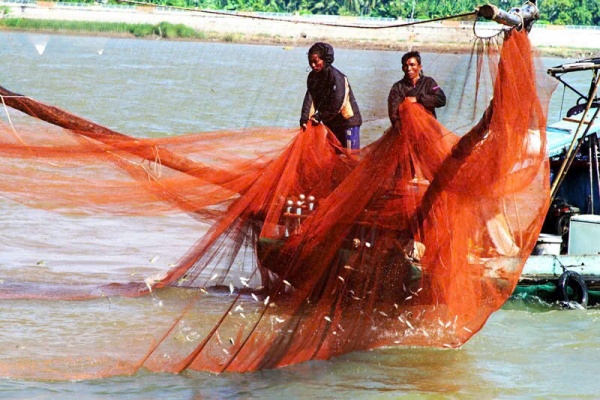
"If you come to our region at that time, you will witness a bustling scene at the headwaters of the Tiền and Hậu rivers. Both on the water and along the banks, the atmosphere surrounding the fishing and fish-selling activities is as lively as a festival.
"Meanwhile in every eatery, the number of diners increases remarkably. Linh fish dishes are the top choice for both locals and visitors because of their simple but delicious taste, and the fact that they are only available for a couple of months," he said.
He explained that the fish arrive like clockwork each year between July and November. Driven by the seasonal rise of the Mekong River, silt-laden waters sweep into local canals and fields, offering a nutrient-rich habitat for the migrating fish to forage and breed.
September and October mark the peak season for linh fish in terms of both abundance and quality, as it is the tail end of the rainy season, when floodwaters begin to recede. During this peak, the fish boast delicious rich and fatty flesh, making it an ideal main ingredient for many delta specialties.
Due to the high demand, locals farm this type of fish, but their quality can't compare to that of their wild-caught brethren.
After years of tasting them, Hiền seems to know as much about the fish as a local fisherman.
She told me: "At the start of the flood season, the fish are still young, as small as the tip of a chopstick, tender-boned and rich in fat."
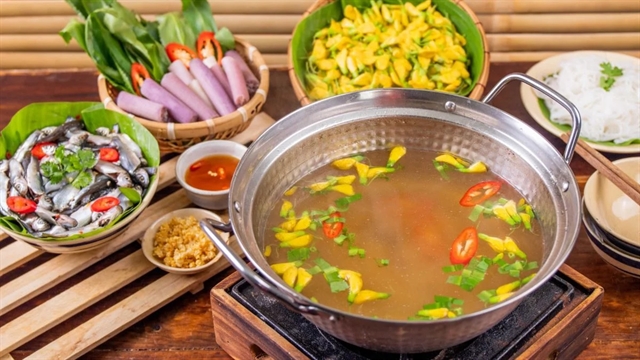
Hiền added that the young fry are perfect for a linh fish hotpot with điên điển (Sesbania sesban), which are bright yellow, edible wild flowers.
"You know, the flowers burst into brilliant bloom at the same time as the fish ride the floodwaters into rivers, ponds and canals. They also last about three to four months, fading when the fish season ends," she said.
"It seems that the fish and the flowers are born to make the perfect hotpot with a special rustic taste, which is now famous nationwide. The sweetness of fresh fish and a sweet-and-sour base typically crafted from fresh coconut water, tamarind juice and garlic, along with the distinctive aroma of sesbania flowers, create an incredibly mouthwatering hotpot."
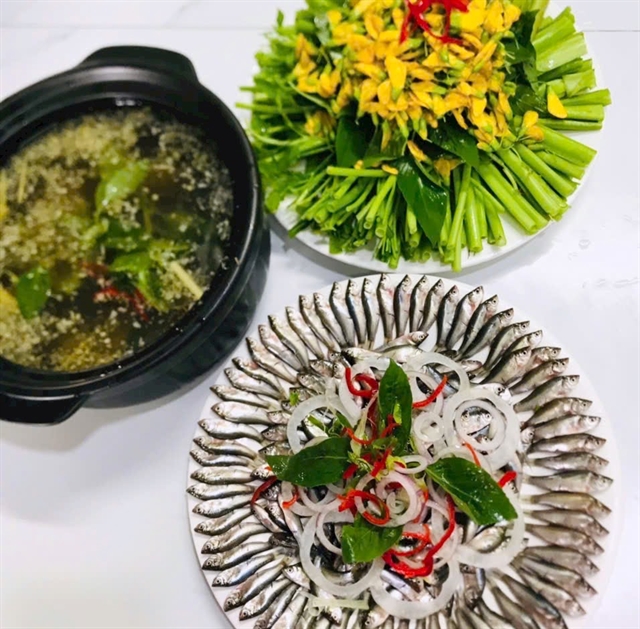
The hotpot is typically served with rice or rice vermicelli and local herbs.
"There is nothing quite like enjoying this dish amid the fresh, open air near the vast expanse of the river waters," Hiền said.
Young linh fish are also often braised with pepper or stewed in fresh coconut milk or tamarind sauce.
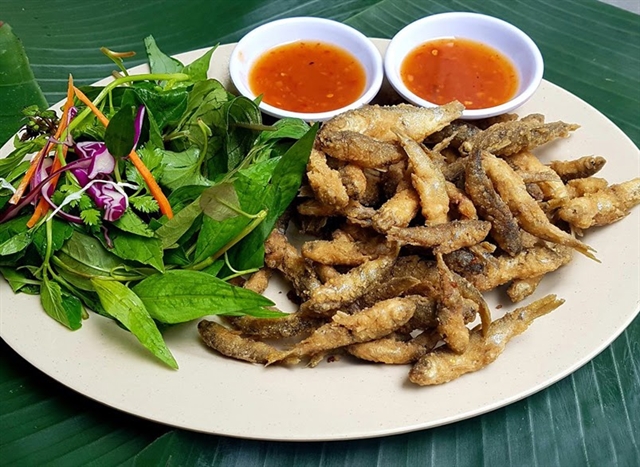
In August and September, the fish are bigger, with harder bones. More typical dishes around this time include crispy fried fish, or fish served in sour soup or grilled.
At the end of the season, as the waters recede, the mature fish are used to make fish sauce and fermented fish paste, which are also renowned local specialties.
"I travel here every year, and several jars of fermented fish paste will come home with me. It is delicious even just eaten with rice. Otherwise, many amazing dishes can be made with it: fermented fish paste hotpot, steamed fermented fish paste with minced pork, salted egg, wood ear mushrooms, shrimp and eggplant," Hiền said.
"Sometimes, I even bring home a dozen kilogrammes of fresh fish and điên điển flowers. I can cook the regional specialty for friends, while the rest will be fermented with coarse salt in earthenware jars. After three to four months, I will have an incredible fermented fish paste." — VNS
