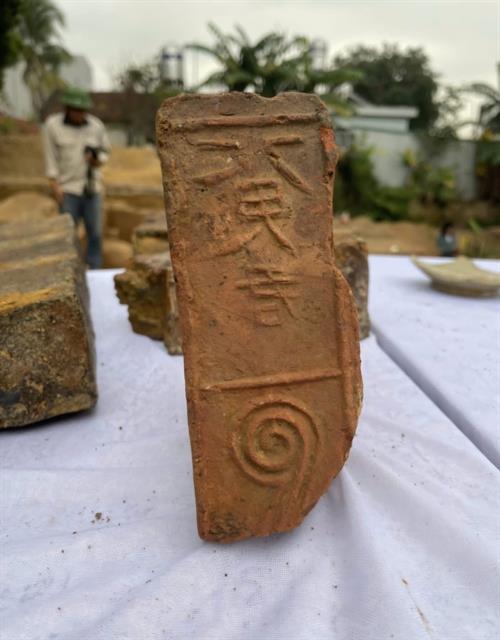
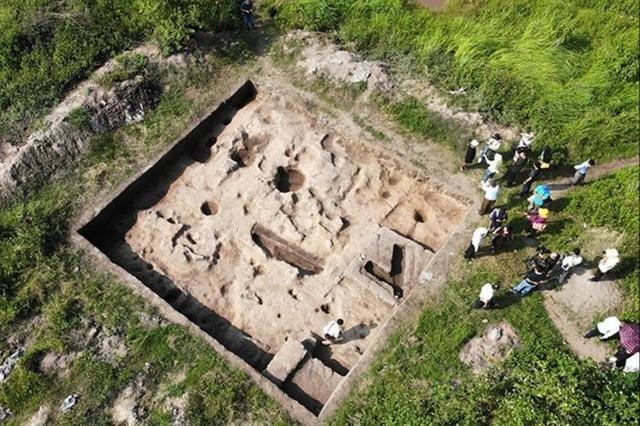
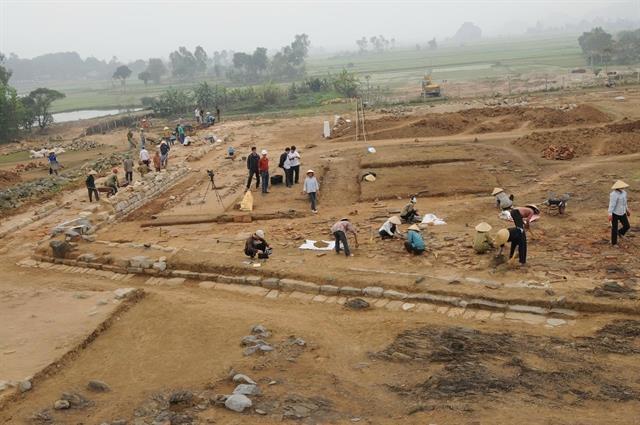
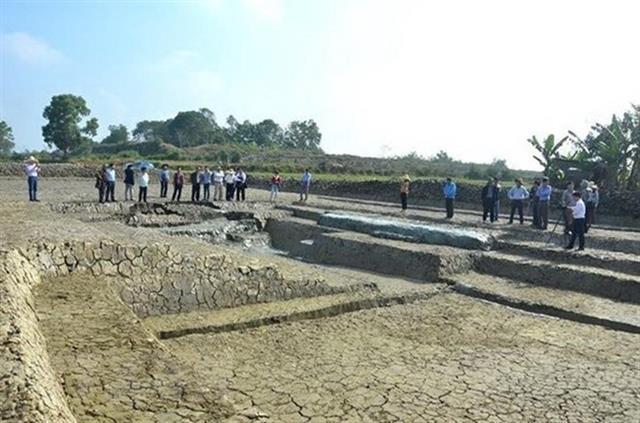
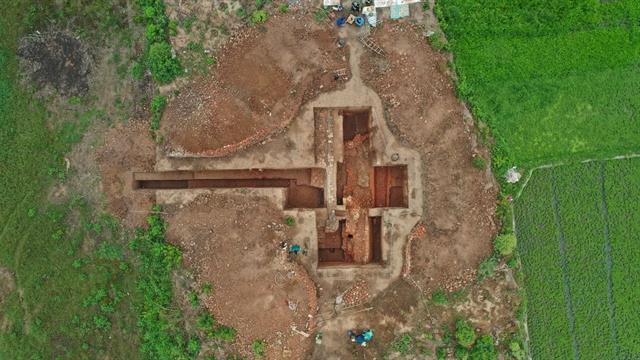
The results indicate that this is a brick tomb situated on a raised mound, covering an area of about 150sq.m, significantly larger than other brick tombs previously discovered in Quảng Ninh and across the country.
The Go Thanh site was part of the Oc Eo culture, an ancient civilisation that flourished across the southern region from the first to the eighth century.
Vườn Chuối (Banana Garden), an archaeological site in Hà Nội’s Hoài Đức Commune discovered in 1969, vividly reflects the continuous habitation of ancient residents on Thăng Long – Hà Nội land over nearly 4,000 years
Recent archaeological research achievements have contributed to clarifying many issues in the historical process, raising community awareness, and promoting the preservation and enhancement of Việt Nam’s cultural heritage values.
The Ministry of Culture, Sports and Tourism has allowed an archaeological excavation in a 300sq.m area at the Óc Eo - Ba Thê Cultural Heritage Site in Thoại Sơn District, An Giang Province.
The excavation discovered many valuable architectural remains, notably the foundation of a structure built with grey-blue rectangular bricks, running along the city wall towards the Dâu River.
An archaeological team has made a significant discovery in the central province of Nghệ An, providing new understandings of prehistoric coastal communities in the region.
The National Museum of History and Department of Culture, Sports and Tourism of Bắc Ninh Province reported the preliminary results of the Luy Lâu ancient citadel excavation.
Vành Village Cave and Trại Hamlet Cave in Lạc Sơn District, both listed as special national heritage sites, are central to understanding the Mường culture.
The country''s leading archaeologists met over the
weekend during a 3-day conference held in Hue City, which included
announcements describing new archaeological discoveries.
Archeologists from the Viet Nam Institute of Archaeology have
discovered numerous valuable relics in the Vu Lam royal step-over
place, located within the Trang An scenic landscape complex.