Weather:
- Ha Noi 21oC
- Da Nang 26oC
- Ho Chi Minh 31oC
Thanh Hà
CẦN THƠ — As a devoted fan of wrap-and-roll dishes, I’ve spent years searching for that elusive wrapper versatile enough for both fresh spring rolls and crispy fried favourites. Finally, I got it: Thuận Hưng rice paper, a celebrated speciality of Cần Thơ City.
As I looked further, I discovered not just a great product but also the story of a craft village and generations of farmers who have spent over 200 years building their pride on rice, experience and skill.
Located next to the Hậu River, the Thuận Hưng rice paper ward has strongly developed from several households to more than 500 family-run production facilities. They are mainly in the Tân An and Tân Phú areas, in which the majority rely on traditional manual methods, while a small number of households use modern machinery to meet market demand.
Thuận Hưng rice paper is renowned for its pliable texture and the fragrant aroma of fresh-harvested rice.
Each household produces its own distinct flavour based on its recipe that combines rice, coconut milk and some other ingredients.
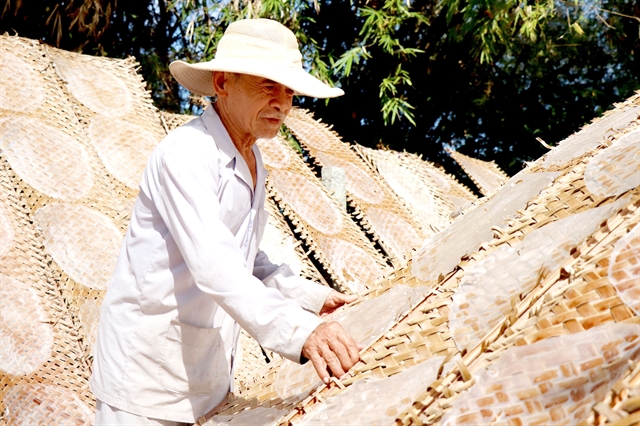
Upon entering the village, visitors are greeted by the faint scent of burning rice straw and the sweet, delicate fragrance of coconut milk, while rice paper can be seen drying everywhere. The villagers make use of every available space – courtyards, pathways, and the banks of ponds – to lay out their rice paper to dry.
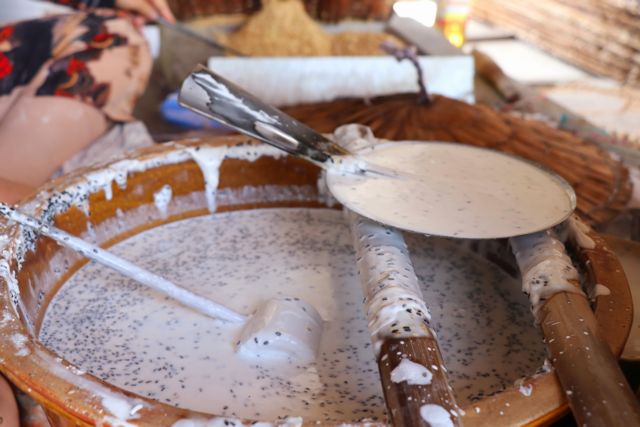
The process of making these rice sheets is a true art form. Raw rice is rinsed, soaked in clean water for several hours (or overnight) until soft, then ground with water into a smooth, milky liquid batter.
A bit of salt, and optional additions like sesame seeds or coconut milk are blended into the rice batter depending on the use of the products.
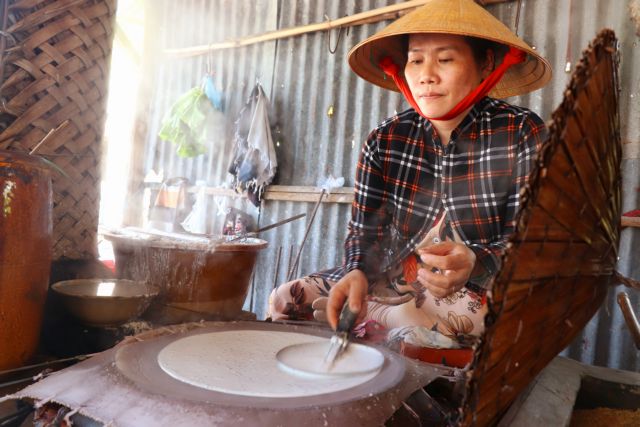
A thin layer of the batter is ladled onto a piece of cloth stretched tightly over a pot of boiling water and spread into a flat circle. A lid is placed over it, and the sheet is steam-cooked for about 15 seconds until translucent.
A short bamboo pole or rolling pin is gently swept under the cooked sheet to lift it off the cloth. It is then transferred to a drying rack or flat bamboo mats and placed under the sun to dry. The bamboo pattern leaves a distinct texture on the paper.
While the craft may appear simple, it demands great dexterity; the maker must work with swift, precise movements to ensure the sheet is thin yet remains intact. Removing the sheet from the cloth requires a delicate touch; one hand lifts it, while the other places it onto a drying rack. A small mistake will tear the sheet to pieces.
In Thuận Hưng, farmers primarily produce three types of rice paper: plain rice paper, coconut-and-sesame rice paper intended for grilling, and ready-to-eat coconut-and-sesame rice paper.
While each variety possesses its own distinct flavour and characteristics, they all share a common quality: they are delightfully pliable and fragrant with the aroma of rice grown in the Mekong Delta region.
"Our sheets are crafted primarily from rice, with the flour mixed according to a special ratio, a closely guarded secret of each household, and a pinch of salt added to enhance the flavour," said villager Nguyễn Thị Tươi.
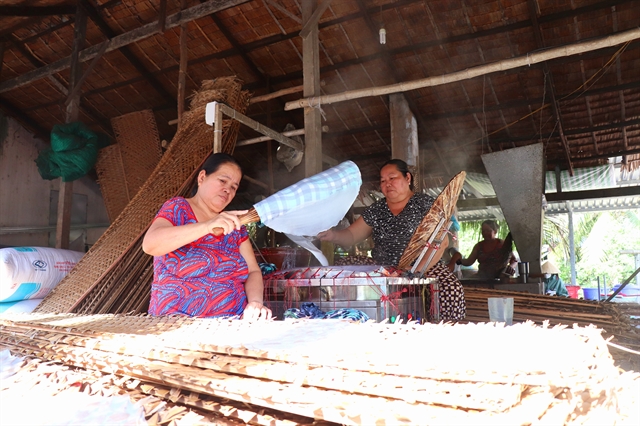
"The rice must be ground immediately after reaching the perfect level of soaking to ensure the best quality. Every step of the process – grating coconuts, preparing coconut milk for the batter, carefully managing the small heat from rice-husk fires, and sun-drying the sheet to ensure that they neither warp nor crack – demands meticulous attention and precise adjustments, honed by the seasoned expertise of the makers."
The traditional craft of making rice paper in Thuận Hưng was recognised as a National Intangible Cultural Heritage in 2023. It is the first village in Cần Thơ receiving this honour.
There are many applications for the rice paper.
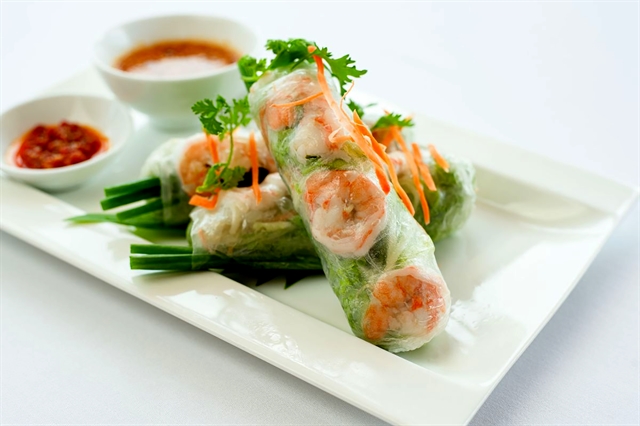
I love making spring rolls by wrapping rice vermicelli, fresh herbs, lettuce and a choice of protein, such as shrimp, pork or tofu, in the sheets. They are served with a sweet and sour fish sauce dip, making them a light, colourful and crowd-pleasing appetiser for any party.
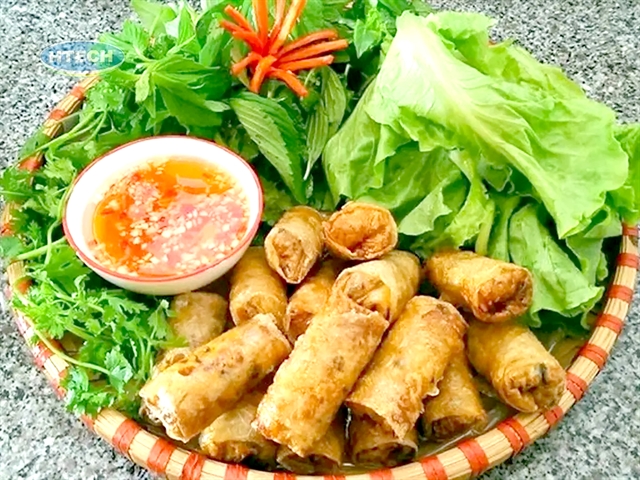
Fried spring rolls are, in my opinion, a favourite for many. They are made by wrapping savoury meat or vegetarian fillings in rice paper and deep-frying or air-frying until golden and crispy. This Vietnamese speciality has won fans around the world and makes a great addition to parties, snacks, lunch or dinner.
My friend sometimes makes her own rice paper chips and crackers, too. Simply cut dry or slightly damp rice paper into small shards or triangles and fry them in hot oil for a few seconds until they puff up. Alternatively, microwave a dry sheet for 20–30 seconds for a quick, crunchy snack.
Meanwhile, a street-style pizza can be found in many localities. But I prefer the way people in Huế make it.
Place a dry or lightly buttered sheet in a pan over heat, crack an egg over it and spread it thinly. Add scallions, cheese and minced meat or dried shrimp, then cook until the base turns crisp.
It's a great dish for children and young people alike, especially when sitting by the Hương River, chatting with friends or simply watching people stroll by. — VNS
